Categories
Blog courses Culture Highlights Preparation Runner Profile Runner Profile Runner Profiles Stage Trip Styles update WL

Runner Profile: Aaron Davis

“Who goes on Aspire trips?”
It’s a question we hear often. The truth is, the runners who show up for our trips come from diverse backgrounds and bring a wide range of running and mountain experience with them to the trails.
We all relate to mountain spaces in unique and personal ways. We are excited to add some depth to our response to the “Who?” question with a series of Aspire trail runner profiles. We enjoyed hitting the dirt and building friendships with these runners on our trips, and we think you’ll enjoy hearing their stories!

Name: Aaron Davis Age: 45 Hometown: Coeur d’Alene, Idaho

What is your occupation?

Heavy Equipment Sales – Latin America & The Caribbean

I also served in the Idaho Army National Guard from 2002 until 2010 as an artillery officer, ending my service at the rank of Captain, and after serving in Iraq in 2005 during Operation Iraqi Freedom.

What Aspire Trip have you participated in?

Wonderland (Longmire to Mowich Segment 2015)

What is your favorite trail snack?

Chipotle peanuts, bacon, oatmeal creme pies

Describe your experience, background, and enthusiasm for running and/or wilderness and backcountry experiences?

I always tell my wife that my dream “job” would be to just clear and build trail all day and run! I wasn’t much of a runner growing up in Boise, Idaho; however, I did do a lot of backpacking, hiking, and camping as a Boy Scout which I loved. In fact, my Eagle Scout “project” was organizing trail work and camp site restoration and clean up on the trail from Chinook Campground into Loon Lake in central Idaho (which for any ultrarunners out there who have run the IMTUF 100-Mile, you ran as part of the race course, albeit many years after I was swinging a Pulaski there with my fellow Scouts…). From my teen years until derailed by a hand injury in my mid-20s, my passion was rock climbing. When injury forced me to explore other activities, I made a goal to run a marathon.

Long story short, I got hooked on running (and marathons in particular), and even did a stint on the All-Guard Marathon Team while in the Army National Guard—my one and only experience at being somewhat of a “pro” and actually getting paid to run – “thank you” to you all tax payers out there 😊.

In 2015, when I was going to turn 40, I set an outlandish goal to break all my PRs in all the more established distances between the 400m and the 100-mile. There were many I’d never really run before, so several were basically “if I finish–I PR!” And though I had dipped my toes into the trail and the ultra world on occasion previously, my only ultra finish before this year was the 2013 Trail Rail Run 50-mile near the Idaho/Montana border. There were a few races I didn’t get to run that PR year, and a few more that I ran but failed to beat the PRs I’d set in my 20s; but it was an awesome year and was also when I really became a born-again trail/ultra runner.

That year, which also included my epic Wonderland trip with Aspire, I ticked off the longest runs of my life, including a sub-30-hour 100-mile finish at IMTUF, which I’ve since gone back to do twice more since.

This crazy COVID year of 2020, I branched out even further and got into fast packing. I spent hours in my wife’s kitchen scale weighing gear and trimming 1/8s of ounces here and half ounces there as I poured over my packing list. This culminated with a 100-mile, 4-day/3-night fastpack trip with a 23.5 pound pack in the Sawtooth’s of Central Idaho with a running buddy of mine.

I also spent much of 2020 with my trusty Rogue Hoe 70HR54 cutting and benching in my own trail system on the wooded hillside behind my house—I’m up to 4-miles with 1,000ft. of vert if you run all 10 x concentric loops. 😊

What questions, concerns, or unknowns did you have going into your trip?

I had a few questions about logistics, format, etc.–I think it was Aspire’s first year (2015), and I was relatively new to big days in the backcountry on this type of running trip. BUT, all those concerns were easily resolved with a couple e-mails and it was an AWESOME experience (and the food was SOOOOO GOOD!!!)

How did you prepare for your trip? Given your experience would you prepare differently, if so how?

I was actually training a lot before the trip, and spent a fair bit of time in the backcountry hiking and backpacking as a kid, so I was fairly prepared and in pretty good shape when I showed up to run with the group. The Wonderland is a pretty tough trail, so it’s definitely going to enhance the experience if you are prepared to enjoy it (and not slog through and suffer too much…)

What story or description would you give to represent the group dynamic on your trip?

I honestly kind of liked that it was a “solo while part of a group” type experience. I was out there for stretches on my own, which totally suits me. But, there were also stretches were I was with one or two others, which was also nice, as we could each take pictures for each other and experience an epic place with others who share a similar passion for the outdoors.

What was a difficult moment or a surprising episode from your trip?

I can say without a doubt it was coming around a corner and bombing down toward a meadow about half way through the run and looking left to see a good sized black bear about 200 feet away bolting out of the meadow as fast as he could. Needless to say, I was glad he didn’t stick around to wait for me!

What advice or thoughts would you offer to someone considering signing up for an Aspire trip?

DO IT!!!! I suppose like a race, it is a significant amount of money to put down to spend a day or more in the mountains; BUT, an Aspire trip is so much more! It’s different than races or other trail running experiences you’ve likely done, and is so worth it.

And the food – man, my wife thought it was worth it just for the culinary experience. I’m not kidding! It’ll leave you wondering how on earth it could be possible to have such amazing food in the outdoors without a full kitchen. Unreal!

Not to mention, there just aren’t races that can take you to some of the places that Aspire can. It really is an amazing experience start to finish, and I can’t say enough good things about it (especially the Wonderland!!!)

It was just a great overall experience, with a good group of people – participants and Aspire staff alike. A great time and a great memory (that I need to repeat in the near future!)

Categories
Blog courses Culture Highlights Preparation Rendezvous Runner Profile Runner Profiles Stage STEHEKIN Stehekin Rendezvous Trip Styles WL Wonderland Circumnavigation Stage YOSE

Aspire Trail Runner Profile: Rachel Beda

“Who goes on Aspire trips?”
It’s a question we hear often. The truth is, the runners who show up for our trips come from diverse backgrounds and bring a wide range of running and mountain experience with them to the trails.
We all relate to mountain spaces in unique and personal ways. We are excited to add some depth to our response to the “Who?” question with the Aspire trail runner profile series. We’ve enjoyed hitting the dirt and building friendships with these runners on our trips, and we think you’ll enjoy hearing their stories!

Name: Rachel Beda Age: 45 Hometown: Seattle, WA

Thanks for sharing your story with us for the Aspire Trial Runner Profile! Which Aspire Trips have you participated in?

Stehekin 2018 and Wonderland 2020

Describe your experience, background, and enthusiasm for running and/or wilderness and backcountry experiences?

I started trail running during medical residency 17 years ago and it never, ever gets old. Wilderness is my meditative, sacred place, and I feel the most at peace and alive while I’m moving through it on my own two feet. A busy work and family schedule means running is the most efficient way to get the most views in the shortest amount of time. 

I’m not fast – I hike the uphills and then love to bomb the downhills. I am typically mid-to-back-of-the-pack at trail races and on Aspire trips. What I lack in speed, I make up for in enthusiasm! 

I don’t have many running buddies – my friends are either short-distance hikers, or genetically gifted speed demons that I can’t keep up with, so I’m typically running alone. I’m comfortable running alone, but I really appreciate the safety net Aspire provides. It’s allowed me to go deeper into the wilderness than I would be comfortable doing by myself. 

What questions, concerns, or unknowns did you have going into your trip? How were they resolved?

I was afraid I wouldn’t be fast enough for the group. I shouldn’t have worried. It’s not a race and there’s no pressure. 

For Wonderland, I was concerned I wouldn’t be able to do 3 long days back-to-back-to-back, and Abram worked with me to make a modified itinerary that worked for me. 

I was afraid it would be all young gunners and I would be too old. It was actually a great mix of all ages. 

How did you prepare for your trip? Given your experience would you prepare differently, if so how? This can be answered in terms of fitness and/or gear.

For Stehekin: I did long trail runs of up to 16 miles with plenty of vert, and weekly mileage of about 20-25mi and it worked great since there is a day of rest at the Ranch between run days. 

For Wonderland: I increased my mileage to 30-35 mile weeks including some long trail runs of up to 18 miles with vert, peaking at a 40mi week. Spoiler: it was NOT enough, and I rode ahead in the van on day 2. For next time (oh yeah, I want to go back and get it all next time!!!), I would aim for more 40 mile weeks, and I would schedule a back-to-back trail weekend of at least 15-20 mi/day + 4000ft of gain on both Sat and Sun. If you are a shorter-distance runner like I am (25k races are my favorites), do not make the mistake I did of underestimating the legitimacy of that amount of vert on day one (9700ft of gain from Longmire to Mowich).

I highly recommend using hiking poles for the climbs and bringing a lightweight water filtering method so that you can minimize water weight. 

What story or description would you give to represent the group dynamic on your trip?

Encouraging, supportive, and ego-free!

What was the most difficult moment and/or a surprising episode from your trip?

I was so excited as we started out on day 1 of Wonderland that I forgot to keep up with my nutrition and hydration in the first few miles, and I started to battle nausea around mile 7. By mile 21 I was dry heaving, and by mile 24 I had to lie down on the side of the trail. Kara, who was the sweep on the Aspire Team, was so incredibly patient, positive, and supportive. She GPS-texted ahead to camp and Ian from Aspire started out towards us with supplies in case I really couldn’t make the last few miles. Thanks to their help and encouragement, I was able to rally and make it 10 more miles to Mowich Lake and the rest of the group. Although I could have done without the dry heaving, it taught me that my strength and endurance is bigger than I thought. I also was blown away by the kindness, patience, and encouragement of the Aspire Team. If they could believe in me after only knowing me for one day, I could certainly believe in myself. That lesson is going to help me whenever the miles get tough in the future. 

What info/advice/thoughts would you offer to someone considering signing up for an Aspire trip?

All the things I was worried about – ego, speed, pressure to perform, competition – none of that exists on an Aspire trip, clearly by design. Abram sets up the most supportive, chill, happy adventures.


Explore our Wonderland Circumnavigation trip.

Have a story from an Aspire trip you’d like to share for a Aspire Trail Runner profile? Fill out the form here and we’ll be in touch!

Categories
Aspire Culture Blog courses Destinations Highlights Pulse Stage Trip Styles update WL Wonderland Circumnavigation Stage

Season of Speed: 2020 FKT attempts on the Wonderland Trail

As runners of wild spaces, trail runners boast an impressive repertoire of skills. One that seems to be missing? Sitting still. Following the lockdown and the initial host of “around my block” projects, many runners looked to the mountains for a sense of freedom and turned to Fastest-Known-Time (FKT) lists for a sense of competition and motivation. Enter Mt. Rainier and a season of “fastest known time” attempts on the Wonderland Trail.

A runner cruising towards Mt. Rainier on the Wonderland Trail

At 14,410′, Mt. Rainier’s dominating visage is both inspiring and intimidating. The tallest Cascade volcano boasts over 35 square miles of rock and snow with 26 glaciers, seven glacial rivers, and endless alpine meadows. While most known for its 150 years of recorded climbing history and an estimated 200,000 successful summit climbs, for trail runners, it is the trip around the mountain which beckons. 2020 saw an unprecedented season of time bending circumnavigations by trail runners as eight new records were set across varying categories of fastest known times on the Wonderland Trail.


Every August, the Aspire Adventure Running crew runs laps around Mt. Rainier, leading weekly trips of runners on a three day stage run of the Wonderland Trail. Our staff grows intimate with the mountain and deeply familiar with each curve of the trail; happy to share this knowledge with all those run, play, dance, and test their mettle on its rugged flanks. In 2020, that included not just trail runners, backpackers, and hikers but a number exceptionally fast runners with record breaking circumnavigation dreams.


Dawn at Panhandle Gap

North Face runner Dylan Bowman functions better with a goal to keep himself accountable. Bowman grew up in CO and spent time living and running in California before settling down in Portland only about a year ago. ” I’ve been blown away in general with how good the running is in the PNW. It’s really an amazing place to run and to train.”

When the pandemic hit and races were cancelled across the globe, he turned his attention to a fastest known time attempt on the Wonderland Trail. “With Hard Rock cancelled, the Wonderland made perfect sense. I’ve always wanted to do it… I would classify the Wonderland is the single greatest North American adventure run there is, basically. I’ve done Timberline, Rim2Rim2Rim, Ultra Trail Mont-Blanc, Western States. The sheer magnitude and beauty of the route; I don’t think there’s anything that compares. ” Bowman exudes.

Prior to this year, the supported Wonderland FKT was held by Ryan Ghelfi at 18 hours 27 minutes and 42 seconds, as reported on FastestKnownTime.com. But when Aspire’s course director Abram Dickerson rolled up to Longmire ready to send runners off on Day 1 of the season’s first Wonderland trip, he bumped into filmmaker Ryan Thrower. Later that day, at Mowich Campground, Abe ran into him again. Over the course of dinner, it came to light that Ryan was doing preliminary shot scouting to film Bowman’s upcoming FKT attempt. Three weeks later, on August 19th, Bowman rolled into his finish at Cougar Rock with a new record time of 16:58:41, knocking almost 90 minutes off of Ghelfi’s 2018 time.


Jeff Mogavero is a Missoula based trail runner and friend of Aspire with some quick legs. Earlier this year, he contributed a piece on his Lost Coast FKT for the Aspire blog. In 2018, he followed Dylan Bowman’s FKT on California’s Lost Coast Trail by knocking ~60 minutes off his time on the 57.6 mi stretch of remote coastline. In July of this year, Jeff set a since usurped FKT on Wyoming’s Teton Crest Trail. The first time I met Mogavero was in 2015, when I gave him a ride back to Bozeman, MT from a trailhead in the Bridger Mountains. We’d connected for a few runs through the sweeping Montana landscape, but I was surprised to receive a phone call from him in early August. Jeff would be out in a few weeks to gather beta on the Wonderland, preparing for a FKT attempt. Serendipitously, his schedule would overlap with ours. I assured him that if needed, we’d be happy to make room for his bivy at Aspire camp.

Trail beta and good food flows freely at Aspire camp at Mowich lake.

By the time Mogavero and I met up during his preliminary run, Bowman’s had been dethroned from his Wonderland FKT record. “[It’s] my claim to fame: set an FKT–it gets broken immediately. I did the Lost Coast, the Loowit, 3 Sisters, all broken just a few days later,” Bowman half laments, half jokes. Just five days after Bowman set a supported record, Tyler Green, a Portland area runner with 12 postings on fastestknowntime.com, dropped Dylan’s time by 18 minutes. This brought the time to beat to 16:40:55.

Preparing for his next day of beta in Aspire’s camp at Mowich Lake, Jeff asserted cautious confidence towards the 10:45/mi average pace required to best Tyler’s new record. We dished him up a plate of spaghetti as a thanks for help schlepping gear and wished him all the speed God could give. Hardly the only person to have his plans interrupted by the unforeseen in 2020, Mogavero eventually had to scrap his FKT attempt due to the thick smoke and fires of mid-September.


On August 26th, two days after Tyler Green reset the overall supported record, Issaquah based runner Kaytlyn Gerbin went out for her own fastest known time attempt on the Wonderland Trail. Something of a legend in the Pacific Northwest, if not beyond, Kaytlyn holds FKT’s on Washington’s Ptarmigan Traverse and the Mt. Rainier Infinity Loop, a course that includes a run of the Wonderland connecting not just one, but two summits of the mountain. “A lot of emotional energy has gone into the mountain in the last few years. Every year, I’m looking for a new style to get on the mountain.” Gerbin shared.

Even with her intimate knowledge and experience on the trail, there’s no getting around the challenge of the terrain the Wonderland presents. Fortunately, the Wonderland doesn’t deal out punishment without ample reward.

“All the sections were pretty hard. I caught sunrise at Golden Lakes, and I love the views of Rainier there. It feels pretty remote. Then coming into Sunrise was an awesome section for me. I had friends who had gone out to take photos and told people in the area what I was doing, so I had a lot of strangers waiting for me to come through and cheering. That was such an empowering moment.”

“I hit a pretty good low up above Panhandle Gap… three-quarters of the way through… you get into some altitude and we had no cloud cover, baking in the sun exposure. I did that section with Alex. We had such strong memories and that helped.”
Kaytlyn’s pacer and friend, Alex Borsuk, shares the Ptarmigan Ridge and Rainier Infinity Loop FKT’s with Gerbin, and would set the unsupported women’s record this year on September 10th with a time of 1 day, 1 minute and 26 seconds.
Gerbin rolled into Cougar Rock with a 18:41:54 finish, beating the previous female supported record by over 3 hours and posting the 4th fastest time over all.

Looking out from Panhandle Gap at Mt. Adams and the Goat Rocks.

For Gerbin, a personal connection with the mountain was a motivating factor to take on the the FKT. “It was really exciting…everyone has been finding new ways to explore their backyard. Most of the people who went after fastest know time attempts on the Wonderland Trail this year have some personal connection to the landscape,” said Gerbin.


Ryan Montgomery echoed this sentiment. “Growing up around Seattle and seeing the mountain, it calls to you. As a kid my Dad would take us up to Crystal [Mountain Resort], and I got fond of the whole area. I’ve spent half of my time for work in Seattle for the last few years and seeing all the stories coming out from the mountain (this summer), I felt like I needed to be there too, and I might as well do it.”

The toe of the Carbon Glacier at ~3,500′ elevation.

More than a month after Kaytlyn’s run, Montgomery, an Auburn, WA native currently living in Truckee, CA, set off from Cougar Rock after the unsupported FKT record. The unsupported approach comes with the expectation that you will receive no external support. “This means you carry everything you need from start to finish except water from natural sources,” according to FastestKnownTime.com

Montgomery liked the added challenge of running unsupported. ” I have always been intrigued by the unsupported aspect. I’m used to racing 100 miles with aid stations every 8 miles… kush life! I wanted to see what (the unsupported style) was all about. The Wonderland is good to do as an unsupported route… in the PNW there’s a plethora of water sources so I knew that wouldn’t be an issue…The whole day I was connected to the mountain for hydration. It makes you realize how important this mountain is and I feel humbled that I was able to run this hard route.” 

The downside of the unsupported approach is the extra weight runners have to carry in nutrition and necessities. “I’m grateful for my weight vest work outs. They definitely helped. After Carbon River I did a lot more hiking than running uphill. But that meant I was able to to really crush the downhills,” Montgomery said. Montgomery set the current unsupported Wonderland FKT at 18:49:11 on October 3rd, the third time that title was handed over this year.

All of these records add up to a lot of time on feet, even at increasingly quick speeds, and yet for some elite runners, spending one day out pushing the limits of FKT attempts on the Wonderland Trail just isn’t enough.


During the final Wonderland trip of the Aspire season, Peter Mortimer rolled into Aspire’s White River campground site in the dark. Mortimer, an Aspire alumni, was 1/3 of his way into an attempt on Ras Vaughn’s (outrageous?) Double Wonderland FKT. Peter rested briefly and talked shop on the upcoming miles before disappearing into the night. That was the last we heard from Mortimer, but a Double Wonderland FKT was posted this year by Christof Tuescher. He spent 3 days, 10 hours, and 50 minutes on the mountain seeing everything there was to see…twice. Remarkably, a triple Wonderland had also been posted by Tuescher this year, with a time of 5 days, 11 hours, and 49 seconds. Tuescher’s FKT athlete page reveals 25 records, including self-supported Pacific Crest Trail through WA record, that was reset this year by Jonathan Thomas, and numerous other multi-day efforts around the mountain West.


Is this Wonderland record game a fluke or a sign of the times?

Wildflowers and glaciers shown on Emerald Ridge

Last year, runners set about 700 Fastest Known Times. This year, nearly four times as many new FKTs have been recorded and posted to fastestknowntime.com. Maybe it’s the weeks of being cooped up at home or the desire to feel connected to community in some way, that has made 2020 special. It could be the canceled races forcing people into racing against times instead of bodies. Or perhaps it’s just a sign of the increasing popularity of a sport once deemed only for the crazy or genetic marvels.

“My 2020 goal was to be podium at Western and top 10 at UTMB. That didn’t happen, but I still felt like I needed a goal where I could say ‘I’m still here’,” Montgomery weighs in. “I think races will be coming back and that will inherently limit FKT attempts, but I think everyone has realized what FKT’s are and that traction won’t go away. The press and content… so many people have thought ‘I need to run that next year’.”

For Mogavero’s part, the mountain now holds a piece of him he plans to return to retrieve. “I put so much time, effort, and mental energy into that trail this fall. It’s all I thought about every single day for a month. I ran it again and again in my head falling asleep. I feel very motivated to get back to (the Wonderland) Trail.”

The allure of hitting the dirt in wild places and pushing one’s physical and mental boundaries is at the core of trail running. Fastest known time records are only one way that trail running is developing as a sport.

“I hope one of the things that sticks is people exploring locally. I see myself going out for some more FKT’s in the future but I will balance that out with routes that are fun. I hope people will not get to sucked up in the numbers and go enjoy the mountains,” shared Gerbin.

Regardless of the why, it’s clear 2020 has meant more time connecting with wilderness. Trail runners are pushing boundaries well past where they were before. Rest assured, the Aspire crew will be there next year, ready with beta for anyone feeling called to run through the forests, meadows and alpine splendor of the Wonderland Trail.

Curiosity piqued? Check out the Wonderland FKT boards.

All photos shot by Nick M Danielson.


Aspire Adventure Running runs 3 day stage trips on the Wonderland Trail through the month of August. Get into the details on incredible food, big mountain days and real running community on Mt. Rainier.

Trent Banks is a mountain rambler, a disc jockey, and father of two daughters, based out of Bellingham, WA. He joined the Aspire crew in 2018. You can find him playing clubs and livestreaming DJ sets, working aid stations at races across the Pacific Northwest, and guiding trips with the rest of the Aspire team. 
Listen to his Spirit Ventures DJ mix series, inspired by and made for trail running.

Categories
Aspire Culture Blog courses Culture Destinations Highlights LCT Lost Coast Trail Stage Pulse Stage Trip Reports and Trip Styles Trip Styles update Wild

Megafauna, Naked Women, and Bloodthirsty Vegetation: An FKT on the Lost Coast Trail

Jeff Mogavero is uniquely positioned to tell stories from the Lost Coast. As a wildlife biologist he spent 7 months trekking deep into remote coastal streams in search of spawning salmon and steelhead. As a runner he recently set the supported FKT on the Lost Coast Trail, a 10 hour and 10 minute sprint across the 57 miles of beach, trail, and views, from Mattole River to Usal Beach. 

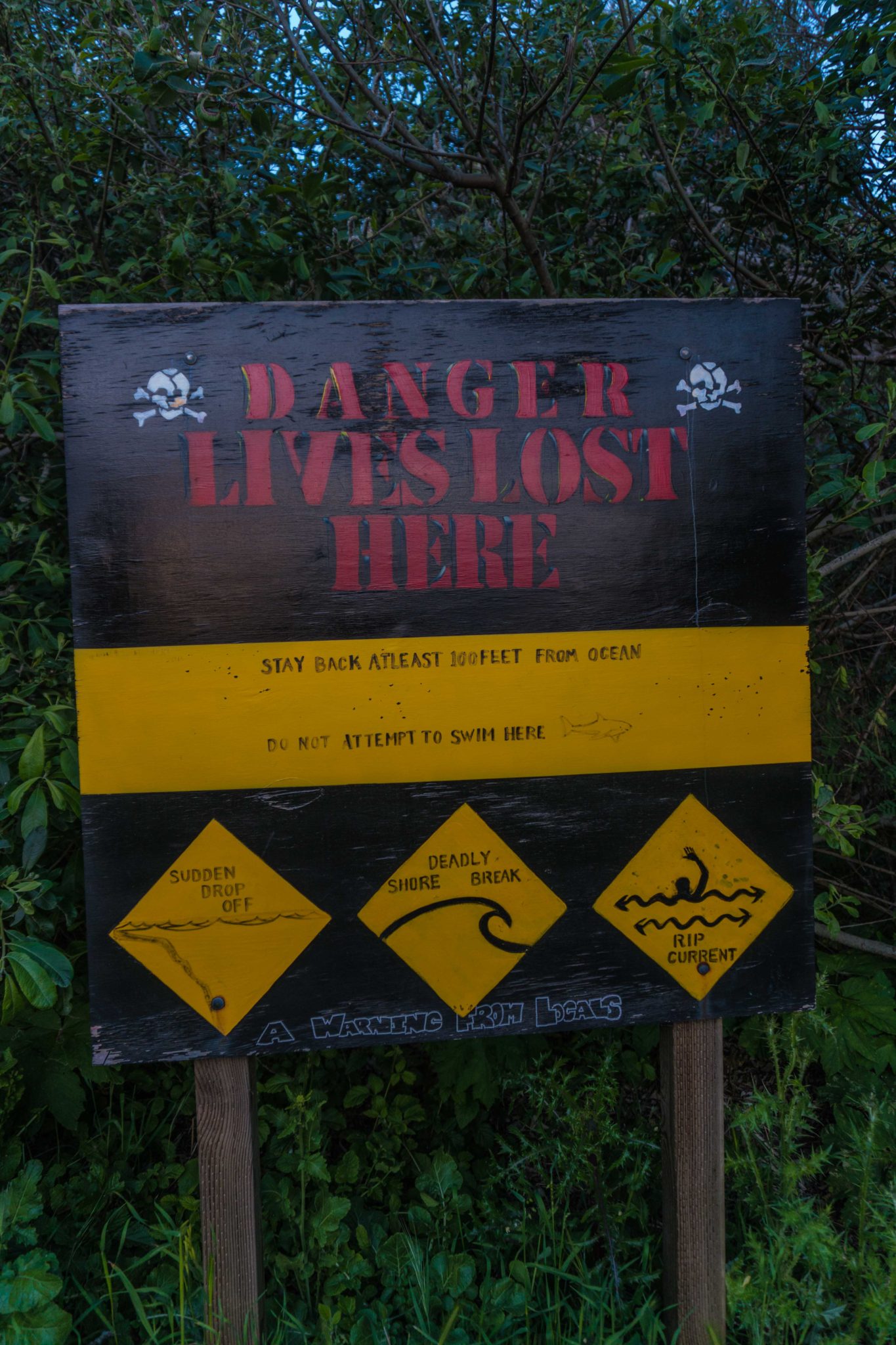
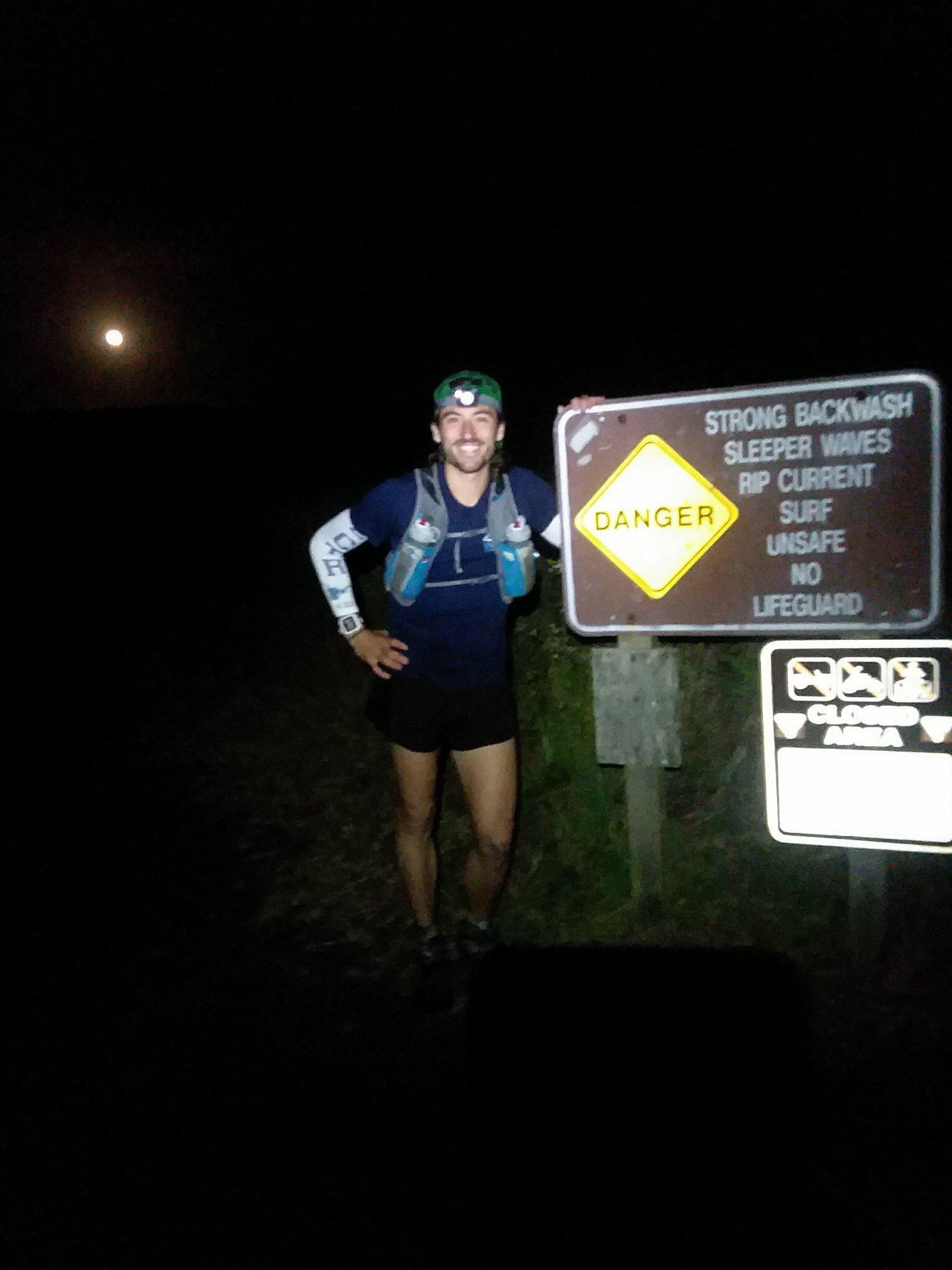
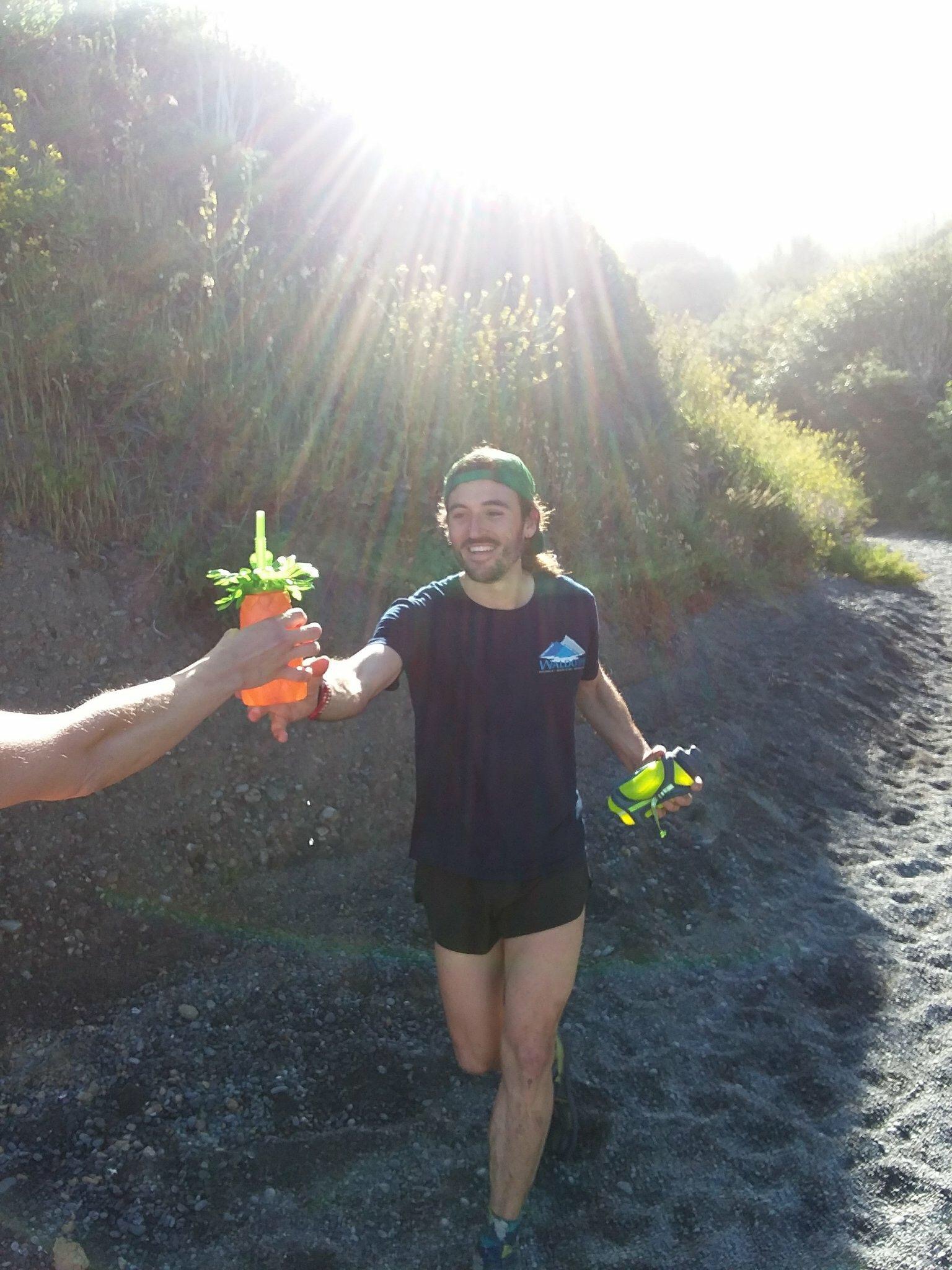
Two naked women came sprinting across the sand towards me. They were clad in nothing but American flag hats, dollar store sunglasses, mardi gras beads, and one, a giant fur coat flowing in the wind. Dana handed me a plastic pineapple filled with hydration mix. I sipped out of the frilly green bendy straw and stripped the pack off my sweaty back. Jordan tossed me a fresh handheld bottle as I looked up at a weathered plywood sign locals had posted where beach meets road: “DANGER -LIVES LOST HERE.” Arriving at the painted skull and crossbones meant that I had safely made it through the first 25 miles of this journey. 

Jordan and Dana were total strangers less than a month ago, and now thanks to a series of serendipitous events unique to the ultra community, they were my crew and fully committed to my physical and psychological well being. We chatted briefly about their lack of clothes and how sore I was from running on sand for the rough equivalent of a marathon. Then as quickly as they appeared, the girls left me to run away into the ocean. I exited the beach and began a 2,000-foot road climb from sea to summit. I had to move quickly if I wanted to best ultrarunner Dylan Bowman’s fastest known time on northern California’s Lost Coast Trail.

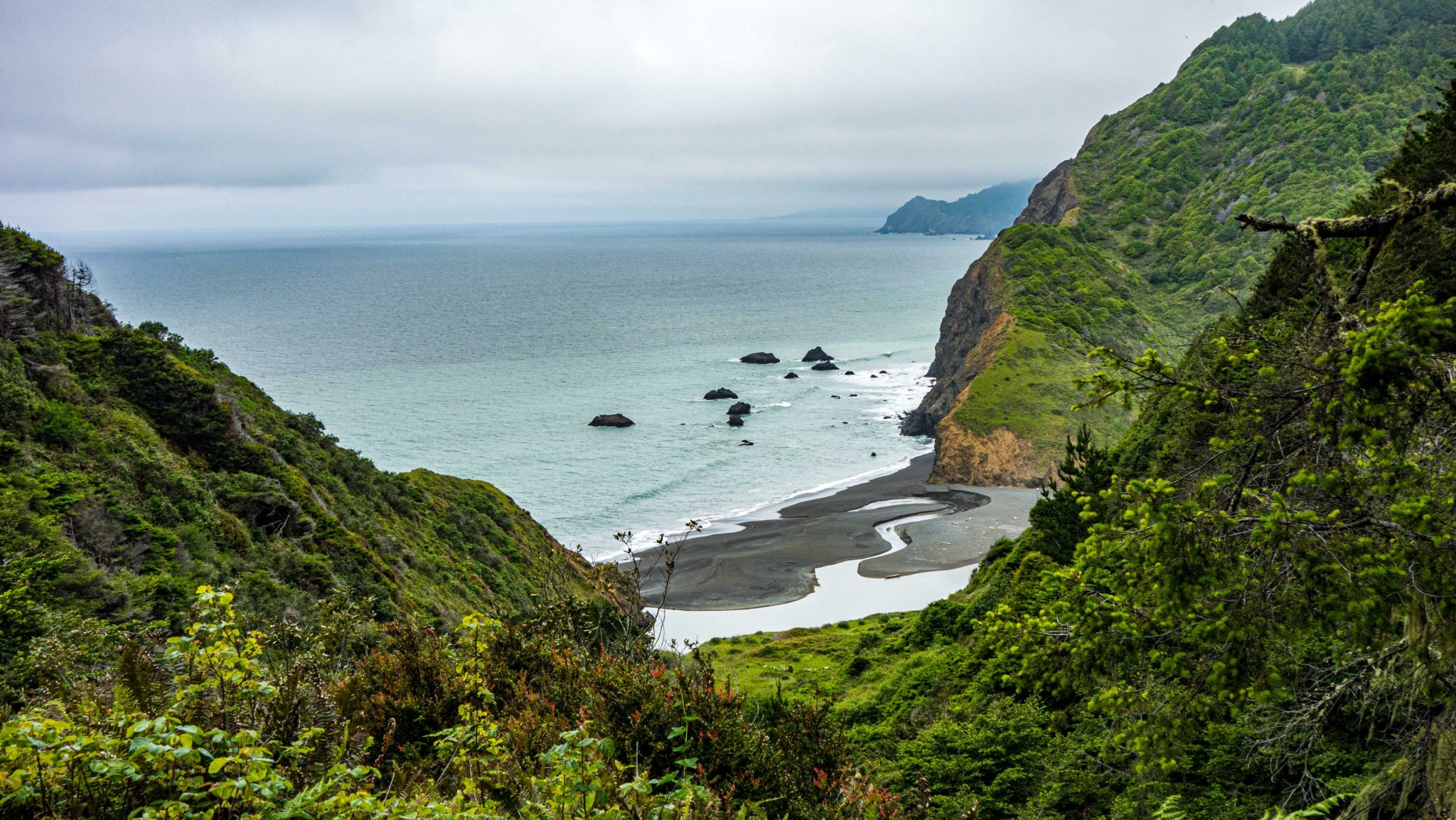
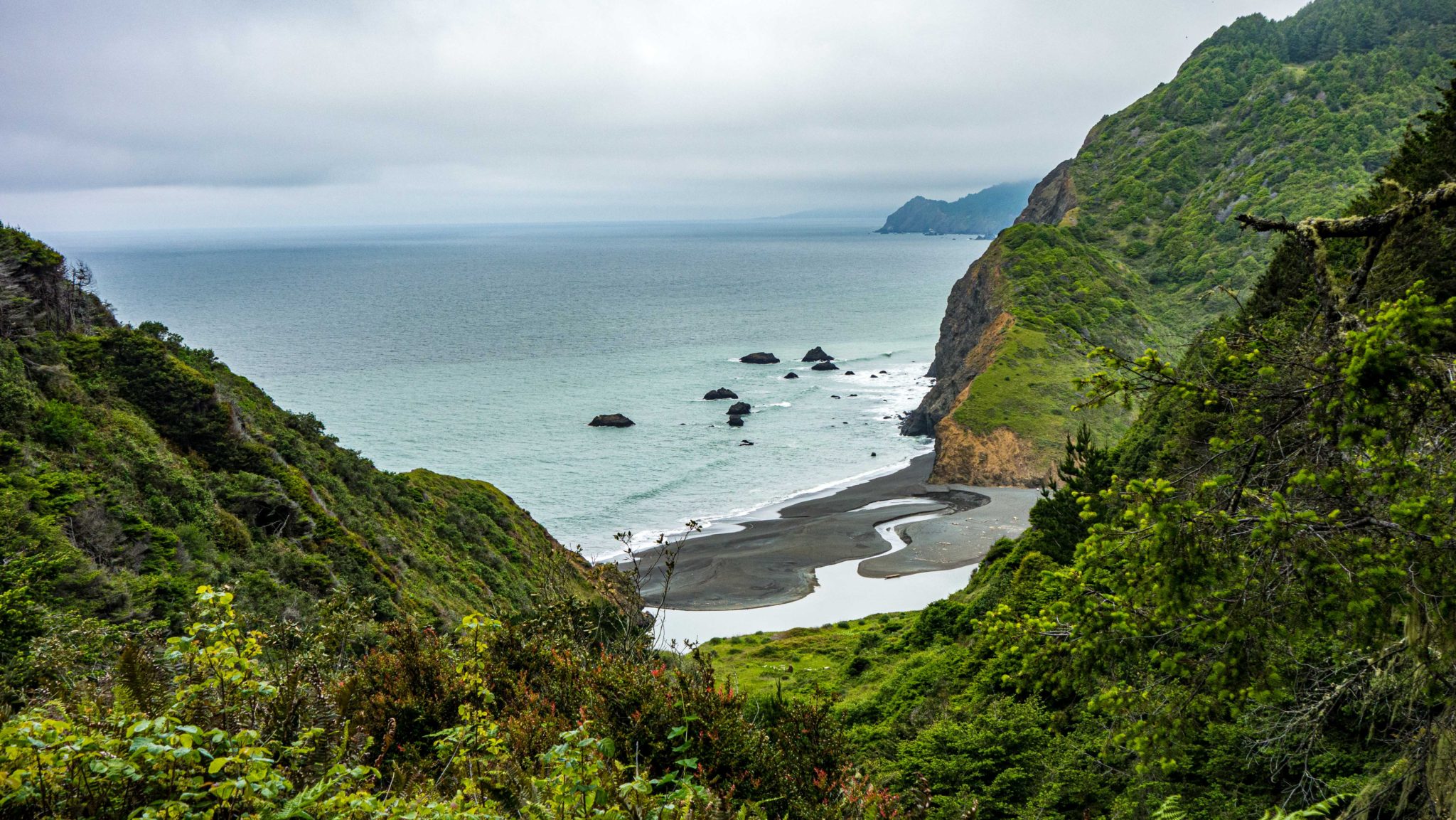
Four and a half hours earlier, we had stood at Mattole Beach on the periphery of a vast coastal wilderness. Jordan snapped a photo of me and I gave her a nervous high-five. A shiver coursed through my body as I turned and started running into the pre-dawn darkness. Miles ticked off as I slipped silently past sleeping seals, sea lions, and unsuspecting slumbering campers. To my left, sea-spray coated cliffs vaulted out of the sand. Above them, the King Range rose thousands of feet into the star-studded night sky. To my right, the Pacific Ocean crashed onto the rocky shore, jostling pebbles, a musical pattering. I ran on a narrow strip of earth between sea and summit. 

After an hour of running, I clicked off my headlamp to watch the pinkening sky bring the severity of the mountains before me into focus. I gazed down the peak-lined coast. I had traveled perhaps seven miles and was about to enter the first of two four-mile impassible zones, where the high tide consumes the Lost Coast Trail twice a day. Ahead of me lay 18 more miles of beach and rock running, followed by 32 miles (and over 10,000 feet of climbing) in the mountains. I settled in for 50 more unforgiving miles on Northern California’s fabled Lost Coast. As footstep after footstep sank into damp sand, I mused over how I had come to find myself in this situation.

For nearly seven months, I had been living an hour and a half south of Usal Beach, the southern end of the Lost Coast, in the small coastal town of Fort Bragg. From Usal, another four and a half hours of nausea-inducing driving would take a determined traveler to Mattole Beach, the northern terminus of the Lost Coast Trail. The 57-miles in between these two beaches proved to be too gnarled for the ambitious builders of California’s famous coastal highway. These miles were “lost,” and with the absence of a road, the Lost Coast was born. 

Throughout the winter, I was working for the state as a seasonal fisheries technician, probing coastal streams and rivers to collect data on the endangered salmon returning to spawn. Twice, my coworkers and I had to abandon plans to backpack the northern part of the Lost Coast due to weather on the notoriously stormy coastline. But the Lost Coast remained just north, a wild adventure nagging in the back of my mind. 

Out of the blue in early April, my supervisor texted me a video of Dylan Bowman running the complete Lost Coast Trail (both the southern and northern sections), setting a new fastest known time (FKT) on the route. I stared at my phone and wondered if I might be able to best Dylan’s time of 11 hours and 12 minutes. Waves of self-doubt and excuses came over me. Any hard effort would be physically draining and mentally brutal, not to mention logistically baffling. The reasons why I was destined to fail began to pile up. I quickly shook these insecurities before they could settle, and instead stoked a fire inside myself. I looked at my phone again and began typing without thinking. “Is this a challenge? Because I am SO down.” And that is how I ended up, a month and a half later, shivering in the dark at the Mattole Beach trailhead at 4:30 in the morning.

The next time I saw Jordan and Dana, they had their clothes on, and I had taken mine off. The sun had blasted me on the 2,000-foot road climb out of Shelter Cove. I quickly shed my shirt as the temperature rose in sync with the topography. I had left the bluff-lined beach below and just finished the first major climb of the 32 rugged King Range miles to come. Jordan and Dana, now sporting butterfly wings and other dollar store accessories, helped me as I prepared to enter the labyrinthine trail that stretched south to Usal. This was my final pit stop before entering the southern wilderness. It was also a chance to once again drink water from a plastic pineapple. 

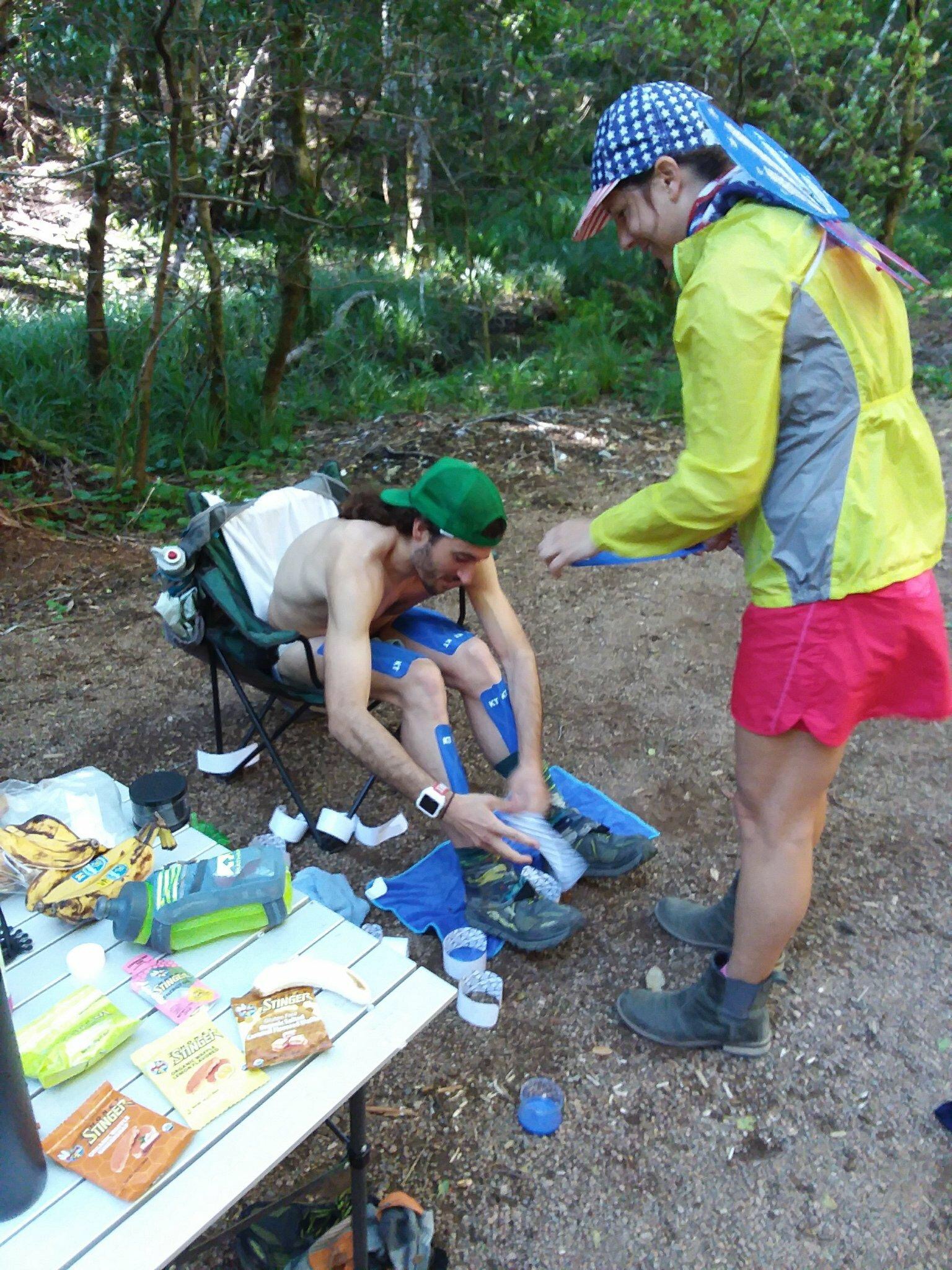
A scouting run I had done a few weeks earlier revealed that much of the next marathon would be heinously overgrown with stinging nettle, thistle, poison oak, and blackberries, commingled into thickets of doom intent on ripping anyone who dared pass to shreds. As a Hail Mary precaution, I covered my legs in strips of KT Tape, praying they would form some kind of barrier against the angry vegetation. 

A few miles later, hands on my knees, sweat dripping into my eyes, I grunted up yet another steep climb.  In the absence of my exuberant crew, my tired mind settled on appreciation. I circled back to the fact that my crew had been nude a few hours before and insisted on giving me water only through a now-beloved plastic pineapple. Not to mention, they had driven over a dozen hours to help me spend a day throwing myself against one of the gnarliest chunks of coastline in the country. 

Forty miles in, 17 miles to go, on this sinuous redwood coast. I crested the top of a ridge and gleefully let my legs spin as I descended a rooty trail winding through a grove of towering conifers. Running out of the woods, I navigated a steep, grassy hillside that plummeted into the ocean hundreds of feet below. The hip high grass was punctuated with tunnels of bushes and trees. I ducked, dodged, and fell to the ground for the fifth time in minutes. So much had gone into this attempt, and here I was falling on the ground and crawling on my knees. The trail was in such rough shape that I had no control over my pace, which had slowed to a literal crawl as I neared mile 57.

I was beaten, I was exhausted, and I was ready to be done. Even so, there I was moving my blistered feet and shredded legs. My mind floated to all of the things I had seen that day. I had run through the middle of a herd of 30 elk (in hindsight, not recommended) and listened to elephant seals barking in the dark. As the trail conditions eroded, my love for this place grew. Despite the adversity, I was enraptured by the most beautiful and diverse route I had ever traversed. 

Rolling into the Usal trailhead exhausted and thrilled, I glanced at my watch. I had managed to travel the 57-mile Lost Coast Trail in a new fastest known time of 10 hours and 10 minutes, over an hour under the old record. 

Traveling the Lost Coast Trail in a day gave me a brief yet powerful glimpse at a truly remote and wild land tucked within the most populated state in the nation. For an FKT attempt like this, there was no fanfare or hoopla. Instead, there was just a text message from a supervisor and three people that did not know what they were getting themselves into. As Jordan and Dana handed me a comical “certificate of achievement” complete with sequins and glitter, I realized what the ultrarunning community can do when it comes together to support one another. Armed with nothing but a plastic pineapple, and perhaps clad in nothing, strangers can help new friends chase dreams.

Jeff Mogavero is a runner, writer, wildlife biologist who’s running and ramblings bring levity, insight, and passion to our community. Read his full FKT report and other writings at https://www.jeffmogavero.com/

Categories
Blog courses Destinations Highlights LCT Lost Coast Trail Stage Runner Resources Stage trip report Trip Reports and Trip Styles Trip Styles

Finding Magic on the Lost Coast

I saw a unicorn in Humboldt County, CA. It was grazing in a field right next to a pair of zebras. I wasn’t high, nor am I superstitious, but this was clearly an omen of the magic awaiting us.


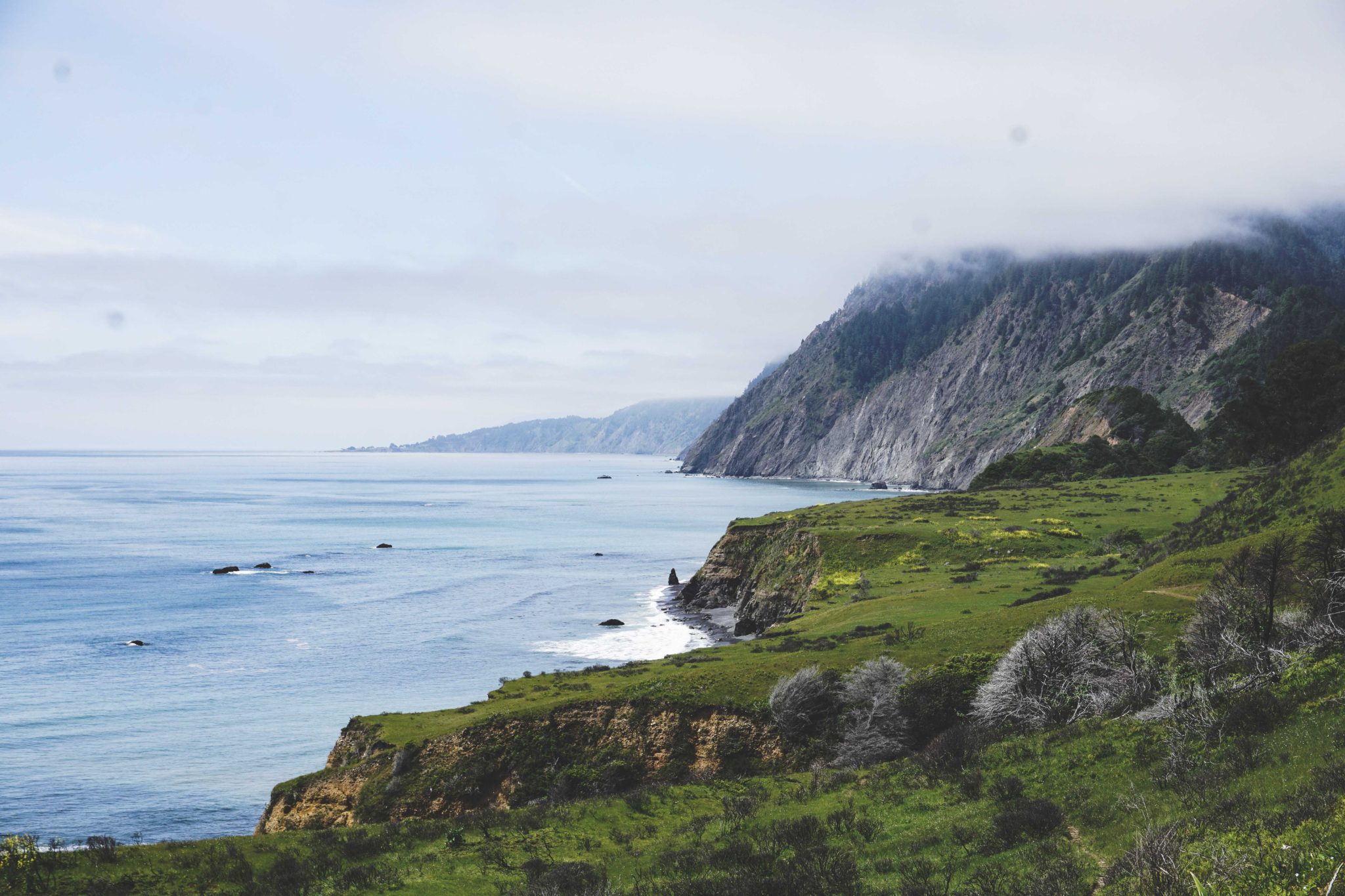
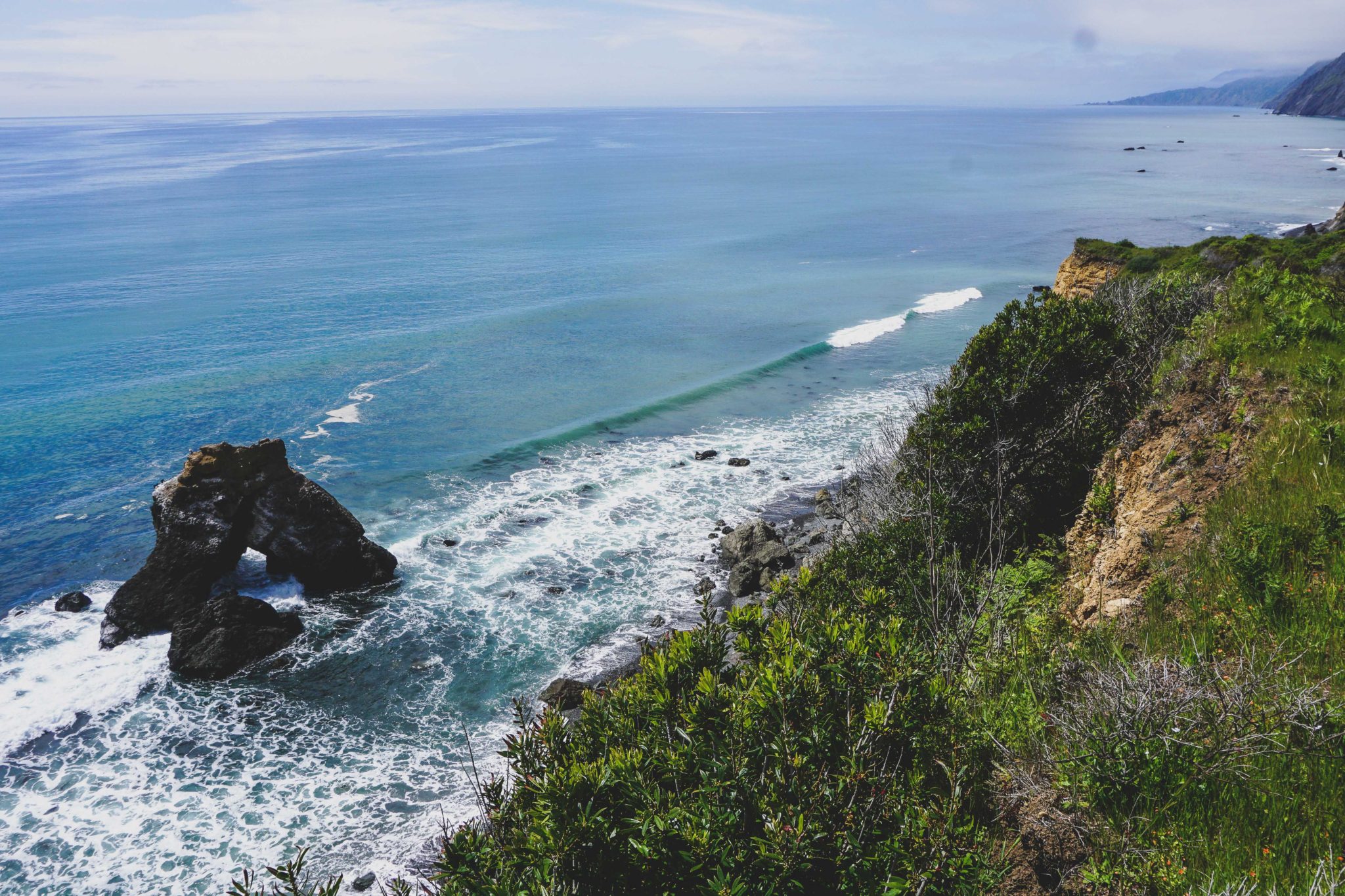
The Lost Coast Trail is a 60 mile point-to-point trail along California’s remotest stretch of coastline. This trail wouldn’t exist except for the steep mountains and geotechnical issues that prevented State Route 1, the Pacific Coast Highway, from paving this pristine seaboard. Instead, the road goes around these coastal mountains and in its place the world has a sanctuary of beaches, headlands, redwood forests, and one remarkable trail.

The trail isn’t obscure. Its reputation among backpackers places it as one of the most iconic footpaths in North America. Viewing the trail as a running objective means all the scenery without any of the pack weight. Doing it in this style also requires support. With Aspire as crew and moving gear between camps and cooking up gourmet meals, you’re guaranteed a good time.  

Day 1: Meet in Fortuna and drive to the Mattole River

Three hundred miles north of San Francisco lies the quaint, but relatively unremarkable, town of Fortuna. It’s the launching point for the trip.  As the crow flies it’s only about four miles to the coast, but its a two-hour drive along winding roads to the trailhead. It’s along this road that we saw the unicorn.

Rolling into camp after the long day of travel, runners head out across the beach in search of a good view of the surf and a place to pitch a tent for the night. As the sun dips towards the horizon, the Aspire crew shows up on the beach with plates of appetizers and cold drinks, a precursor of the nights meal and a pattern to be repeated for the remainder of the trip. 

Trail running on the lost coast

Day 2: Mattole River to Shelter Cove (24 miles, elevation gain: 1,000’)

The day begins with heaping plates of french toast, yogurt, various nut butters and fresh berries, drizzled or doused in maple syrup. It’s an early start and a carefully timed departure to catch the appropriate tide. 

Trail running on the lost coast

For many miles the Lost Coast is literally a beach trek. In some sections the beach is swallowed by the incoming tide, making safe passage impossible. Knowing the particular times and heights of the local tidal rhythms is essential. Aspire has all of this info dialed, right down to the date of the trip to catch the best possible window to make 3 tide-dependent crossings possible in a single 24 mile day. 

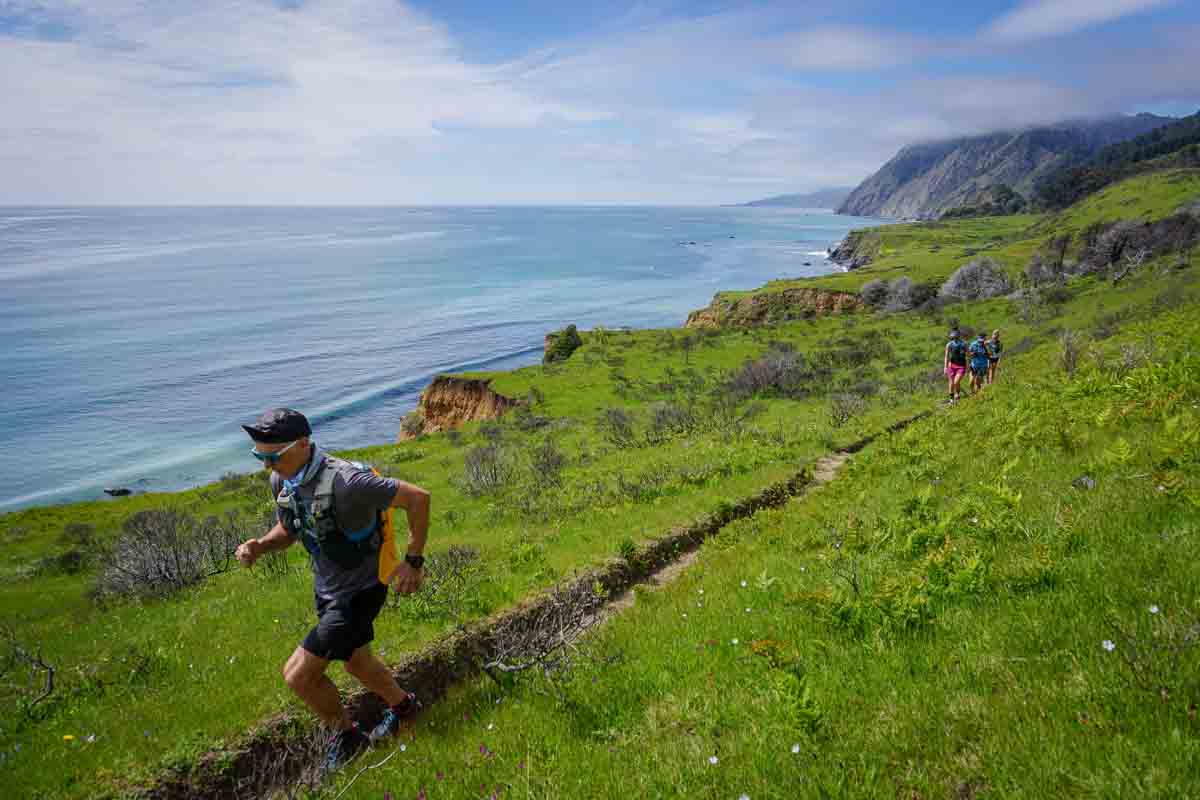
The terrain is a mixture of sandy beach, basketball sized cobbles, single-track trail, creek crossings, and rocky tidal flats. It’s not race pace, but the effort is real. Eight to ten hours on the beach takes its toll, but the rewards are incredible. Along the way runners encounter abandoned lighthouses, intertidal creatures, herds of sea lions, and spot whales on the horizon. 

Sea lions while trail running the lost coast

The day finishes at Shelter Cove and Aspire shuttles runners to a nearby campsite with a waiting dinner of homemade spaghetti (meatball or vegetarian), topped with fresh basil and parmesan. No one goes hungry.

Trail running camp on the lost coast

Day 3: Shelter Cover to Needle Rock (10-20 miles, elevation gain:1,500’ to 3,500’)

On day two, runners have a choice: a 10-mile direct route into the next camp, or a 20-mile route.  These ten bonus miles are along runnable single-track, connecting the red dirt trail and oak forests of the King Range’s crest with the Lost Coast Trail. There is no pressure to go either way, it’s up to each runner to choose the adventure that best suits their goals and ambitions.   

Trail running on the Lost Coast, California

Both options converge after runners drop out of the mountains and land on a rolling plateau of single-track. Here the forested trails open up to the vast expanse of the Pacific Ocean. The trail winds through Eucalyptus groves, pocket beaches, and rolling terrain that would be perfect for running if the views weren’t so spectacular that slowing to take it all in seems inevitable. 

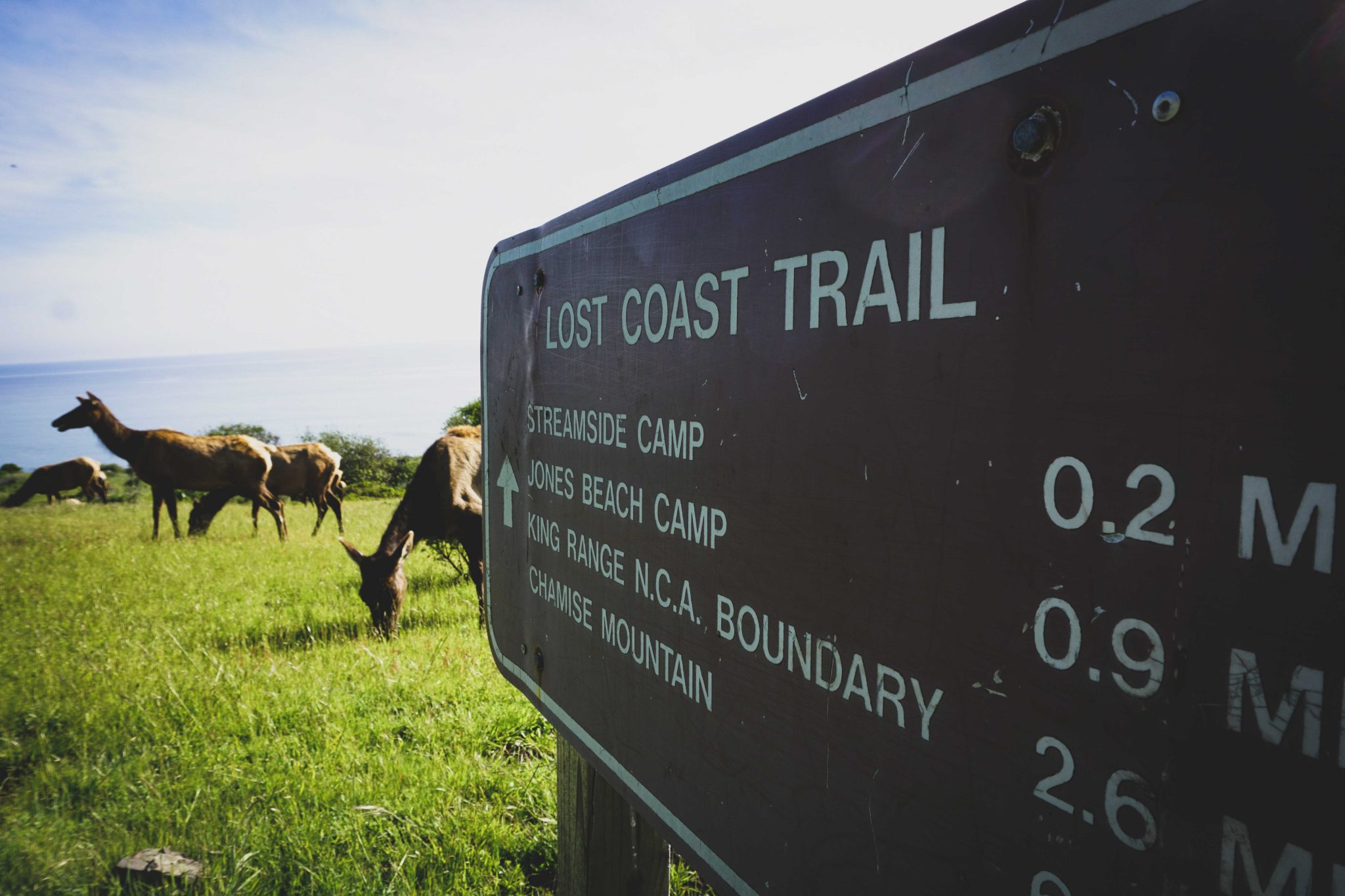
Right in the middle of this pristine landscape is the Needle Rock Camp. Home to only a handful of campsites, perched on a sweeping ocean overlook at the end of a steep windy road, it’s arguably one of the best campsites on the planet. The site is cared for by a cadre of hosts who take turns staffing the small visitor center. Full to the brim with whale bones, sea shells, historical photos, and knick-knacks, the center is an epicenter of local information. A few moments on the weathered redwood porch can easily turn to hours as the history of the place is unfolded by loving caretakers. 

Trail running on the Lost Coast, California

Basecamp for the night is staged out of the “barn camp”. The shower tent is set up looking westward towards the horizon and a resident herd of Elk are the backdrop to the evening’s dinner, libations, bonfire, and dutch oven apple crisp. 

Day 4: Needle Rock to Usal Beach (20 miles, elevation gain: 6,300’)

Waking up to the sound of waves rhythmically crashing into the shore is consoleing as sore legs prepare for the third day of running.  Day three is 20 miles and has the most climbing of them all. The southern part of the Lost Coast receives less maintenance, making it brushy and remote feeling. The trail is all single-track as it climbs headlands and winds in and out of creek drainages. Pockets of Redwood trees, the Jurassic quality of the coastal underbrush, and the mystery of what lies ahead all add to the adventure quality of the day.  

Trail running on the Lost Coast, California

The last miles of trail drop from a final coastal overlook and wind down to the Usal River. Like clockwork, the Aspire crew has a basecamp waiting and all the fixings for dinner and celebration ready. Runners inevitably report fighting the intrusion of thoughts about what’s waiting at home and embrace living in the moment for the last night. This is easier to do when a pair of elk wander through camp, and  spend the night grazing in the grassy delta, just a hundred yards away.   

camp shower while trail running on the Lost Coast in California

Day 5: Usal Beach Breakfast and drive back to Fortuna

It’s a trek back to civilization. Miles of steep and winding dirt road easily take an hour of careful driving to reach pavement. From there it’s still hours back to Fortuna. The van is filled with laughter and stories of the trail. The strangers of a few days ago are now friends born of sweat, dirt, and trail. Eventually conversations circle back around to the unicorn. Even though it was actually a white horse with a manufactured horn protruding from its bridle, it, like all the miles and moments in-between, were absolutely magical. 

Categories
Blog courses Destinations Highlights on the fence Runner Resources Stage trip report Trip Reports and Trip Styles Trip Styles WL Wonderland Circumnavigation Stage

Running the Distance: A Wonderland Trip Report

Christy Mahon is a mountaineer and environmental activist who joined Aspire for our Wonderland Circumnavigation in 2019. This blog was original posted on Stio.com. Words by Christy Mahon. Photos by Ted Mahon.

As we were organizing our running packs for the day, Abram unfolded a map and laid it out on the table. “It’s about 28 miles and 9,000 feet of climbing,” he said. “It’s actually the short day of the loop.”

That got a chuckle out of us. We were about to start our second day of a three-day trail running adventure circumnavigating Mount Rainier on the 93-mile Wonderland Trail.

Considering it would take us about nine hours to complete this section, we thought it seemed anything but short. But if your goal is to tackle this trail in three days, even the shortest leg of the trip is going to be pretty long.

There are certain adventures in life that grab your attention and don’t let go. For me, running the Wonderland Trail was one of those adventures. 

After years spent toeing the line at dozens of trail running ultra races, including five 100 milers, I’ve recently found myself yearning for something a little different. Something without the structure of a race, but one that would still push my body and mind, and still include the long distances that I love. Something that offered the restorative and healing effects of being in the wild and the mountains, and help me escape from the everyday stresses of work and life.

Mount Rainier has always been a special mountain for me. I’ve been fortunate to have climbed and skied it several times through the years. When I first heard of trail running the Wonderland Trail, it was one of those adventures that I just had to add to my list.

Built in 1913, the Wonderland Trail offers 22,000 vertical feet of cruisy trail running around one of our country’s prominent national park treasures. The nearly 100-mile trail lives up to its name with majestic landmarks colorfully identified as Devil’s Dream, Emerald Ridge, Golden Lakes and Summerland. The vast alpine terrain is filled with bears and blueberries and high alpine lakes just off the trail that beg for a quick dip as you go.

The idea of breaking up a beautiful long course over multiple days seemed so appealing. But running for several consecutive days around a mountain as big as Mount Rainier presented some logistical challenges.

Which is where Abram came in. With the mission of helping runners “reach their own personal aspirations,” Abram Dickerson and Aspire Adventure Running organize trail running adventures through the Northwest, from the Cascades to Northern California. From single-day adventures to multiday efforts such as the Wonderland and Lost Coast trails, Abram and his team assist with meals, camping, transportation and other logistics.

So with Aspire’s support we set out on this new adventure. For three days we spent nearly every daylight hour running up and down through countless glacial drainages. We ran through lush green tunnels in the lower “forest-bathing” zones, across huge glacial creek beds, and over high ridge crests and moraines with expansive views of one of the largest mountains in the country.

Heading into the adventure, I wasn’t sure how my body would react to repeated days of 28-34 miles or how this new way of traveling would go, but like in life, with a little preparation anything becomes possible.

As I closed the loop around Mount Rainier on day three, I felt as if I had opened a new door to a different type of adventure. I had realized a new goal: to experience and challenge myself on the world’s most legendary trails and traverses, not against others in a race setting, but rather just for myself.

It was a good reminder that when you don’t know what comes next, just keep moving forward and often the adventure will find you. Taking that first step can be a leap of faith, but once you do and you start down that new path you might be surprised where it takes you.

Categories
Aspire Culture Campaigns courses Culture Destinations Highlights on the fence Runner Resources Stage trip report Trip Reports and Trip Styles Trip Styles What to Expect on Trips WL Women's Adventure Scholarship Women's Adventure Scholarship Blogs Wonderland Circumnavigation Stage

Confronting Fear on the Wonderland Trail

Janel Lanphere was one of three recipients of our 2019 Women’s Adventure Scholarship. We were inspired by her essay about the power of adventure to accept her internal wild and remote spaces. We caught up with her this fall, after she ran the Wonderland Trail with us.

What do you do when something scares you?  Avoid it or confront it? What about those events that look amazing, but you don’t have the confidence?  Do you make a training plan and stick to it, like you know you should? Or do you put it off for when you have more time, or the kids are older, or when you have the money saved?  Well, none of these excuses worked for me. I won the 2019 Women’s Scholarship Award for the Wonderland Circumnavigation around Mt. Rainier in Washington State. I had to get on board, fast.

Wonderland trail stretches in front of Mt. Rainier
A rare flat section on the trail. Photo: Janel Lanphere

I learned that I won the Wonderland trip with only a few months before the mid-August trip, giving me  mere weeks of preparation time. It was a bit too close for comfort. The short story is that my training did prepare me well for the trip, but this discussion is about the mind.  The preparation I really needed was to start to believe in myself.

Piecing a big goal into smaller steps has always worked for me in the past, so I decided to try it here. Working on my training plan, I added two extreme days that were similar time commitments  to the expected days on the Wonderland trip.  

The Wonderland Trail doesn’t disappoint. Photo: Janel Lanphere

On my first extreme day I paced my friend Helen Galerakis in her first 100-mile race- The Bighorn 100.  Pacing her for around 20 miles wasn’t going to be enough of a time commitment, so I added a warm up/research run and a run to and from the last aid station. The cumulative running over the two days was eleven hours, which qualified as the most running I had ever done over that short time period.  My mindset was expanded on this run. Not only were the muddy conditions something to be endured, but pacing throughout the night and into the dawn was challenging, as well as beautiful. I was inspired by my friend’s grit and strength, and my body and mind handled it fine. I was feeling lighter and not as concerned about the Wonderland Trail.

For my second extreme day I registered for a 12 hr lap style race.  The Parhelic Circle Trail Race is hosted by local company Sundog Running.  I was a little concerned that this event was just two weeks before the Wonderland Trail trip, and would be my longest amount of time running.  It scared the crap out of me! In past long runs the pain started to set in around the 20-mile mark. The thought of continuing on for hours and hours after that seemed unfathomable.  In the end, I made it to 36 miles- which not only was the farthest I had run in a single day, but it also matched the longest distance (day 1) on the Wonderland Trip.  

In my essay submission to the Women’s Scholarship I wrote about conquering my inner demons from childhood abuse.  In last year’s Trail Marathon Championship race, I had no reason to be confident as I hadn’t been able to eat/drink due to nausea and in spite of that I was able to quiet those demons for the first time.  Accepting the situation and taking the Championship race one mile at a time allowed me to solve the nausea problem and get back in the race to finish as Master’s Women’s Champion. In the 12-hour Parhelic I dissected the race one lap at a time. This allowed me to put energy into the task at hand, instead of succumbing to anxiety and fear. I could feel a shift. I was starting to believe in myself and I wanted to do more.

trail runners after a long day on the Wonderland Trail
Sarah and Paula sharing the last piece of pie. Photo: Janel Lanphere

The night before the start of the Women’s Wonderland Trip we shared some of our stories and experiences that led us here.  The apprehensive tension was in the air but instead of hierarchical competitive energy focusing on things like who was the best among us, who had the most experience or fastest time, a sense of community was developing.  In the company of women I didn’t hear these intimidating questions. Each of us entering an unspoken pact to take care of one another and make our way together, each at their own pace. Looking back on it now, it makes me think of the lyrics:

I see you over there, on the internet. Comparing all the girls who are killing it.

Taylor Swift, “You Need to Calm Down”

 While training for this trip I spoke with several people. Some men who had taken on big goals and found their way to making it happen.  Those conversations focused on developing strength, finding my edge and taking chances. When I spoke to my female ultra-running friends the conversation was again, different.  The conversations focused around what was I going to find out about myself during the event and how this experience was going to change me. All of these points of view were helping me change the inner dialogue from one of fear from this unknown territory to preparing a space for something else. 

two trail runners crossing a bridge in Mt. Rainier National Park
Sarah and Paula happy to be getting started on day 1. Photo: Janel Lanphere

Ready or not, it was time to put one foot in front of the other.  Starting out with nervous energy, I had the good fortune of having a similar overall pace to Sarah and Paula-two inspiring women I got to know well over the trip.  We leap frogged many times over the miles, each having our strengths and accepting each other’s decisions to push or hold back the pace based on the terrain at hand.   Day one ended with a mind melting climb up to Mowich Lake Campground. I struggled hard. Having only taken one pole with me (with the inaccurate idea that one pole is really all you need) I was losing the battle.  Paula kindly lent me one of her poles as I was ascending at a much slower pace than she was. It was my turn to accept the community Paula, Sarah and I had developed over the miles on the trail.  

a waterfall amidst glowing green moss
A beautiful creek on the Wonderland Trail. Photo: Janel Lanphere

Day two went off without a hitch. Paula, Sarah and I again ran together.  It was a beautiful run in such amazing country with great company. For day three Paula, Sarah and I discussed our plans: Paula planned to push to do the entire distance. I planned to stop early at Box Canyon and Sarah was going to see how she felt.  Even though we had differing plans, we decided to start the day together. Within the first few miles I caught my last glimpse of Paula and Sarah and never met up with them again. This made for a day alone on the trail, and although my familiar mental demons stayed away, new anxiety came in its place.  

a trail runner selfie
Day three on the Wonderland Trail. Photo: Janel Lanphere

One of the challenges for me on this trip was the point to point nature of circumnavigating a mountain. While Aspire provided maps and route information, and the Wonderland Trail was marked at junctions,  I struggled more than I expected with the lack of trail markings and flags. As my mental control was declining on day three after hours of being alone in unfamiliar country, I had a long low point.  Fear of bears and cougars set in and took hold. As I neared the end of the day my mind starting playing tricks on me, but then I saw a pencil on the ground and my heart leaped at the idea that someone else was up ahead!  Seconds later I discovered it wasn’t a pencil after all, just a stick. It happened again with a rock- it looked like a pack. But it wasn’t, I was hallucinating objects of civilization just to calm my anxiety of being alone. 

Even though there was a trail sweeper behind me (likely hours back), I had completely forgotten about them. I sure was happy to find myself in Box Canyon at my chosen end to day three and to see the Aspire Adventure Running crew waiting. I sat down, started to eat and immediately felt myself falling asleep. I was more fatigued than I realized.  I was so happy with what I had accomplished and at peace with my decision to stop a few miles early.

the clouds fill valleys in Mt. Rainier National Park
Above the clouds. Photo: Janel Lanphere

Grit, intelligence and community are just a few of the qualities of the women I met on this amazing trip.  The qualities of people who work their way up, take on big challenges and find a way to make them happen. They speak up or provide care for the greater good. These are my people.  It was an honor and a privilege to share in the collective shift in consciousness as each of us moved into a space unknown, redefining how we think about running and really how we think about ourselves.

Join Aspire Adventure Running in 2020 for a circumnavigation of Mt. Rainier. Dates, pricing and more information can be found on the course page.

Categories
Blog courses Destinations Highlights Runner Resources Stage trip report Trip Reports and Trip Styles Trip Styles YOSE Yosemite Backcountry Stage

Trail running in Yosemite National Park

The four day Yosemite Backcountry trip is an incredible addition to the Aspire calendar. It’s hard to put into words the immediacy and immensity of this place. I really wanted to give anyone interested in the trip a better sense of the flow and what to expect, so I’ve written this post with my inherent biases, interspersing my own experience and presumed the perspective of someone showing up for the trip. Enjoy!

Day 1: Intros

Pleasantries were lubricated by drinks pulled from the ever-present, ever-cold cooler and the plates of appetizers really hit the spot after the long drive to the park. It’s simultaneously impressive and obvious why a dozen runners from Ohio, California, Pennsylvania, New Jersey and Washington states all converged on this campground with the same purpose: 100 miles of backcountry trails in one of the most iconic landscapes on the planet.

Tamarack Flats is one of the quietest campgrounds in all of Yosemite. 52 sites, no RV’s, no local store, and it’s well away from the hoards of people crammed into the valley floor. This little piece of the park would be home for the next five days. Rolling into camp, a few things were immediately obvious. There was a ton of firewood. There’s a lot of food packed into those beefy bear-proof coolers. That big tent would keep us us dry and cozy if the weather turns. And everyone here was speaking the same running language. 

The Aspire crew facilitated introductions, gave some valuable background on the park, and then dove deep on the details of the routes, safety plan, logistics, and flow of the trip. In essence, each day we would get shuttled to a different trail. Everyone would run at their own pace, and our guides/crew would consist of a “Sweep” who would always run behind the group at whatever pace and a “Super” who started their run at the “finish.” It was expected that runners would spread out and there was no expectation that we traveled together.

Dinner: Grilled Chicken or Tempeh, Rice Pilaf, Green Salad and Cheesecake. 

Day 2: Porcupine Creek to Tamarack Flat  22 Miles, Elevation Gain: 3,500′ Loss: 5,200′

Breakfast: Heaping plates of French Toast, homemade jams, yogurt, fresh fruit, and nut butters.

Waking up in the woods to a day of running sure beats the alarm cry for the office. The energy among the group at breakfast was palpable. Between bites of french toast there are the last clarifying route, gear, and preparation questions and suddenly it’s 8:00 and we’re piling into the shuttle van. 

a group of happy runners in front of a trial sign.

After a short drive to the trailhead and the obligatory group photo, we’re off. No ready–set–go, no pistol firing, no race clocks, just running.  It’s three miles of gritty single track to the first real views of the trip. The conifer forest of Lodgepole Pines and Red Firs fell away as the dirt trail turned to granite dome. Cresting a small rise, the valley appeared. Half Dome loomed large on the horizon with a deep chasm separating the south end of the valley where we stood, and layers upon layers of views. Granite cliffs, waterfalls, alpine peaks and winding rivers create a full frontal assault to the visual cortex. 

This was just the beginning. Our trail turned west, following the north rim of the Valley. Before the day was over we’d visit Yosemite Point, filter water from Yosemite Creek before it plummeted 2,425 feet to the valley floor, and stand on the summit of El Capitan. If all of that wasn’t enough, we finished the run with a swim in Cascade Creek, just two miles short of our finish at Tamarack Flat Campground where dinner was waiting.  

Dinner: Spaghetti with homemade meat or vegetarian sauce, Green Salad, Chocolate dipped Strawberries

Day 3: Ten Lakes Basin, 21 Miles, Elevation Gain:  +6,000′ Loss: -5,200′

Waking up the second day the edge of newness was gone. The uncertainty of “What am I getting into” was replaced with confidence and eagerness for more views. 

Breakfast: Breakfast Burritos w/ eggs, hash browns, bacon, avocado, salsa, and fresh fruit. 

The shuttle ride from camp to the May Lake trailhead was great for digestion. Clear skies and smiles on our faces were the norm. Our trip through the Ten Lakes Basin was marked by a lingering snowpack that required attention to navigate, but provided a landscape devoid of any other travelers. We kept the group tighter, route finding together and chatting as the miles unfolded.

Our route took us around Tuolumne Peak and deep into the South Fork of Cathedral Creek Canyon. By mid-day we were scanning the long blue horizon with lines of receding peaks in the background and a foreground full of deep granite valleys. 

It’s easy to feel small and vulnerable wearing only a vest in this wild remote place. The three big climbs of the day challenged our legs, but as we reached every high pass, dropped into a new river valley, or stumbled upon an alpine lake, the hard work was absorbed by the beauty of the scenery.   

Dinner: Burger Night! Meat or Vegetarian. Corn on the Cob, home fries, and Dutch oven Apple Crisp. 

Day 4: Pohono Trail, 18 Miles, Elevation Gain +2,000’ Loss: -4,500’

In 2019 the Sierra’s experienced a record snowpack. Heavy winter accumulation and late season/spring storms left the high country blanketed in snow well into July. This led to some variations in our original itinerary. Rather than a 30-mile day through the Grand Canyon of the Tuolumne River, our route would take us along the South Rim of the Yosemite Valley. While there were no complaints, it didn’t reflect the backcountry feel we were shooting for. Note: We’ve adjusted this day’s itinerary for 2020, check out the details on the Yosemite Backcountry Course Page. 

Breakfast: Pancakes, from regular or GF flours, Yogurt, Fruit,  Maple Syrup, and all the fixins with sides of Bacon or Veg Sausage

In 1903 John Muir spent 3 days camping with President Theodore Roosevelt atop Glacier Point. It’s the trip in which Muir convinced Roosevelt to protect and preserve Yosemite as a national treasure. It’s a cool spot, and the start of our 18-mile run along the South Rim of Yosemite Valley. Here the exposure of the valley is BIG. Taft Point sits 3,500’ above the valley floor and juts out of the rock face like a diving board. Stepping up to the edge, or a close as is reasonable, the reality of life, death, and gravity are all mashed into one clear line. 

From Taft, it was a net down runnable day on trail that felt fast and smooth after a day deep in the backcountry.  Since this was the short day of the trip, we capped off the afternoon with lunch spread out under a large oak tree on the bank of the Merced River while we lazily swam, ate, and drank with El Cap Looming over us.   

Dinner: Bratwursts (Meat or Vegetarian), baked beans, and coleslaw with Dutch Oven Brownies

Day 5: Tuolumne Meadows to Yosemite Valley, 21 Miles, Elevation Gain: +2,500 Loss: -6,500′

Waking up on the last day of the trip, time was all skewed. The rhythm of existing to run and explore felt normal. The body was sore, but the soul was full. The other runners are friends, a gypsy trail family brought together under a tent for a week of trails, laughter, and good food. It didn’t really seem possible that the real world was looming somewhere outside of this magical park. 

A man gazes over an alpine lake in the High Sierra

Breakfast: English Muffin and Egg, Ham, or Veggie patty, with greens, salsa, and heaps of Avocado washed down with Orange Juice. 

a man running down a rocky trail with a waterfall in the background.

This day was a classic. Tuolumne Meadows to Yosemite Valley. Here we followed the same path by which ancient alpine ice fields spewed forth from the Sierras and formed the deep glacial chasm of Yosemite. It’s a special run. Following the creeks and drainages of the high country, runners find themselves along the shores of the Merced River and the steep granite steps alongside Nevada and Vernal Falls. Reaching the falls puts the valley floor into view and a long sightline of granite faces glowed in the setting sun. 

Having reached the Valley, drinks, appetizers, and the abundant dinner fare that’s become a norm of the trip was waiting at a nearby picnic area. It was a celebratory scene as runners finished, then headed off to the nearby Curry Village for showers, gift shopping, and merged with the rest of the crowds who had been drawn into the Valley’s tight orbit. 

Finishing hardly seemed real. The juxtaposition of so much beauty in larger world paved over with progress and a simplicity of purpose contrasted with the responsibilities of an outside world. It’s a hard reconciliation and it’s precisely this disorientation of re-entry that marks the certainty of having been away from it all. What a fantastic feeling to have at the end of four of the most incredible days of living. 

Dinner: Tacos w/ Chorizo and Vegetarian fillings, Rice, Fresh Salsa, and bottomless Guacamole.

Sign up to run with Aspire in Yosemite National Park this summer. 

Categories
Blog courses Destinations Highlights on the fence Runner Resources Stage trip report Trip Reports and Trip Styles Trip Styles What to Expect on Trips WL Wonderland Circumnavigation Stage

Running the Wonderland Trail with Aspire Adventure Running

Mt. Rainer is an icon of the Pacific Northwest. A looming 14,410’ mass of rock and ice rising up from the sea in an immense display of majestic beauty. Less obvious is the thin ribbon of trail circling the mountain: the Wonderland. The trail hugs the mountain’s glaciated flanks, weaves through ancient forests, flows through flower-filled meadows, and climbs the many ridges cut by Rainier’s glaciers and rivers. Ninety-three miles long and rising and falling for 21,810’, this trail is easily on the shortlist of the world’s most inspiring footpaths.  

Mt. Rainier National Park and the Wonderland Trail has long been heralded as a backpacking destination and every year hundreds of pack-laden hikers spend close to 2 weeks in orbit around the mountain. This is by far the most popular approach, but increasingly the Wonderland trail has been exercising its own gravitational pull on the ultra running community.

Ryan Ghelfi of Ashland OR, currently holds the record for the Fastest Known Time (FKT) on the trail (2019), an 18 hour, 27 minute, and 42 second sprint.  This record amounts to an average pace of just over 12-minute miles for nearly 19 straight hours. This kind of time or for that matter, any single 93-mile push is remarkable and generally reserved for the elite and/or very determined runner.  However, between the extremes of the long slog and the relentless sprint there is the increasingly popular, reasonably accessible, and genuinely adventurous 3-day supported circumnavigation. 

The elevation profile for the Wonderland Trail is a jagged saw blade. A line cut by glaciers advancing and retreating over centuries and carving pattern of deep valleys divided by ridgelines on every aspect of the mountain. Atop each ridge an unobstructed mountain view awaits and in each valley lies a ribbon of river melting out from the icy flanks of the mountain. Between them are old growth forests, meadows of wildflowers, cascading creeks, and lots of switchbacks. 

Here’s what to expect when running the Wonderland trail with Aspire:

Day 1: Longmire to Mowich Lake (34 Miles, Elevation Gain/Loss +9,755/-7,600) 

This section of the Wonderland is the longest and most remote push between campgrounds. We favor attacking this section with fresh legs. It’s a humbling and tone-setting day that consists of 5 significant climbs and long sections of downhill.

Hallmarks of the day are: 

Man running with Mt. Rainier's Tahoma Glacier in the background
Views of the Tahoma Glacier
Mt. Rainier National Park's St. Andrews Lake
Swimming in St. Andrew’s Lake
Crossing the South Mowich River

A fast runner could cover the distance in 8 hours. 12 hours is very common. 14 hours is not unreasonable. The longest we’ve had a runner out there was 18.5 hours. It’s not a day to push super hard. Find an uphill pace that can be sustained, a downhill flow that won’t result in twisted ankles, and pause for pictures at every high point. 

Camp is at Mowich Lake. 2,300’ up from the South Mowich River, by far this is the remotest front country campground in the park. The Aspire tent, generally a glow in the evening light, is distinct from the small enclave of backpacker tents. A feast is waiting, a hot shower, and a well deserved rest after a long day.  

Day 2: Mowich Lake to White River (26 Miles, Elevation +5,871’ / -5,900’)

Waking up at Mowich Lake, one is immediately aware of their sore legs and the fact that this only one third of the way into the trip. The key is to eat a good breakfast, ignore the soreness, and to start moving. The body is wise and inevitably the aches felt in the first few miles of trail melt into the rhythm of movement and the beauty of the surroundings. 

On the day’s agenda is:

The Carbon River Suspension Bridge
dropping into Mystic Lake Valley
Lunch in the Mystic Lake valley
Skyscraper pass
Skyscraper Pass

Day two, we usually see runner come in between 6-10 hours. This is the short day of the trip. We celebrate in camp with a bonfire, burgers, and a dutch oven crisp. 

Day 3: White River to Longmire, 32 Miles, Elevation +6,800’/ -5,900’

If waking up on day 3 of a Wonderland the thought of with 31 miles still ahead doesn’t make you question your capacity/sanity, you are superhuman. The mere mortals among us can take comfort in the promise of at least hike/hobbling through some pretty spectacular views. This last day is the crux day, and it’s divided into two halves. The first 20 miles connects White River to Box Canyon. Arguably, this is the most scenic section of the entire Wonderland loop.

Summerland
Summerland
Panhandle Gap
Panhandle Gap
Indian Bar
Indian Bar
Cowlitz Divide
Cowlitz divide

At Box Canyon, the Wonderland Trail touches asphalt for the second time in 83 miles. Road access equals aid. Cold drinks, watermelon and replenishing salts accompany the motivational mojo to finish.  

The last 12 miles from Box Canyon back to Longmire are separated by one last climb, a few waterfalls, and more encounters with humans than every other mile of the trail combined. The trail doesn’t lack in beauty, but compared to what’s been accomplished and the relatively few miles remaining, the mission is to finish.

Reflection Lakes
Reflection lakes

The last six miles of trail from Reflection Lakes to Longmire are literally, with a few minor exceptions, all down hill. The trail widens, the downhill grade softens and barring any debilitating pain it’s somehow easy to open up the stride and really run the last few miles to Longmire.

At the finish are there aren’t any rachous crowds or chintzy medallions. The fanfare of finishing are simply the good eats, cold beverages, and friends who’ve been there throughout the entire journey.   

Sign up to run the Wonderland with Aspire in 2020. View dates and learn more here.

Categories
Blog courses Destinations Highlights on the fence Runner Resources Stage Trip Reports and Trip Styles Trip Styles What to Expect on Trips WL Wonderland Circumnavigation Stage

Longmire to Mowich Lake

Taking the opportunity to run the Longmire to Mowich Lake segment of Mt. Rainer’s famed Wonderland Trail with Aspire Adventure Running was such a great decision and elevated my running experience to a whole new level that is hard to match when just out running on my own, which is my typical go-to for such an adventure.

Instead of spending more time prepping than actually running – gathering trail and camp site permits, food, supplies, coordinating drop-off and pick-up rides, etc. – it was all handled for me.  I was able to simply grab my normal running kit and a couple personal items after work on a Friday, show up at the designated rendezvous point and have every detail taken care of. I was able to focus on soaking up every last breath-taking view of one of the Pacific Northwest’s premier hiking / running trails—all of the joy and little to none of the “other stuff” that goes into pulling off an epic day of trail running.

As an added bonus, my wife and our 18-month old son were welcomed along on the pre and post portions of the trip for a nominal fee to enjoy all the gourmet-quality (not kidding!!) food, camaraderie and logistical support of “my” big adventure.  Ultra running can be a somewhat selfish pursuit at times, but even though my wife was along for the ride, the Aspire team made sure her experience was unforgettable. They coordinated her hike in the final mile at Mowich to meet me so she had photo ops on the trail.  It was well deserved payback for the woman who has crewed, dropped me off / picked me and kept me fed on plenty a mountain run.

With every trail course Aspire offers dishing up a gourmet, bucket-list running adventure, I am positive we’ll be a repeat customers. In fact, my wife thought it was so great that she thinks it might be something “I” should do every year (just so long as she can come along…)!