Categories
Aspire Culture Blog courses Culture Destinations Diverse Voices Highlights Native YOSE Yosemite Backcountry Stage

Running on Stolen Land: Yosemite National Park

Developing a sense of context provides support for the deep connections to ourselves, each other, and the land that we celebrate on our trips. As part of our commitment to community and context, we are educating ourselves on the indigenous lands where we run trips… learning about the people who call these lands home, the forced succession of their homelands, their traditional lifeways , modern challenges, and the roles they play in land stewardship and conservation.

Coming off of a month of beautiful trips in Yosemite National Park, we share what we’ve learned Miwok people who inhabited the valley for thousands of years before the arrival or white settlers in the 1850’s.


Yosemite National Park is known for its dramatic natural landscapes boasting incredible waterfalls, giant sequoia trees, and towering granite domes.  It became a National Park in 1890 and continues to hold its sense of awe and appreciation among those who visit.

While Yosemite is known as a world-class destination for climbers and outdoor enthusiasts alike, the history and unfortunate harm of the Indigenous communities in the Valley is important for present visitors to acknowledge and also have an increased awareness of the Indigenous land management and cultural practices that make these natural areas a better place for all.  

History

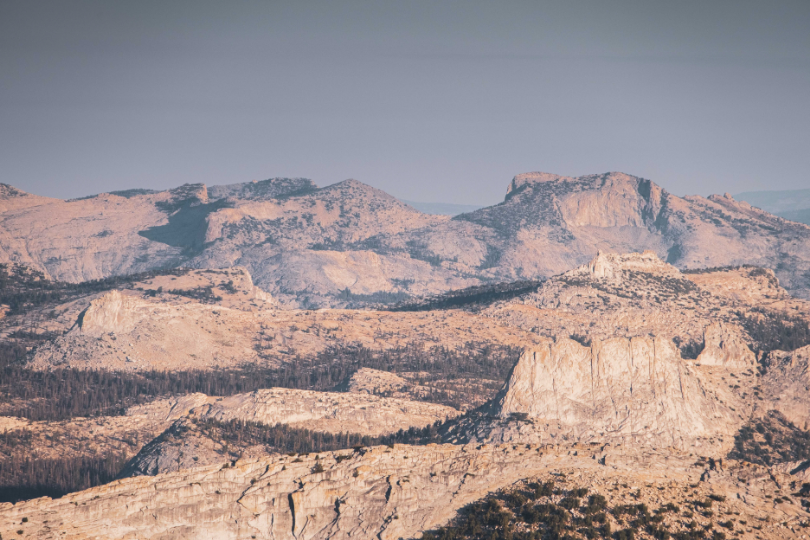
The area we now refer to as Yosemite National Park is the traditional homelands of the Ahwahnechee people, a Southern Sierra Miwok Indigenous Nation who lived in the Ahwahnee (Yosemite) Valley.  Ahwahnee was a Miwok word to describe the open mouth of a bear, similar to how the First Peoples viewed the open end of their valley. 

For over 5,500 years the valley had an abundance of natural resources that allowed the Indigenous people to thrive off the land. This drastically changed around 1848, when word of gold in the area brought a flood of settlers to Yosemite. This gold rush resulted in a violent clash between the Native Americans and the new coming colonists, driving the Miwok Nation out of their homeland to mine the area for gold. 

During this period, the Southern Sierra Miwok Nation suffered from violent dispossession, relocation, and economic disadvantage in their ancestral homeland from the militia group, Mariposa Battalion.  This state funded militia group waged a seven month war, systematically burning villages and food supplies, thus forcing the Indigenous Communities from their land. The Native Americans eventually relented, were captured, and were forced to relocate to a reservation, ending the tribal habitation of Yosemite Valley and beginning a new era of the settlers.
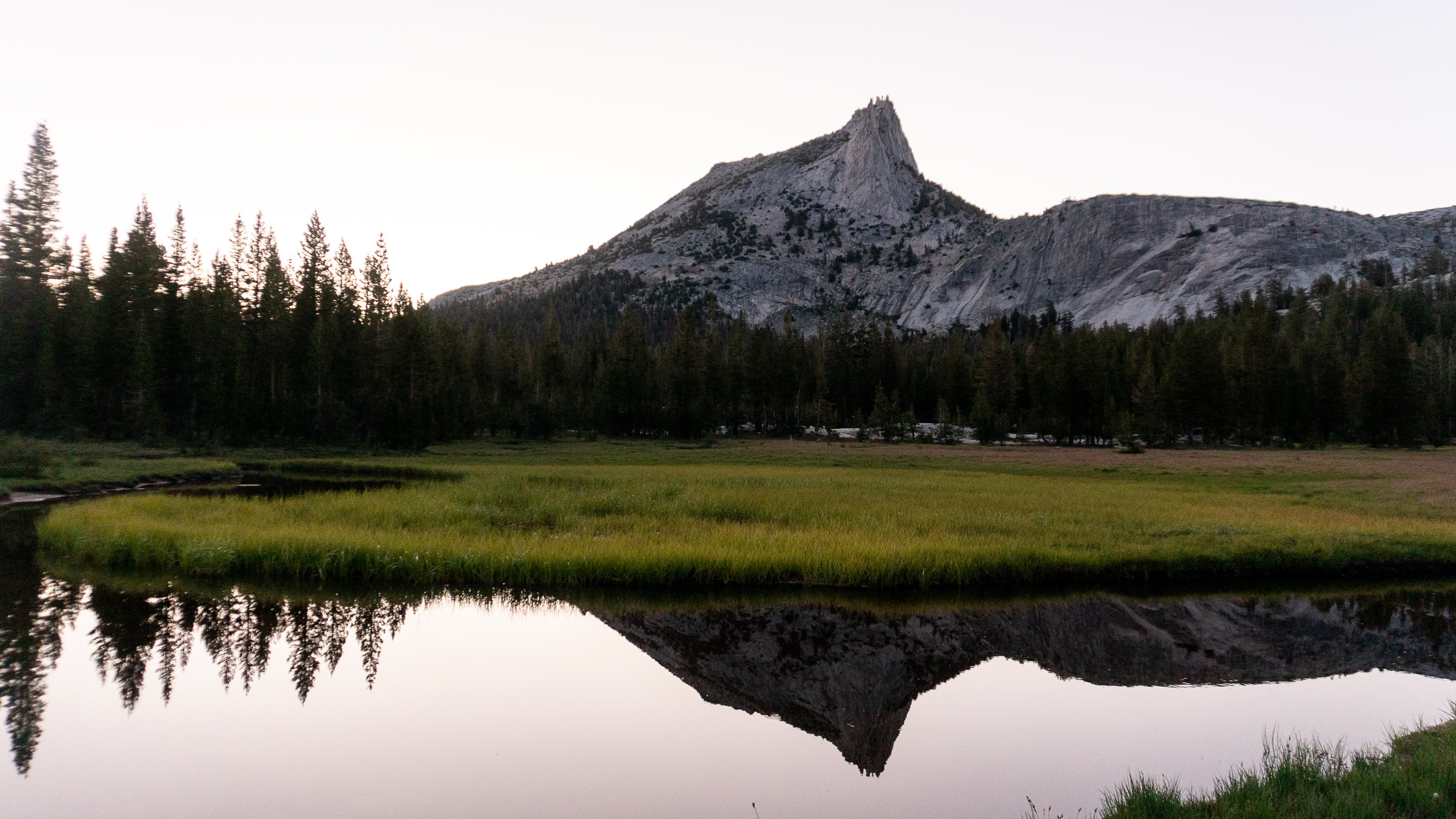
Within a year’s time, the Ahwahneechee resettled throughout the valley, but in 1864, President Abraham Lincoln designated the Yosemite Valley as a protected area.  While the efforts were made to conserve the natural environment, the newly protected region brought a rush of tourism to the valley, which further lessened the control the Miwok had of their ancestral lands. 

Petitions for Yosemite to become a National Park began in 1889 when John Muir came to the valley.  At the time, the area was preserved as a forest reserve by the State Government but officially became a part of the National Park Service in 1890.

While the creation of the Park meant environmental preservation in the Valley, it further restricted the Ahwahneechee people from using their land for cultural and traditional purposes. By 1935 the South Sierra Miwok Nation was completely relocated from their lands and were threatened with fines, arrest, and further banishment from the park if not obeyed.
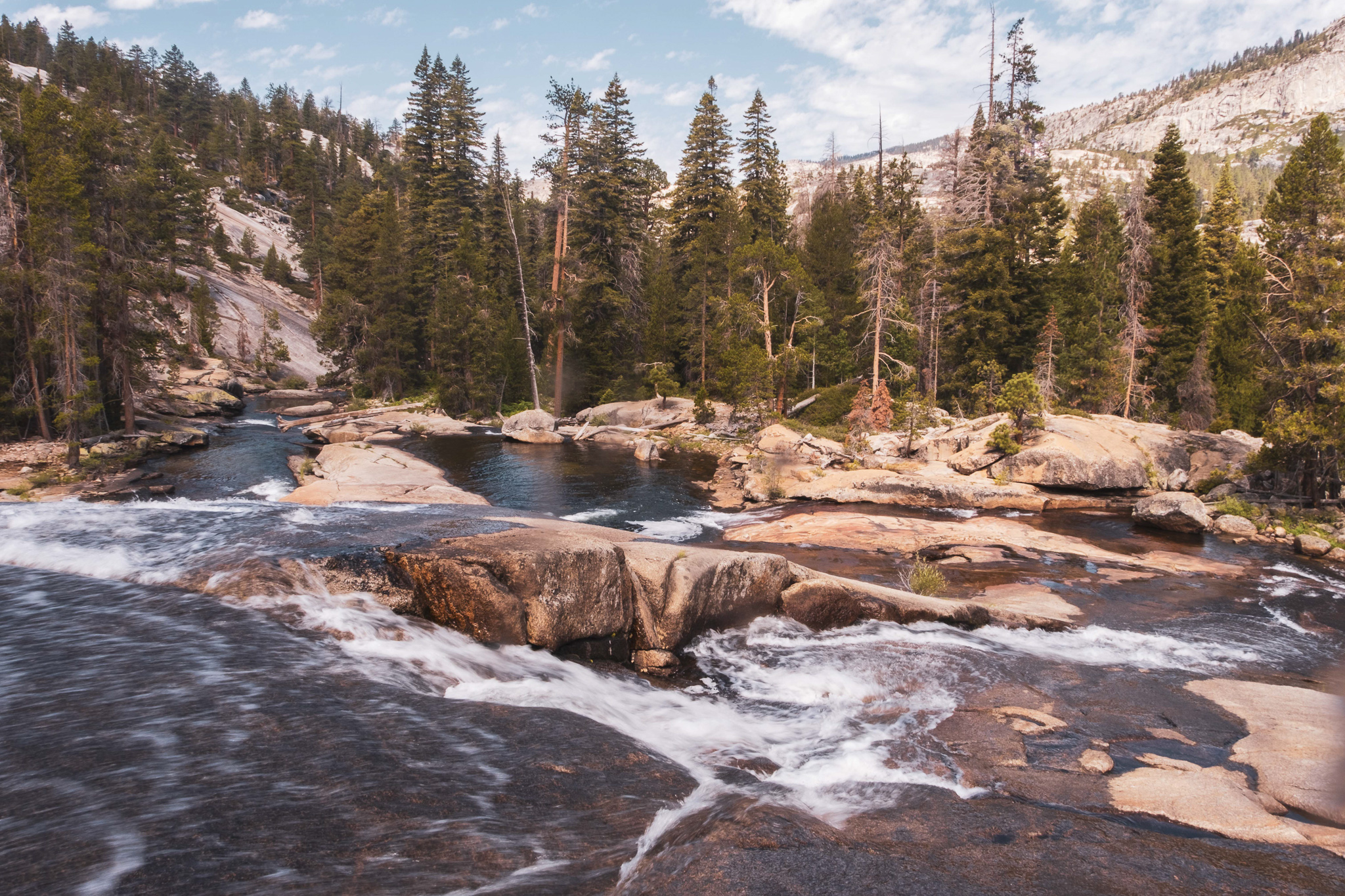

Fighting for Federal Recognition

Despite a dark past of displacement, the Indigenous groups of Yosemite have continued to advocate and lobby for federal recognition and use of their ancestral lands by working with the National Park Service. In 1980, the American Indian Council of Mariposa County (AICMC) was approved for the construction of a new Indigenous Cultural center in the Valley. In 1987, they were approved for the first Native American Relationship Management Policy to outline the importance of Indigenous Americans in the National Park management. 

While Yosemite works with the AICMC to better explain the Native American history of the Valley, most of the information and museums in Yosemite still highlight the settlers’ history instead of the Ahwahneechee history. 

Currently, the Southern Sierra Miwok people are “seeking self-determination, self-governance, and acknowledgment through the federal recognition process. This designation will allow [their] tribe to acquire tribal sovereignty rights. Federal recognition allows access to further health benefits, scholarships for higher education, funding opportunities to support [their] wellbeing and cultural continuance.” (Southern Sierra Miwuk Nation). 
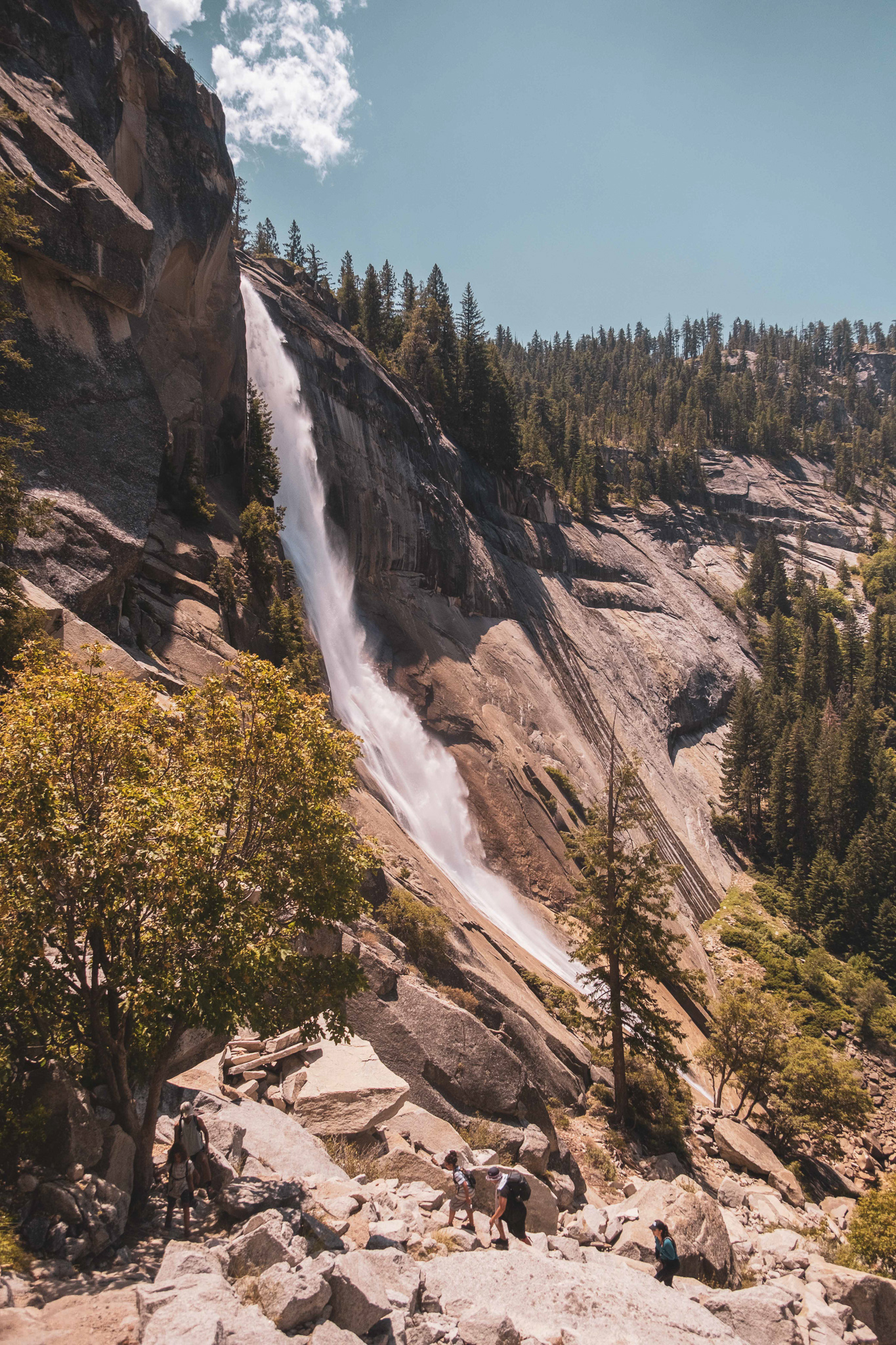
As explained by the Miwok Nation, the motivation for the federal acknowledgement is to support and work with the underlying issues of fundamental justice for their people.  The hope is to “significantly enhance and facilitate this interaction by establishing a formal government-to-government relationship” through self-sovereignty, child welfare, additional federal support programs, revenue sharing trust funds, educational assistance, environmental protection and land acquisition, and protection of Indigenous cultural sites, and traditional gathering and other interest in their ancestral lands.

Ultimately, with the number of people traveling to Yosemite rising each year the importance to acknowledge, support, and campaign for the preservation and rights of the Southern Sierra Miwok Nation increases.  As trail runners and outdoor enthusiasts, it’s important we not only learn the true history of these wild spaces, but also support and help in the federal recognition of the first inhabitants of these regions we enjoy so much. 


For additional information and ways to support the Southern Sierra Miwuk Nation see below:  

Southern Sierra Miwuk Nation https://www.southernsierramiwuknation.org/federal-recognition 

Native Land – Me-Wuk (Southern Sierra Miwok)

Yosemite Mariposa County 

Indian Country Today https://indiancountrytoday.com/archive/native-history-yosemite-national-park-created-on-native-homelands 

The Yosemite Valley Native Americans 

https://ppaccone.medium.com/the-yosemite-valley-native-americans-f89957da5f18

Kara Folkerts

Kara Folkerts is a plant powered trail runner, sustainable travel advocate, yoga teacher, and passionate about all things sustainability, travel, health, and outdoor movement.  Originally from Canada, Kara has spent the last few years exploring and living abroad in various countries across the globe before joining the Aspire crew in 2020. Kara has been guiding various trail running, sustainability, and health retreats internationally since completing her undergrad in Ecotourism and Outdoor Leadership.  With all of these experiences, she seeks meaningful connections with others, loves to learn of new cultures, and fosters the mindset of a lifelong learner.  With a big heart for trail running and exploring wild places, she’s always stoked to get out there with others. 

She writes about all her adventures on her blog at www.karafolkerts.com and on her instagram @karafolkerts
Categories
Aspire Culture Blog courses Culture Destinations Highlights Stage Trip Styles YOSE Yosemite Backcountry Stage

Yosemite: A History of Awe

Yosemite National Park is the birthplace of American environmental activism, as well as modern rock climbing, backpacking, and landscape photography. So much that we consider as American “wilderness” started right here. Ian Ramsey gives some insight into some of this Yosemite history and how it lives on today in this incredible place.


From my backcountry overlook on the Snow Creek trail, I’m looking across the valley at Half Dome. To my left, Cloud’s Rest rises into the sky. The dimensions are unfathomable-Is that distant ridge two miles or twenty miles away? I haven’t seen anyone in hours. 

Over the past few days, I’ve run, power-hiked, skidded and sprinted my way around the valley. I’ve also sat in quiet wonder, watching the light reflect off of El Cap, listening to waterfalls, and watching deer ambling through meadows.

In between backcountry adventures, I’ve also gotten glimpses of industrial tourism-trails, restaurants, and visitors centers packed full of families, senior citizens, crying toddlers, international tourists, and scout troops.  Overfull parking lots and long lines at ice cream stands.  With 4.5 million visitors in 2019, Yosemite is the fifth-most visited National Park. Movies like Free Solo have featured the park, and if you open any Patagonia catalog or climbing or backpacking magazine, you’re sure to see images of the great granite walls, alpine meadows and forested slopes. Heck, Yosemite was even in a Star Trek movie.


The History of Yosemite

Native Lands of the Ahwahnechee

The name “Yosemite”-which means “killer” in Miwok-was the name that the local nineteenth-century settlers mistakenly called the local Ahwahnechee tribe who lived in the valley. The Ahwahnechee, relatives of the Northern Paiute and Mono tribes, had lived in the valley that they called “Ahwahnee”-meaning “big mouth”-for hundreds, if not thousands, of years. Indeed, the valley has been inhabited for over 3000 years. In 1849, their lives were disrupted when the California gold rush brought 90,000 non-native settlers and miners to the region. 

In 1851, as part of the Mariposa Wars intended to suppress Native American resistance, the State of California funded a private militia, and these soldiers -the first documented Europeans to enter the valley in Yosemite history-drove most of the Ahwahnechee people from the area. While a few native people held on, living and working in the valley, they still faced terrible discrimination.

A century later, in 1969, the National Park Service would continue this inequity, evicting the remaining Native people from their residences and destroyed their village as part of a fire-fighting exercise.  Today, the Park Service is doing its best to honor the legacy Native people’s connection to this land, but there is much work to be done.

Early Development

Starting in 1855, entrepreneur James Mason Hutchings started to publicize Yosemite and bring tourists to the valley, where he built roads and a hotel.  Other hotels and businesses started to pop up in the valley, and tour operators started to cut roads through sequoia trees. As awareness of the area’s unique beauty spread, along with fears of rampant development, prominent citizens advocated for protection of the valley. In 1864, the US Congress passed a bill creating the Yosemite Grant-it was the first instance of park land being set aside specifically for preservation and public use. This set the precedent for the creation of Yellowstone as the first National Park a few years later, in 1872. 

Muir and early conservation

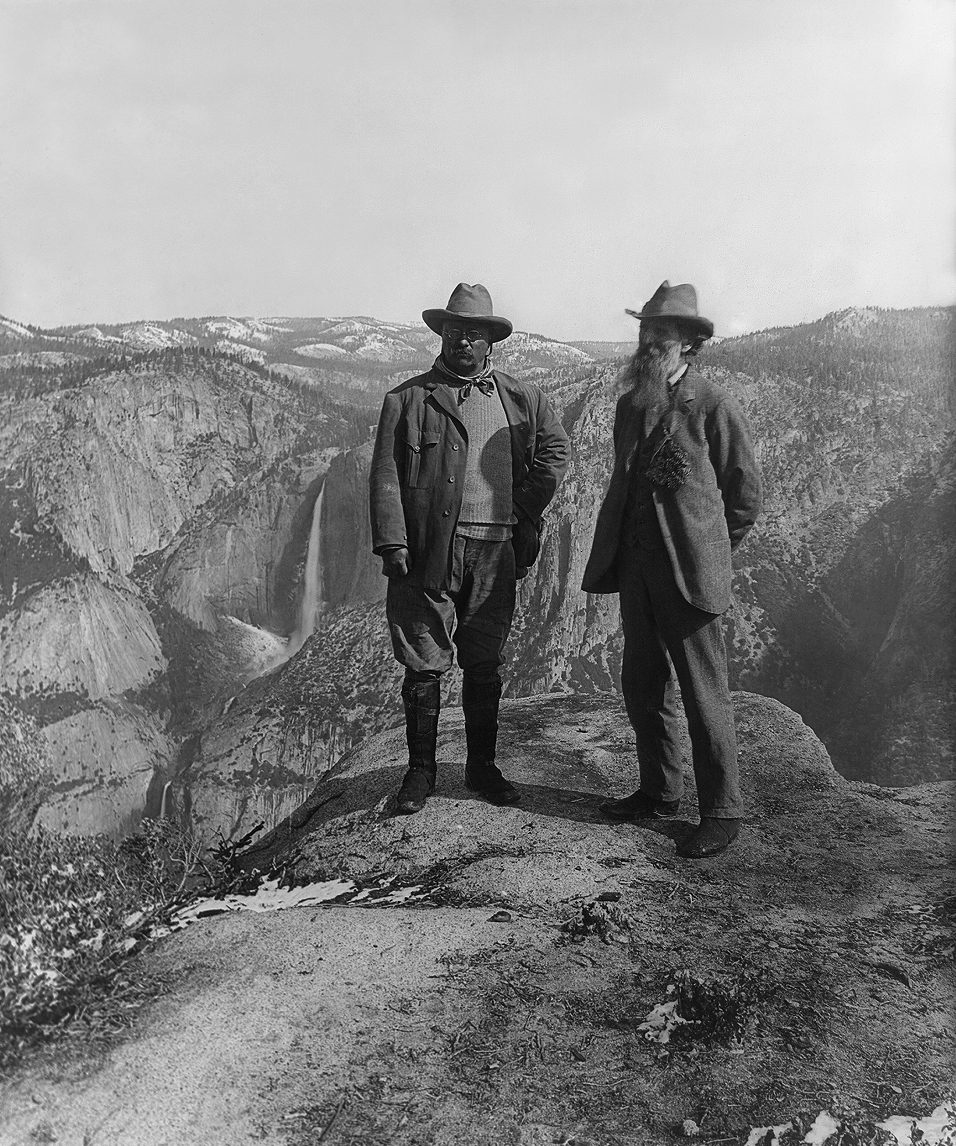
John Muir and Theodore Roosevelt

In 1878, a Scottish immigrant named John Muir arrived in San Francisco and immediately set off on foot across the central valley for Yosemite. He would spend the next eight years living in, and exploring the valley. During that time he would build a small cabin, work as a sheepherder and run a sawmill, but mostly he would explore and adventure around Yosemite and the Sierras. 

Muir’s writings about Yosemite and the Sierras would not only introduce the region to the world, but would also introduce new ideas about conservation, earth-based spirituality, mountain-climbing, ecology, and glaciology to the world. Muir hosted people like Ralph Waldo Emerson and Teddy Roosevelt, who shared his message. In 1890, after decades of activism by Muir and others, Congress signed an act to create Yosemite National Park.  Two years later, in 1892, Muir would create the Sierra Club to inspire people to hike the Sierras and protect them.

In 1923, despite decades of efforts of Muir and others, the nearby Hetch Hetchy Valley was dammed to provide water for the growing Bay Area, a conservation loss in Yosemite history that would serve as a cautionary tale for decades.

Throughout the 1920s and 1930s, a young photographer and Sierra Club member named Ansel Adams made the valley and Sierras even more famous with his evocative black and white photos of the landscape.  Through the work of Adams and the Sierra Club, the John Muir Trail was created, as well as nearby Kings Canyon National Park. Adams, who would go on to become America’s most famous landscape photographer, became synonymous with conservation, documenting, and advocating for, the National Parks.

As automobile travel, the highway system, and the population of California increased, visitation to the park increased. In the 1920s, the park concessionaire, hoping to make Yosemite “The Switzerland of America” even put in a bid to host the winter Olympics in the park, but fortunately it was unsuccessful.

As I look out across the valley, I’m so grateful that this wasn’t developed for the Olympics. Where I ran yesterday across granite ledges, there might have been a ski lift. Tolumne Meadow, with its carpets of richly-scented wildflowers, might have been yet another hotel.

I’m so grateful that running here in Yosemite still translates into a wild, sensory experience of cold rushing water and the pitchy scent of sequoias. I’m glad that I can feel the warmth of the granite on my face and that, an hour later in a completely different ecosystem, my eyes are ringing bright with the colors of subalpine paintbrush and monkeyflowers. And I’m glad that, because Yosemite wasn’t developed as much for industrial tourism, it was discovered by rock climbers.

Scaling the granite monoliths

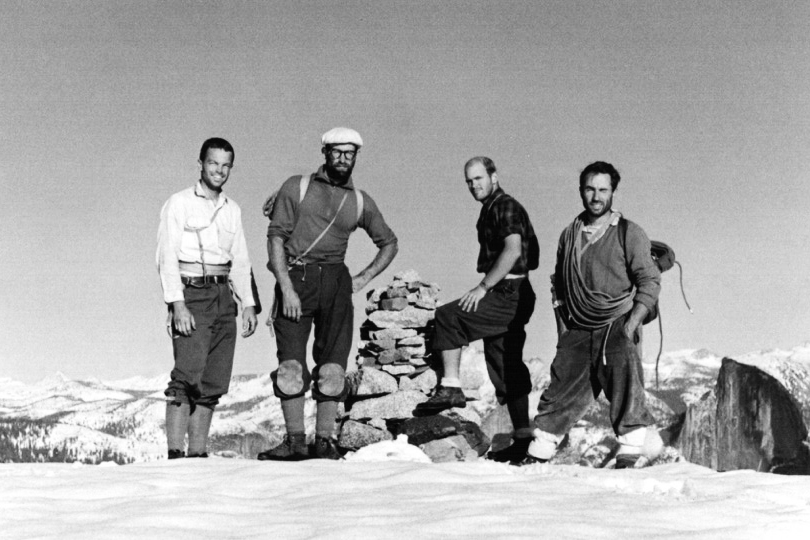
In the 1950s and 60s, Yosemite became the center of American rock climbing, with climbers like Yvon Chouinard (who would go on to found the company Patagonia) and Royal Robbins putting up many first routes and making big walls like El Cap and Half Dome world-famous. They would also develop new climbing technologies like molybdenum pitons and nuts. Their achievements would inspire generations of climbers like Jim Bridwell, Lynn Hill, and Ron Kauk to live at the infamous Camp Four and push the limits of human possibility.

Today groundbreaking climbers like Emily Harrington, Alex Honnold, and Tommy Caldwell are still sending routes that would have been impossible even a few years ago. One of the early Yosemite climbers-David Brower-would go on grow the Sierra Club from a regional hiking and advocacy group to America’s most prominent environmental organization.

Yosemite and the Sierras are also the birthplace of American backpacking, where people inspired by Jack Kerouac and Gary Snyder’s “Rucksack Revolution” started putting on Kelty framepacks in the 1960s. Today, nearly 4,000 people hike the John Muir Trail each year, half of them through-hiking the entire Pacific Crest Trail.

Royal Robbins and friends climbing in the park, 1964


Running amongst the monoliths

While Yosemite is best-known for climbing, there is a rich modern history of trail-running here, particularly on the John Muir Trail. Over the past decade, an assortment of ultrarunners have kept lowering the FKT (fastest known time) for the 212 mile trail, including Hal Koerner, Mike Wolfe, Darcy Piceu, and Leor Pantilat, before Frenchman Francois D’Haene set the current record at 2 days, 19 hours, and 26 minutes.  Former FKT holder Catra Corbett actually yo-yo’ed the trail, running the 424(!) miles in just over 12 days. Elsewhere in the park, climber Dean Potter set the FKT for Half Dome just two weeks before dying in a tragic wingsuit accident in 2015. Recently, Jason Hardrath set a number of records on the Yosemite Valley Loop El Capitan, and the Trans-Yosemite Trail. Countless other trails offer opportunities for runners to explore, whether they set records or not.

Yosemite, 2021

Today, Yosemite is a perfect example of the challenges the National Park Service faces as it tries to balance tourism and recreation with conservation. A century of Forest Service fire suppression policies combined with drier, hotter weather and smaller annual snowpack due to climate change have created a landscape that is prone to intense annual wildfire. These fires disrupt visitation and destroy ecosystems and infrastructure. 

At the same time, record-setting numbers of tourists and their cars mean that that the valley’s air quality can sometimes be substandard.  Backpackers, hikers and big-wall climbers often find themselves in situations where rescue and other medical services are called for. The park service struggles to create a safe, quality experience for all visitors while maintaining the unique landscape and ecology of Yosemite.


And today, as I watch clouds drift across the tip of Half Dome, I’m one of those grateful visitors. If you rock climb, or backpack, or enjoy photography, or consider yourself an environmentalist, or enjoy public lands-anywhere in the world- you owe a debt of gratitude to this place. But all of those stories and facts and historical figures fade away when you look at the 2,425 foot high Yosemite Falls, or find yourself in a Sequoia grove.  Yosemite’s greatest legacy is awe, the opportunity to deeply experience something bigger, wilder and more beautiful than you knew was possible.


Run Yosemite with Aspire!

Half Dome for the win.

If Yosemite with less crowds and more mountain running sounds like your kind of daydream, you are only one step away from a dream come true. Join us for some truly elevated trail miles on top of the Sierras.

We’ve already sold out 2 trips for 2021. The third trip has a handful of spots left. Hop on board!


Ian Ramsey

With three decades spent exploring the PNW and Alaska, Ian is based in Maine, where he directs the Kauffmann Program for Environmental Writing and Wilderness Exploration, and teaches writing, ecology, brain science, music and mindfulness to high school students. With over two decades leading trips and expeditions across the US, Alaska and internationally, he loves empowering people to take agency in their lives and discover new places. Ian is a poet and graduate of the Rainier Writing Workshop, and his writing has been featured in places like Terrain.org, Orion and High Desert Journal.  He also directs a community steelband, loves kayaking big water, drinks copious amounts of coffee, geeks out around nutrition, literature and fitness, and was once a member of an Inuit Dance Troupe.

Check out his website at Ianramsey.net

Categories
Blog courses Destinations Highlights Runner Resources Stage trip report Trip Reports and Trip Styles Trip Styles YOSE Yosemite Backcountry Stage

Trail running in Yosemite National Park

The four day Yosemite Backcountry trip is an incredible addition to the Aspire calendar. It’s hard to put into words the immediacy and immensity of this place. I really wanted to give anyone interested in the trip a better sense of the flow and what to expect, so I’ve written this post with my inherent biases, interspersing my own experience and presumed the perspective of someone showing up for the trip. Enjoy!

Day 1: Intros

Pleasantries were lubricated by drinks pulled from the ever-present, ever-cold cooler and the plates of appetizers really hit the spot after the long drive to the park. It’s simultaneously impressive and obvious why a dozen runners from Ohio, California, Pennsylvania, New Jersey and Washington states all converged on this campground with the same purpose: 100 miles of backcountry trails in one of the most iconic landscapes on the planet.

Tamarack Flats is one of the quietest campgrounds in all of Yosemite. 52 sites, no RV’s, no local store, and it’s well away from the hoards of people crammed into the valley floor. This little piece of the park would be home for the next five days. Rolling into camp, a few things were immediately obvious. There was a ton of firewood. There’s a lot of food packed into those beefy bear-proof coolers. That big tent would keep us us dry and cozy if the weather turns. And everyone here was speaking the same running language. 

The Aspire crew facilitated introductions, gave some valuable background on the park, and then dove deep on the details of the routes, safety plan, logistics, and flow of the trip. In essence, each day we would get shuttled to a different trail. Everyone would run at their own pace, and our guides/crew would consist of a “Sweep” who would always run behind the group at whatever pace and a “Super” who started their run at the “finish.” It was expected that runners would spread out and there was no expectation that we traveled together.

Dinner: Grilled Chicken or Tempeh, Rice Pilaf, Green Salad and Cheesecake. 

Day 2: Porcupine Creek to Tamarack Flat  22 Miles, Elevation Gain: 3,500′ Loss: 5,200′

Breakfast: Heaping plates of French Toast, homemade jams, yogurt, fresh fruit, and nut butters.

Waking up in the woods to a day of running sure beats the alarm cry for the office. The energy among the group at breakfast was palpable. Between bites of french toast there are the last clarifying route, gear, and preparation questions and suddenly it’s 8:00 and we’re piling into the shuttle van. 

a group of happy runners in front of a trial sign.

After a short drive to the trailhead and the obligatory group photo, we’re off. No ready–set–go, no pistol firing, no race clocks, just running.  It’s three miles of gritty single track to the first real views of the trip. The conifer forest of Lodgepole Pines and Red Firs fell away as the dirt trail turned to granite dome. Cresting a small rise, the valley appeared. Half Dome loomed large on the horizon with a deep chasm separating the south end of the valley where we stood, and layers upon layers of views. Granite cliffs, waterfalls, alpine peaks and winding rivers create a full frontal assault to the visual cortex. 

This was just the beginning. Our trail turned west, following the north rim of the Valley. Before the day was over we’d visit Yosemite Point, filter water from Yosemite Creek before it plummeted 2,425 feet to the valley floor, and stand on the summit of El Capitan. If all of that wasn’t enough, we finished the run with a swim in Cascade Creek, just two miles short of our finish at Tamarack Flat Campground where dinner was waiting.  

Dinner: Spaghetti with homemade meat or vegetarian sauce, Green Salad, Chocolate dipped Strawberries

Day 3: Ten Lakes Basin, 21 Miles, Elevation Gain:  +6,000′ Loss: -5,200′

Waking up the second day the edge of newness was gone. The uncertainty of “What am I getting into” was replaced with confidence and eagerness for more views. 

Breakfast: Breakfast Burritos w/ eggs, hash browns, bacon, avocado, salsa, and fresh fruit. 

The shuttle ride from camp to the May Lake trailhead was great for digestion. Clear skies and smiles on our faces were the norm. Our trip through the Ten Lakes Basin was marked by a lingering snowpack that required attention to navigate, but provided a landscape devoid of any other travelers. We kept the group tighter, route finding together and chatting as the miles unfolded.

Our route took us around Tuolumne Peak and deep into the South Fork of Cathedral Creek Canyon. By mid-day we were scanning the long blue horizon with lines of receding peaks in the background and a foreground full of deep granite valleys. 

It’s easy to feel small and vulnerable wearing only a vest in this wild remote place. The three big climbs of the day challenged our legs, but as we reached every high pass, dropped into a new river valley, or stumbled upon an alpine lake, the hard work was absorbed by the beauty of the scenery.   

Dinner: Burger Night! Meat or Vegetarian. Corn on the Cob, home fries, and Dutch oven Apple Crisp. 

Day 4: Pohono Trail, 18 Miles, Elevation Gain +2,000’ Loss: -4,500’

In 2019 the Sierra’s experienced a record snowpack. Heavy winter accumulation and late season/spring storms left the high country blanketed in snow well into July. This led to some variations in our original itinerary. Rather than a 30-mile day through the Grand Canyon of the Tuolumne River, our route would take us along the South Rim of the Yosemite Valley. While there were no complaints, it didn’t reflect the backcountry feel we were shooting for. Note: We’ve adjusted this day’s itinerary for 2020, check out the details on the Yosemite Backcountry Course Page. 

Breakfast: Pancakes, from regular or GF flours, Yogurt, Fruit,  Maple Syrup, and all the fixins with sides of Bacon or Veg Sausage

In 1903 John Muir spent 3 days camping with President Theodore Roosevelt atop Glacier Point. It’s the trip in which Muir convinced Roosevelt to protect and preserve Yosemite as a national treasure. It’s a cool spot, and the start of our 18-mile run along the South Rim of Yosemite Valley. Here the exposure of the valley is BIG. Taft Point sits 3,500’ above the valley floor and juts out of the rock face like a diving board. Stepping up to the edge, or a close as is reasonable, the reality of life, death, and gravity are all mashed into one clear line. 

From Taft, it was a net down runnable day on trail that felt fast and smooth after a day deep in the backcountry.  Since this was the short day of the trip, we capped off the afternoon with lunch spread out under a large oak tree on the bank of the Merced River while we lazily swam, ate, and drank with El Cap Looming over us.   

Dinner: Bratwursts (Meat or Vegetarian), baked beans, and coleslaw with Dutch Oven Brownies

Day 5: Tuolumne Meadows to Yosemite Valley, 21 Miles, Elevation Gain: +2,500 Loss: -6,500′

Waking up on the last day of the trip, time was all skewed. The rhythm of existing to run and explore felt normal. The body was sore, but the soul was full. The other runners are friends, a gypsy trail family brought together under a tent for a week of trails, laughter, and good food. It didn’t really seem possible that the real world was looming somewhere outside of this magical park. 

A man gazes over an alpine lake in the High Sierra

Breakfast: English Muffin and Egg, Ham, or Veggie patty, with greens, salsa, and heaps of Avocado washed down with Orange Juice. 

a man running down a rocky trail with a waterfall in the background.

This day was a classic. Tuolumne Meadows to Yosemite Valley. Here we followed the same path by which ancient alpine ice fields spewed forth from the Sierras and formed the deep glacial chasm of Yosemite. It’s a special run. Following the creeks and drainages of the high country, runners find themselves along the shores of the Merced River and the steep granite steps alongside Nevada and Vernal Falls. Reaching the falls puts the valley floor into view and a long sightline of granite faces glowed in the setting sun. 

Having reached the Valley, drinks, appetizers, and the abundant dinner fare that’s become a norm of the trip was waiting at a nearby picnic area. It was a celebratory scene as runners finished, then headed off to the nearby Curry Village for showers, gift shopping, and merged with the rest of the crowds who had been drawn into the Valley’s tight orbit. 

Finishing hardly seemed real. The juxtaposition of so much beauty in larger world paved over with progress and a simplicity of purpose contrasted with the responsibilities of an outside world. It’s a hard reconciliation and it’s precisely this disorientation of re-entry that marks the certainty of having been away from it all. What a fantastic feeling to have at the end of four of the most incredible days of living. 

Dinner: Tacos w/ Chorizo and Vegetarian fillings, Rice, Fresh Salsa, and bottomless Guacamole.

Sign up to run with Aspire in Yosemite National Park this summer.