Categories
Aspire Culture Blog courses Destinations Highlights Pulse Stage Trip Styles update WL Wonderland Circumnavigation Stage

Season of Speed: 2020 FKT attempts on the Wonderland Trail

As runners of wild spaces, trail runners boast an impressive repertoire of skills. One that seems to be missing? Sitting still. Following the lockdown and the initial host of “around my block” projects, many runners looked to the mountains for a sense of freedom and turned to Fastest-Known-Time (FKT) lists for a sense of competition and motivation. Enter Mt. Rainier and a season of “fastest known time” attempts on the Wonderland Trail.

A runner cruising towards Mt. Rainier on the Wonderland Trail

At 14,410′, Mt. Rainier’s dominating visage is both inspiring and intimidating. The tallest Cascade volcano boasts over 35 square miles of rock and snow with 26 glaciers, seven glacial rivers, and endless alpine meadows. While most known for its 150 years of recorded climbing history and an estimated 200,000 successful summit climbs, for trail runners, it is the trip around the mountain which beckons. 2020 saw an unprecedented season of time bending circumnavigations by trail runners as eight new records were set across varying categories of fastest known times on the Wonderland Trail.


Every August, the Aspire Adventure Running crew runs laps around Mt. Rainier, leading weekly trips of runners on a three day stage run of the Wonderland Trail. Our staff grows intimate with the mountain and deeply familiar with each curve of the trail; happy to share this knowledge with all those run, play, dance, and test their mettle on its rugged flanks. In 2020, that included not just trail runners, backpackers, and hikers but a number exceptionally fast runners with record breaking circumnavigation dreams.


Dawn at Panhandle Gap

North Face runner Dylan Bowman functions better with a goal to keep himself accountable. Bowman grew up in CO and spent time living and running in California before settling down in Portland only about a year ago. ” I’ve been blown away in general with how good the running is in the PNW. It’s really an amazing place to run and to train.”

When the pandemic hit and races were cancelled across the globe, he turned his attention to a fastest known time attempt on the Wonderland Trail. “With Hard Rock cancelled, the Wonderland made perfect sense. I’ve always wanted to do it… I would classify the Wonderland is the single greatest North American adventure run there is, basically. I’ve done Timberline, Rim2Rim2Rim, Ultra Trail Mont-Blanc, Western States. The sheer magnitude and beauty of the route; I don’t think there’s anything that compares. ” Bowman exudes.

Prior to this year, the supported Wonderland FKT was held by Ryan Ghelfi at 18 hours 27 minutes and 42 seconds, as reported on FastestKnownTime.com. But when Aspire’s course director Abram Dickerson rolled up to Longmire ready to send runners off on Day 1 of the season’s first Wonderland trip, he bumped into filmmaker Ryan Thrower. Later that day, at Mowich Campground, Abe ran into him again. Over the course of dinner, it came to light that Ryan was doing preliminary shot scouting to film Bowman’s upcoming FKT attempt. Three weeks later, on August 19th, Bowman rolled into his finish at Cougar Rock with a new record time of 16:58:41, knocking almost 90 minutes off of Ghelfi’s 2018 time.


Jeff Mogavero is a Missoula based trail runner and friend of Aspire with some quick legs. Earlier this year, he contributed a piece on his Lost Coast FKT for the Aspire blog. In 2018, he followed Dylan Bowman’s FKT on California’s Lost Coast Trail by knocking ~60 minutes off his time on the 57.6 mi stretch of remote coastline. In July of this year, Jeff set a since usurped FKT on Wyoming’s Teton Crest Trail. The first time I met Mogavero was in 2015, when I gave him a ride back to Bozeman, MT from a trailhead in the Bridger Mountains. We’d connected for a few runs through the sweeping Montana landscape, but I was surprised to receive a phone call from him in early August. Jeff would be out in a few weeks to gather beta on the Wonderland, preparing for a FKT attempt. Serendipitously, his schedule would overlap with ours. I assured him that if needed, we’d be happy to make room for his bivy at Aspire camp.

Trail beta and good food flows freely at Aspire camp at Mowich lake.

By the time Mogavero and I met up during his preliminary run, Bowman’s had been dethroned from his Wonderland FKT record. “[It’s] my claim to fame: set an FKT–it gets broken immediately. I did the Lost Coast, the Loowit, 3 Sisters, all broken just a few days later,” Bowman half laments, half jokes. Just five days after Bowman set a supported record, Tyler Green, a Portland area runner with 12 postings on fastestknowntime.com, dropped Dylan’s time by 18 minutes. This brought the time to beat to 16:40:55.

Preparing for his next day of beta in Aspire’s camp at Mowich Lake, Jeff asserted cautious confidence towards the 10:45/mi average pace required to best Tyler’s new record. We dished him up a plate of spaghetti as a thanks for help schlepping gear and wished him all the speed God could give. Hardly the only person to have his plans interrupted by the unforeseen in 2020, Mogavero eventually had to scrap his FKT attempt due to the thick smoke and fires of mid-September.


On August 26th, two days after Tyler Green reset the overall supported record, Issaquah based runner Kaytlyn Gerbin went out for her own fastest known time attempt on the Wonderland Trail. Something of a legend in the Pacific Northwest, if not beyond, Kaytlyn holds FKT’s on Washington’s Ptarmigan Traverse and the Mt. Rainier Infinity Loop, a course that includes a run of the Wonderland connecting not just one, but two summits of the mountain. “A lot of emotional energy has gone into the mountain in the last few years. Every year, I’m looking for a new style to get on the mountain.” Gerbin shared.

Even with her intimate knowledge and experience on the trail, there’s no getting around the challenge of the terrain the Wonderland presents. Fortunately, the Wonderland doesn’t deal out punishment without ample reward.

“All the sections were pretty hard. I caught sunrise at Golden Lakes, and I love the views of Rainier there. It feels pretty remote. Then coming into Sunrise was an awesome section for me. I had friends who had gone out to take photos and told people in the area what I was doing, so I had a lot of strangers waiting for me to come through and cheering. That was such an empowering moment.”

“I hit a pretty good low up above Panhandle Gap… three-quarters of the way through… you get into some altitude and we had no cloud cover, baking in the sun exposure. I did that section with Alex. We had such strong memories and that helped.”
Kaytlyn’s pacer and friend, Alex Borsuk, shares the Ptarmigan Ridge and Rainier Infinity Loop FKT’s with Gerbin, and would set the unsupported women’s record this year on September 10th with a time of 1 day, 1 minute and 26 seconds.
Gerbin rolled into Cougar Rock with a 18:41:54 finish, beating the previous female supported record by over 3 hours and posting the 4th fastest time over all.
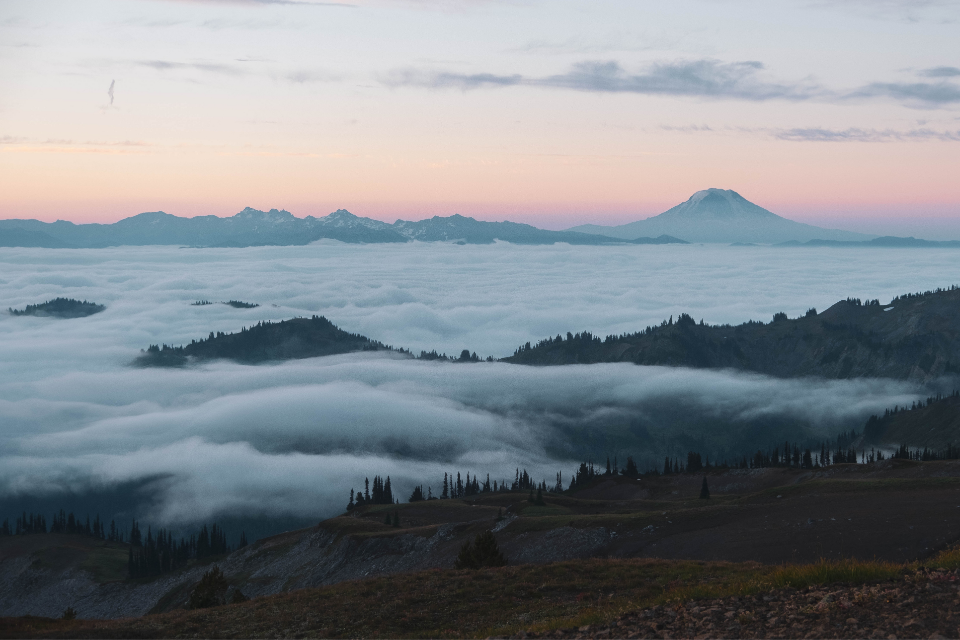
Looking out from Panhandle Gap at Mt. Adams and the Goat Rocks.

For Gerbin, a personal connection with the mountain was a motivating factor to take on the the FKT. “It was really exciting…everyone has been finding new ways to explore their backyard. Most of the people who went after fastest know time attempts on the Wonderland Trail this year have some personal connection to the landscape,” said Gerbin.


Ryan Montgomery echoed this sentiment. “Growing up around Seattle and seeing the mountain, it calls to you. As a kid my Dad would take us up to Crystal [Mountain Resort], and I got fond of the whole area. I’ve spent half of my time for work in Seattle for the last few years and seeing all the stories coming out from the mountain (this summer), I felt like I needed to be there too, and I might as well do it.”

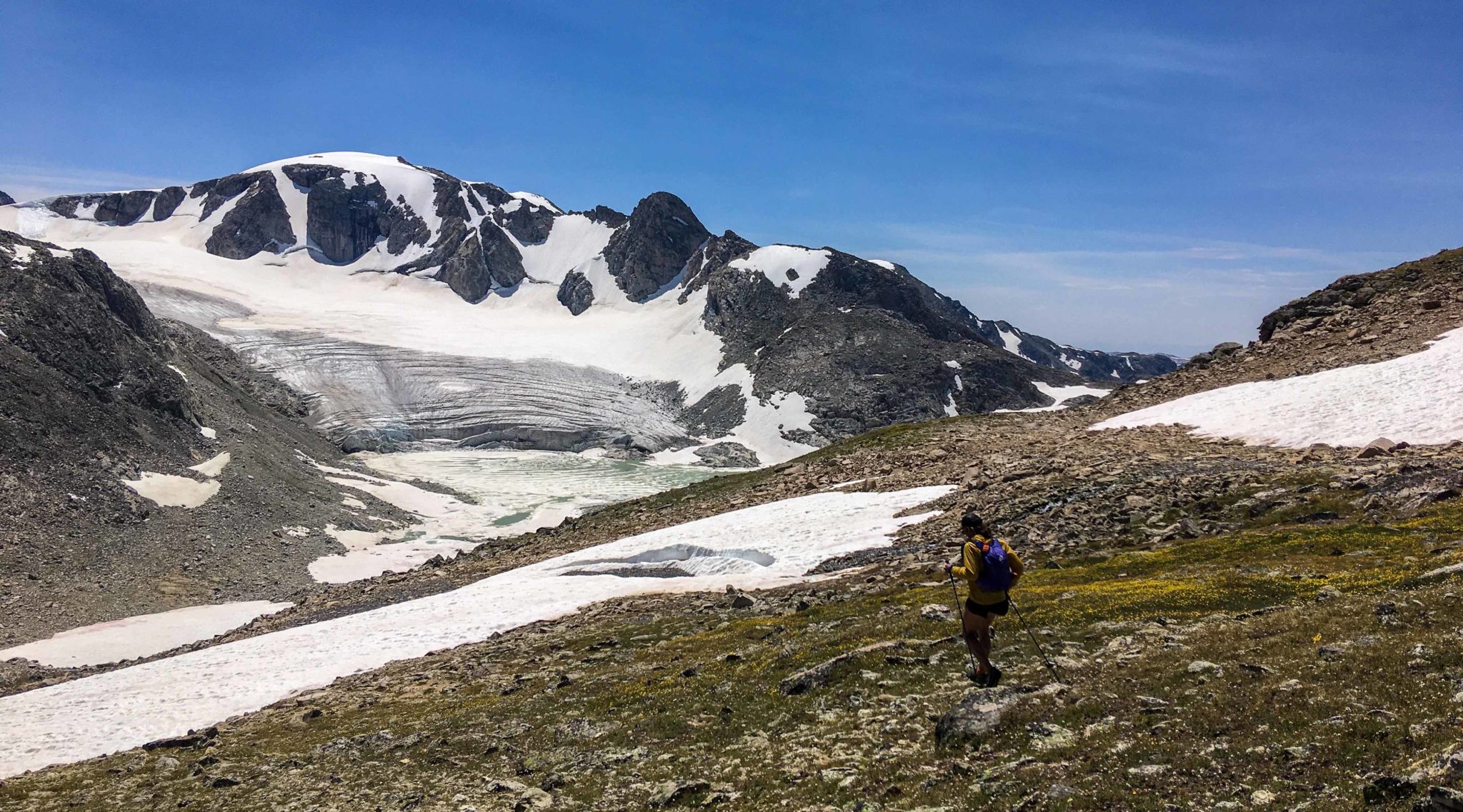
The toe of the Carbon Glacier at ~3,500′ elevation.

More than a month after Kaytlyn’s run, Montgomery, an Auburn, WA native currently living in Truckee, CA, set off from Cougar Rock after the unsupported FKT record. The unsupported approach comes with the expectation that you will receive no external support. “This means you carry everything you need from start to finish except water from natural sources,” according to FastestKnownTime.com

Montgomery liked the added challenge of running unsupported. ” I have always been intrigued by the unsupported aspect. I’m used to racing 100 miles with aid stations every 8 miles… kush life! I wanted to see what (the unsupported style) was all about. The Wonderland is good to do as an unsupported route… in the PNW there’s a plethora of water sources so I knew that wouldn’t be an issue…The whole day I was connected to the mountain for hydration. It makes you realize how important this mountain is and I feel humbled that I was able to run this hard route.” 

The downside of the unsupported approach is the extra weight runners have to carry in nutrition and necessities. “I’m grateful for my weight vest work outs. They definitely helped. After Carbon River I did a lot more hiking than running uphill. But that meant I was able to to really crush the downhills,” Montgomery said. Montgomery set the current unsupported Wonderland FKT at 18:49:11 on October 3rd, the third time that title was handed over this year.

All of these records add up to a lot of time on feet, even at increasingly quick speeds, and yet for some elite runners, spending one day out pushing the limits of FKT attempts on the Wonderland Trail just isn’t enough.


During the final Wonderland trip of the Aspire season, Peter Mortimer rolled into Aspire’s White River campground site in the dark. Mortimer, an Aspire alumni, was 1/3 of his way into an attempt on Ras Vaughn’s (outrageous?) Double Wonderland FKT. Peter rested briefly and talked shop on the upcoming miles before disappearing into the night. That was the last we heard from Mortimer, but a Double Wonderland FKT was posted this year by Christof Tuescher. He spent 3 days, 10 hours, and 50 minutes on the mountain seeing everything there was to see…twice. Remarkably, a triple Wonderland had also been posted by Tuescher this year, with a time of 5 days, 11 hours, and 49 seconds. Tuescher’s FKT athlete page reveals 25 records, including self-supported Pacific Crest Trail through WA record, that was reset this year by Jonathan Thomas, and numerous other multi-day efforts around the mountain West.


Is this Wonderland record game a fluke or a sign of the times?

Wildflowers and glaciers shown on Emerald Ridge

Last year, runners set about 700 Fastest Known Times. This year, nearly four times as many new FKTs have been recorded and posted to fastestknowntime.com. Maybe it’s the weeks of being cooped up at home or the desire to feel connected to community in some way, that has made 2020 special. It could be the canceled races forcing people into racing against times instead of bodies. Or perhaps it’s just a sign of the increasing popularity of a sport once deemed only for the crazy or genetic marvels.

“My 2020 goal was to be podium at Western and top 10 at UTMB. That didn’t happen, but I still felt like I needed a goal where I could say ‘I’m still here’,” Montgomery weighs in. “I think races will be coming back and that will inherently limit FKT attempts, but I think everyone has realized what FKT’s are and that traction won’t go away. The press and content… so many people have thought ‘I need to run that next year’.”

For Mogavero’s part, the mountain now holds a piece of him he plans to return to retrieve. “I put so much time, effort, and mental energy into that trail this fall. It’s all I thought about every single day for a month. I ran it again and again in my head falling asleep. I feel very motivated to get back to (the Wonderland) Trail.”

The allure of hitting the dirt in wild places and pushing one’s physical and mental boundaries is at the core of trail running. Fastest known time records are only one way that trail running is developing as a sport.

“I hope one of the things that sticks is people exploring locally. I see myself going out for some more FKT’s in the future but I will balance that out with routes that are fun. I hope people will not get to sucked up in the numbers and go enjoy the mountains,” shared Gerbin.

Regardless of the why, it’s clear 2020 has meant more time connecting with wilderness. Trail runners are pushing boundaries well past where they were before. Rest assured, the Aspire crew will be there next year, ready with beta for anyone feeling called to run through the forests, meadows and alpine splendor of the Wonderland Trail.

Curiosity piqued? Check out the Wonderland FKT boards.

All photos shot by Nick M Danielson.


Aspire Adventure Running runs 3 day stage trips on the Wonderland Trail through the month of August. Get into the details on incredible food, big mountain days and real running community on Mt. Rainier.

Trent Banks is a mountain rambler, a disc jockey, and father of two daughters, based out of Bellingham, WA. He joined the Aspire crew in 2018. You can find him playing clubs and livestreaming DJ sets, working aid stations at races across the Pacific Northwest, and guiding trips with the rest of the Aspire team. 
Listen to his Spirit Ventures DJ mix series, inspired by and made for trail running.
Categories
Aspire Culture Blog courses Culture Highlights Preparation SUCIAWFA Trail Skills and Equipment Wild

Misadventure on the Wind River High Route

Adventure and misadventure are separated by a thin line. Most times we operate on the safe side, but all too easily incidents and accidents can push us into emergency response. Are we as runners prepared for those moments? How vulnerable are we to injury, accident, and death? It behooves us to learn from other people’s accidents, so we are more prepared to respond when we end up on the flip side of the perfect mountain adventure. 

When I heard Gabe’s scream, every alarm bell in my brain went off. The pain searing his scream was unmistakable and instantly my stomach knotted with nausea. Something was wrong, very wrong. Up to that moment I had been in awe of the alpine splendor of the cirque we were navigating, now the surrounding crown of peaks felt like a prison. Gabe had disappeared, swallowed by the mobile home-sized boulders that lie in every direction. After a flash of panic my resolve steeled and I prepared for the worst. I had no idea what I was going to encounter when I found Gabe – if, I found Gabe. But first, I had to find him.

The two of us had been side-by-side just moments before. We were descending a massive boulder field in the heart of Wyoming’s remote and wild Wind River Range. We were attempting the Wind River High Route, a 98-mile route along the crest of the range. With over 60 miles off trail travel, two 13,000’ summits, and a multitude of 12,000’ passes, there was little room for error in our planned 48-hour single push. 

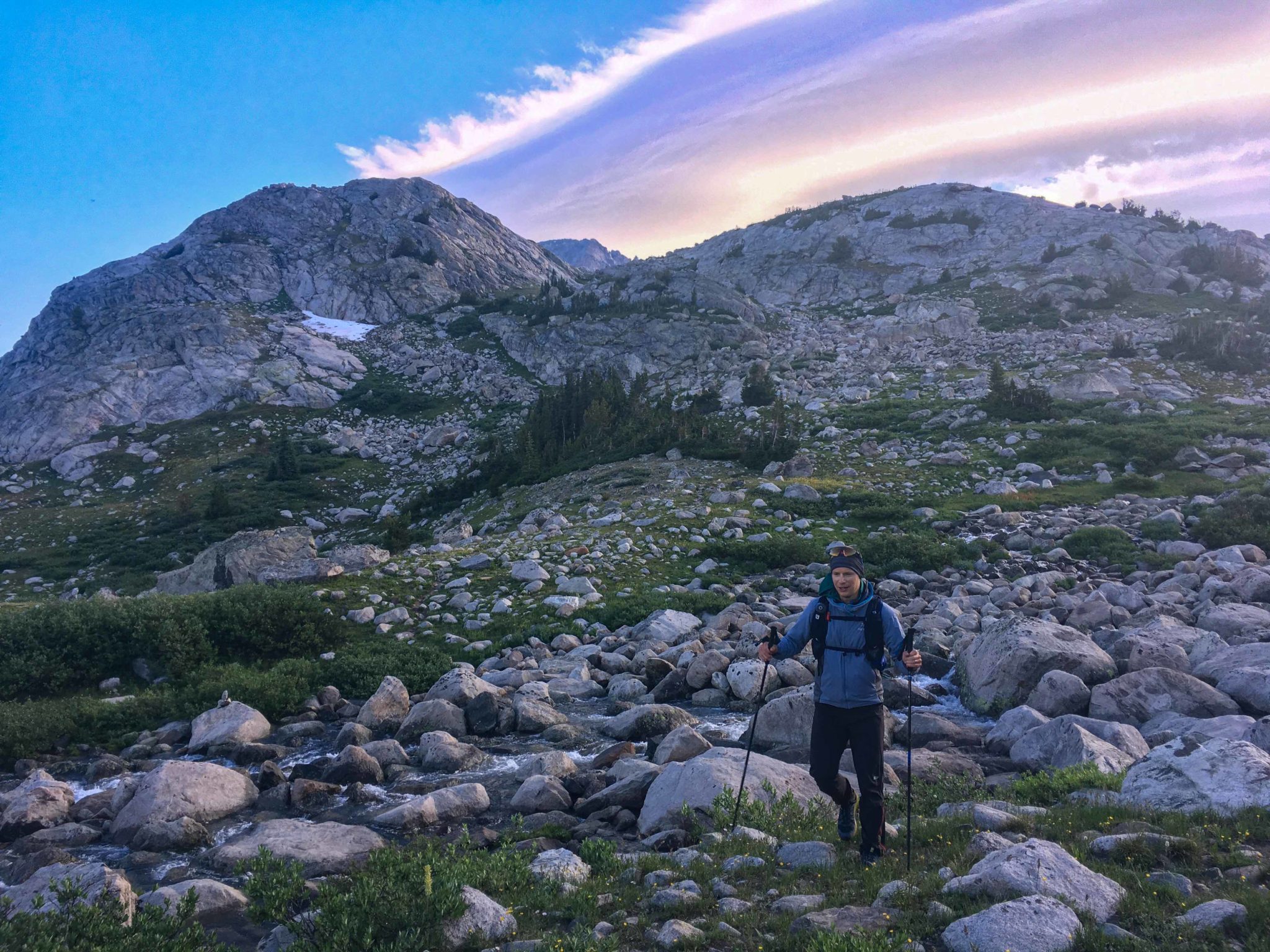
We had just been chatting about how the route was so gnarly and unforgiving, it would be impossible without the aid of trekking poles. We hopped massive gaps between equally massive boulders. Realizing we moved faster on snow, we separated, exploring two different tongues of snow reaching up from the valley into the boulder field. With any luck, one would prove to be safe to travel down and speed our descent. When Gabe disappeared, we were many miles from the nearest hint of trail.  The feeling of isolation was overwhelming. 

After several time bending minutes of searching, I found Gabe pulling himself out of a hole between several boulders the size of minivans. While searching for him my mind had instinctively reviewed the hundreds of hours of first aid training I’d received over the years. From Boy Scouts to wilderness first aid on a NOLS course in that very mountain range to a wilderness first responder course in college. Gabe shared similar training and our mutual background in wilderness medicine was a critical element to our partnership.  We would never have considered such a daunting, committing route as the Wind River High Route without a solid ability to respond to the risk exposure the route presented. We knew the margin for error was exceptionally low and the consequence of an injury or accident was very high. Our training in wilderness medicine and emergency response empowered us to realistically assess the gravity of potential injuries and determine if the route was feasible. Armed with the knowledge that we could help one another out if shit hit the fan, we decided to chase the speed record on the route. And as luck would have it, shit did indeed hit the fan.

As I helped Gabe up out from the rocks he moaned and held his chest. He had jumped from a boulder onto a patch of snow and the impact of the landing had punched a deep hole in the ice and snow. He had been leaning forward and In doing so, he landed straight on his ribs. He was alive, but in visible pain. Gabe groaned and said, “on the bright side, I didn’t hear anything break…but I also didn’t hear this break” – a snapped trekking pole dangled from his hand. I breathed a sigh of relief that I didn’t have to deal with a broken femur poking out of his leg and blood squirting everywhere, which I had expected to find.

 I looked at the pole Gabe was holding. Then I looked up. And around. We were 15 hours into our push, part way off a pass, in the most remote part of one of the most remote mountain ranges in the lower 48. We had just traveled around 20 heinous and grueling off-trail miles. Most of those miles had been on suncupped snow and long boulder fields. Whether or not Gabe had a broken rib, he was clearly not well. Thankfully, he could still move. Neither of us knew what the correct decision was, but we knew that standing in a boulder field at 11,000 feet as night fell was not it. I handed Gabe one of my poles and we made our way painstakingly slowly to the lake below.

Upon reaching the lake, we sat for food and to collect ourselves. Gabe was injured, but could still move. Running and scrambling were painful, but walking was fine. We sat together, mosquito head nets obscuring our vision as hundreds of bloodthirsty monsters tried to make us a little bit more miserable. The route, were we to continue, would be 75 miles of high elevation off-trail wandering and rough singletrack. To cover that terrain in 30 hours, we needed to exclusively run and scramble. Even fully healthy, traversing the next section of frustrating bushwacks, snowy passes, and pumping rivers would be a tall order. Acknowledging the uncertainties and risks we would be in if we continued our push, we decided to bail.

Our decision put us on a whole new journey. Reaching the nearest trailhead would require another five miles of off trail travel over a glaciated 12,000 ft pass, followed by another 20 miles on trail. Our new goal of “let’s get out of here alive” consisted of thousands of feet of kicking steps into snow at 11,000 ft at midnight, multiple river crossings, a two-hour bivvy in near-freezing temps, and a massive amount of moans from Gabe. In the end we covered 54 miles over 32 hours of moving, but most importantly we made it home safe.

There is no denying how unbelievably lucky Gabe and I were to make it out of the Winds with nothing but a cracked rib. Our plan had been to go lighter and faster than anyone had ever gone on that route. We knew our chances of success were very small. We also knew that because we carried little more than food, some extra layers, and bivvy sacks, the amount of risk we were accepting was tremendous. Without a background in wilderness medicine, we would have never ventured off into the mountains. Our backgrounds made us more aware of the situations that could arise, and prepared us to act in the event that something tragic happened. 

Receiving training in wilderness first aid is absolutely necessary for any trail runner or mountain adventurer. The situations faced in a wilderness setting differ vastly from those of our normal lives. My time on the Wind River High Route drove home this point. Before every mountain excursion, my mind races through potential injuries and what my response would be. A background in wilderness first aid not only allows you to respond during those “oh shit” moments, it also makes you check yourself before striking off at the trailhead. And most importantly, it allows us to help our friends and strangers in times of need. All of us inclined to time in wild places will eventually find ourselves needing to help someone, or receive help ourselves. As runners, we love going light and carrying less, but we should all think deeply about the risks we choose, the skills we have to respond with, and the gear we carry to keep ourselves and others safe. 

When I think back to the Wind River High Route, the first thing I recall is not Gabe’s injury. Instead, it’s gazing down a wildflower meadow to watch a glacier calve into a lake at 11,000 ft. I remember wonderful, rambling conversations with a friend as we traverse the Gannet Glacier, the largest glacier in the Rocky Mountains. I reminisce on how hard I pushed myself while traveling through the most rugged, raw, and intimidating landscape I have ever encountered. Mountain travel is one of the most pure and gratifying pursuits I know. Developing all the mountain skills to make informed decisions about the risks and the rewards of our pursuits will sometimes mean that what’s safe will not always equate with success. But, in the mountains we play the long game. We do it for the love, for the challenge, to be with our people, and at the end of the day, the most important thing is that we all make it back to the trailhead. 

Jeff Mogavero is a runner, writer, and river surfer who’s mountain ramblings bring levity, insight, and passion to our community. Read more of his words at https://www.jeffmogavero.com/

Looking to grow your Wilderness First Aid Skill Set?

Check out Aspire’s 3-day runner centric, Sucia Island WFA Course

Categories
Aspire Culture Blog courses Culture Destinations Highlights LCT Lost Coast Trail Stage Pulse Stage Trip Reports and Trip Styles Trip Styles update Wild

Megafauna, Naked Women, and Bloodthirsty Vegetation: An FKT on the Lost Coast Trail

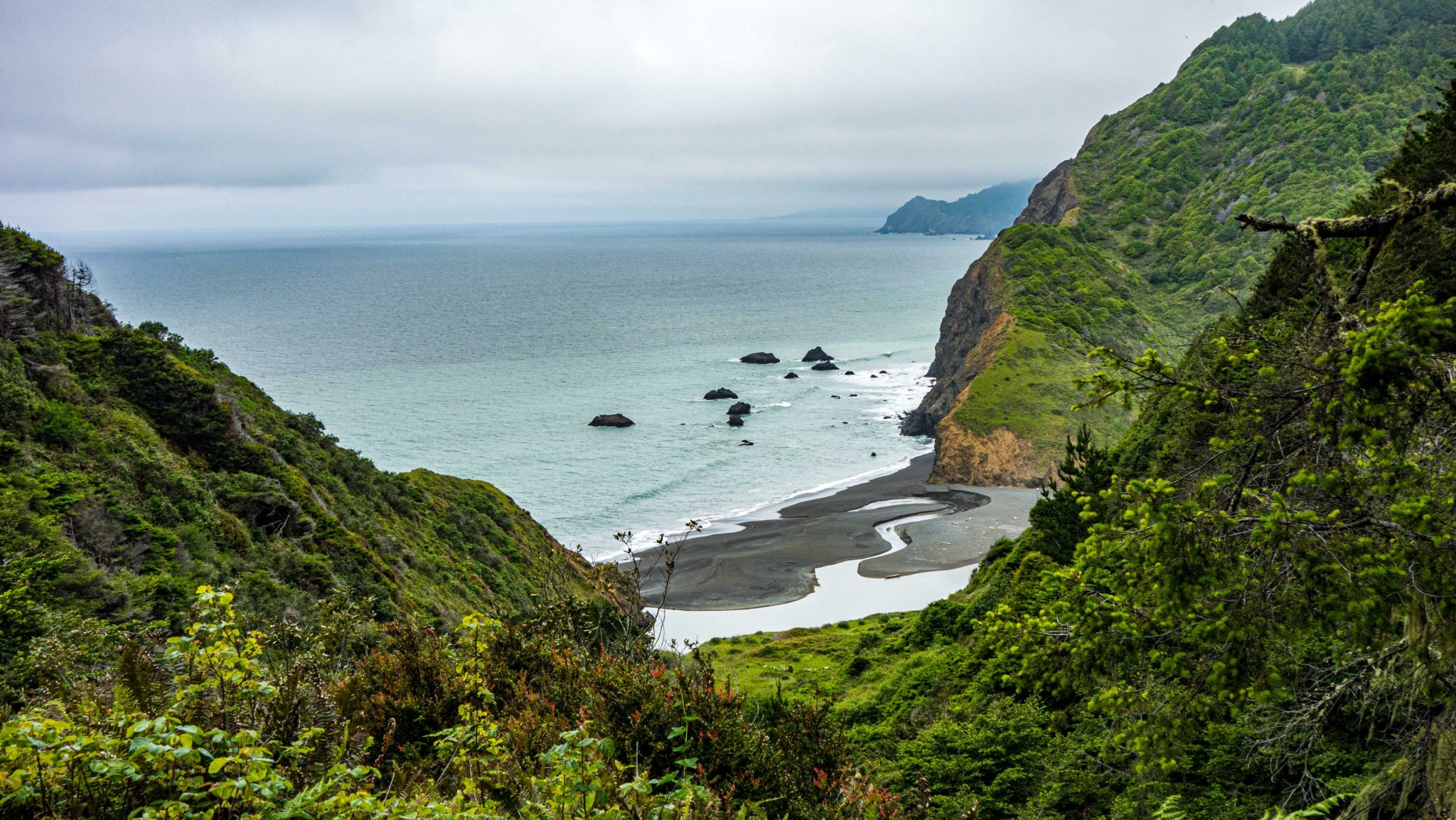
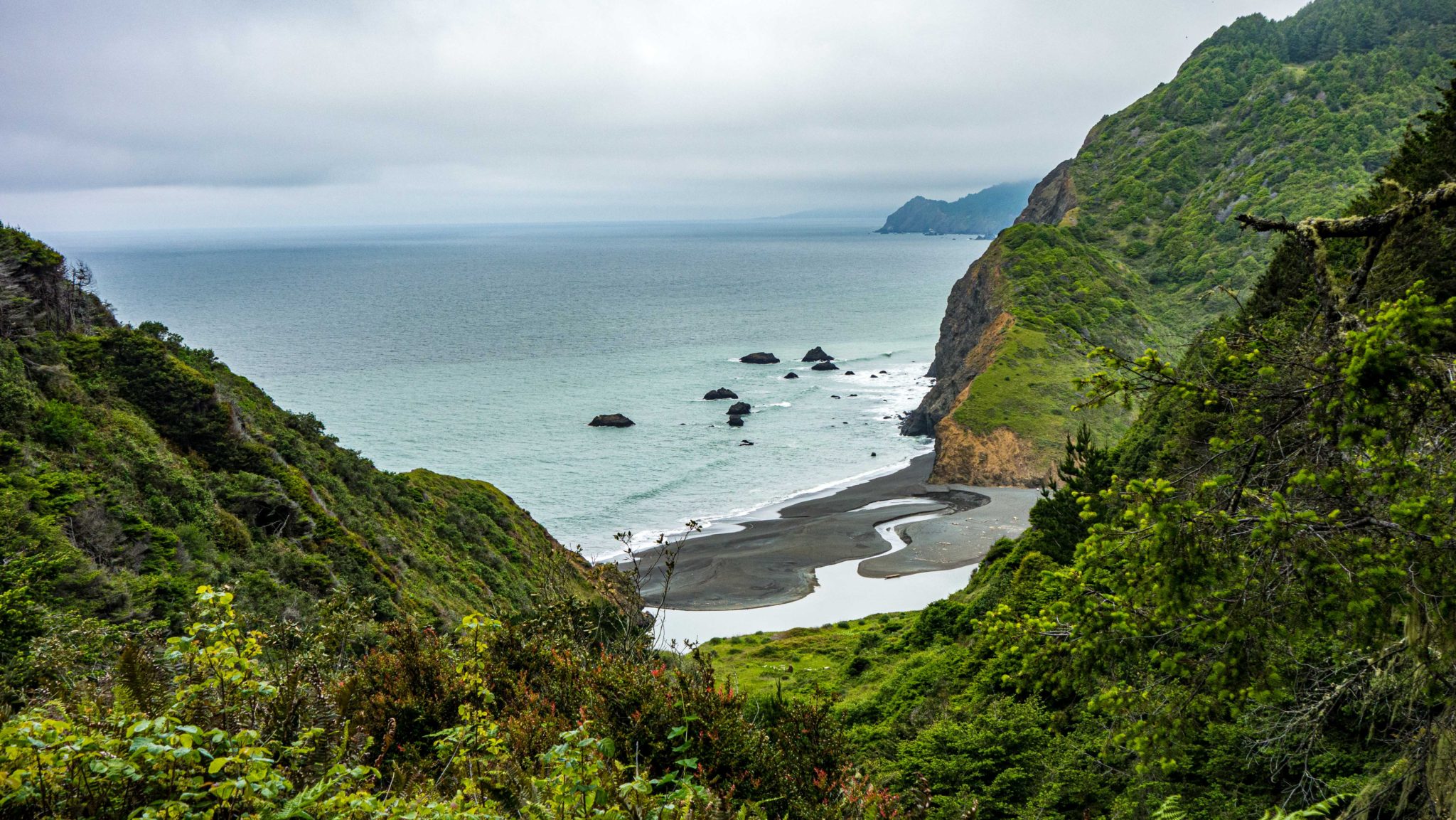
Jeff Mogavero is uniquely positioned to tell stories from the Lost Coast. As a wildlife biologist he spent 7 months trekking deep into remote coastal streams in search of spawning salmon and steelhead. As a runner he recently set the supported FKT on the Lost Coast Trail, a 10 hour and 10 minute sprint across the 57 miles of beach, trail, and views, from Mattole River to Usal Beach. 

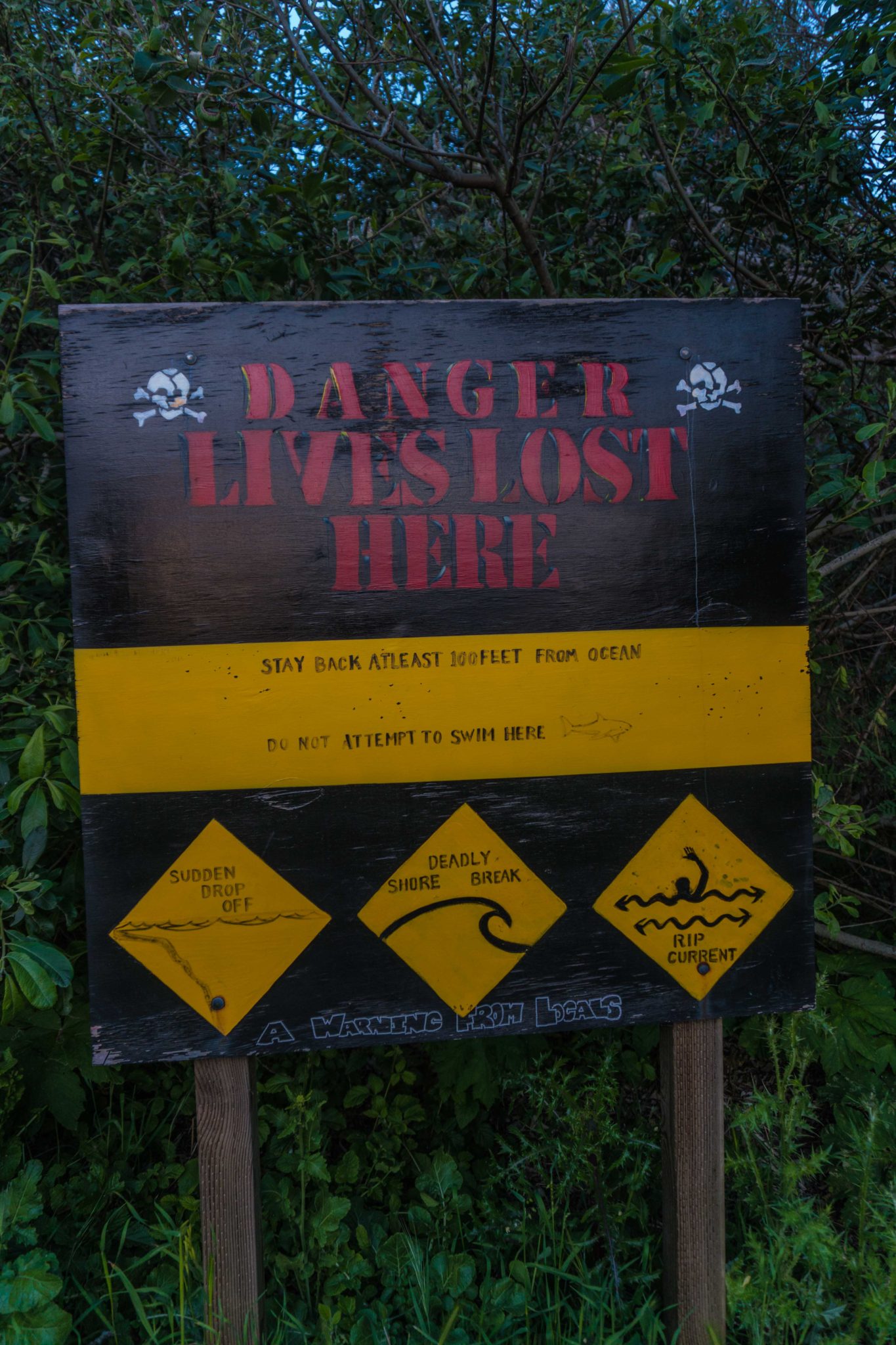
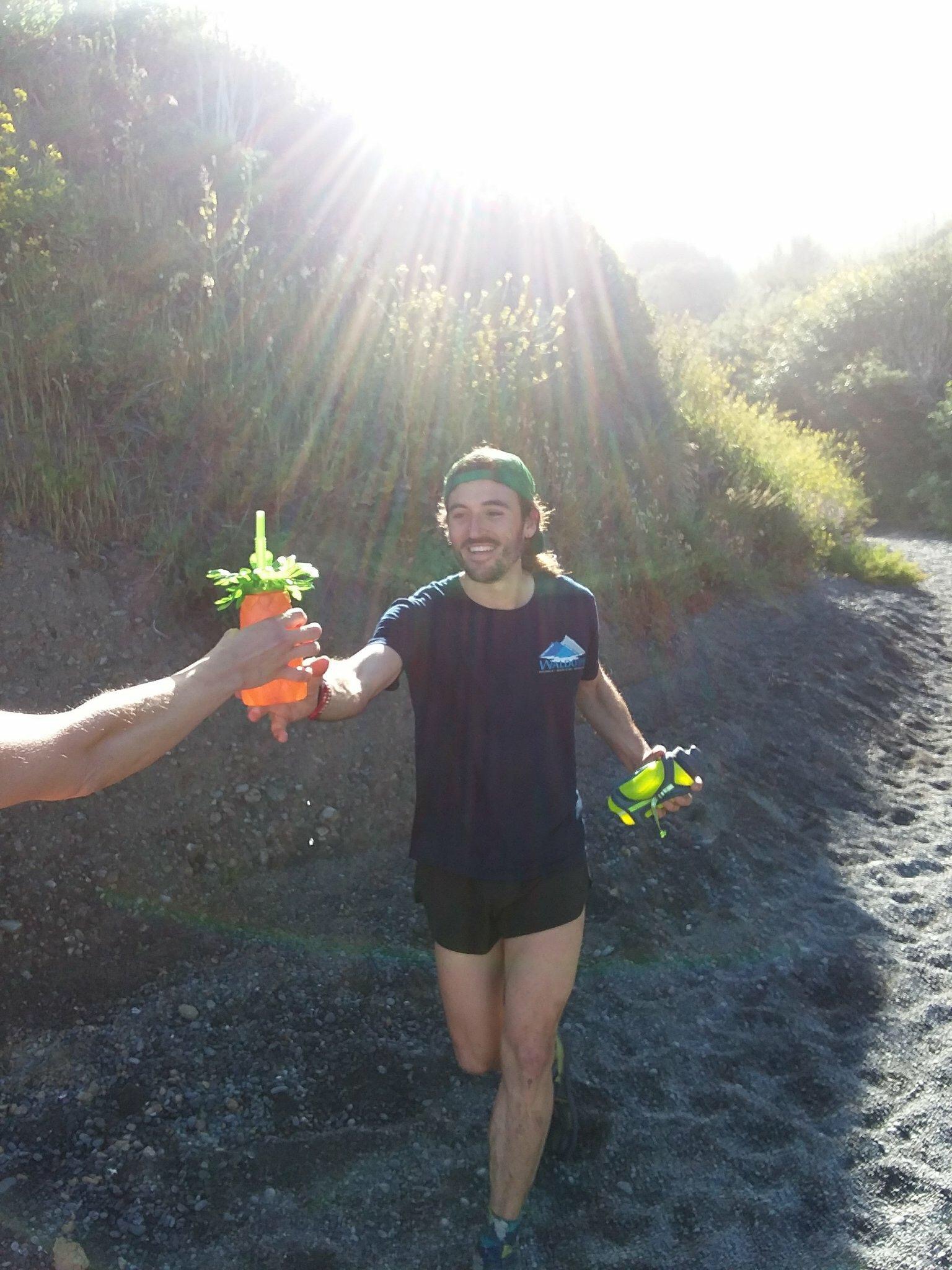
Two naked women came sprinting across the sand towards me. They were clad in nothing but American flag hats, dollar store sunglasses, mardi gras beads, and one, a giant fur coat flowing in the wind. Dana handed me a plastic pineapple filled with hydration mix. I sipped out of the frilly green bendy straw and stripped the pack off my sweaty back. Jordan tossed me a fresh handheld bottle as I looked up at a weathered plywood sign locals had posted where beach meets road: “DANGER -LIVES LOST HERE.” Arriving at the painted skull and crossbones meant that I had safely made it through the first 25 miles of this journey. 

Jordan and Dana were total strangers less than a month ago, and now thanks to a series of serendipitous events unique to the ultra community, they were my crew and fully committed to my physical and psychological well being. We chatted briefly about their lack of clothes and how sore I was from running on sand for the rough equivalent of a marathon. Then as quickly as they appeared, the girls left me to run away into the ocean. I exited the beach and began a 2,000-foot road climb from sea to summit. I had to move quickly if I wanted to best ultrarunner Dylan Bowman’s fastest known time on northern California’s Lost Coast Trail.

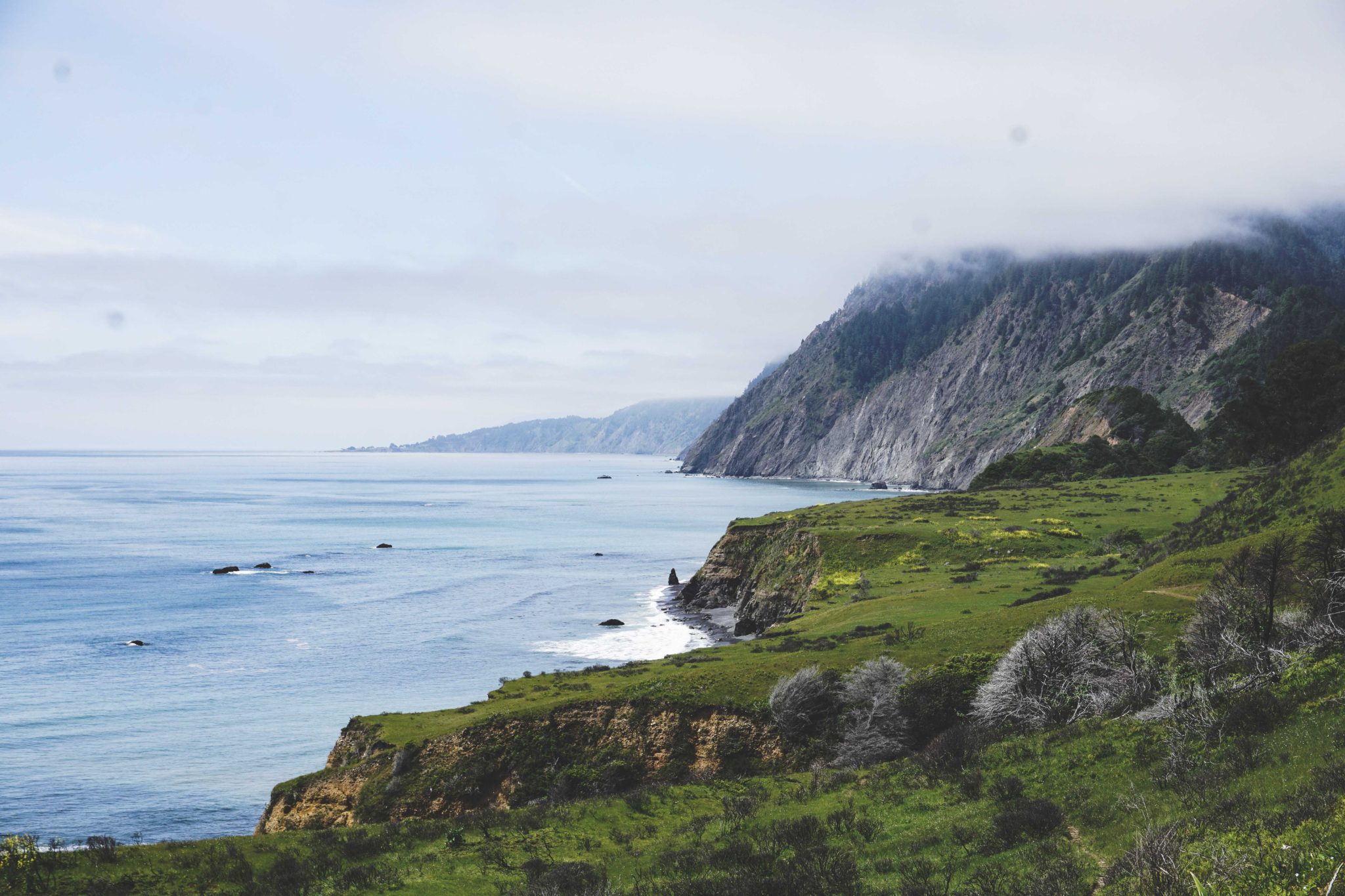
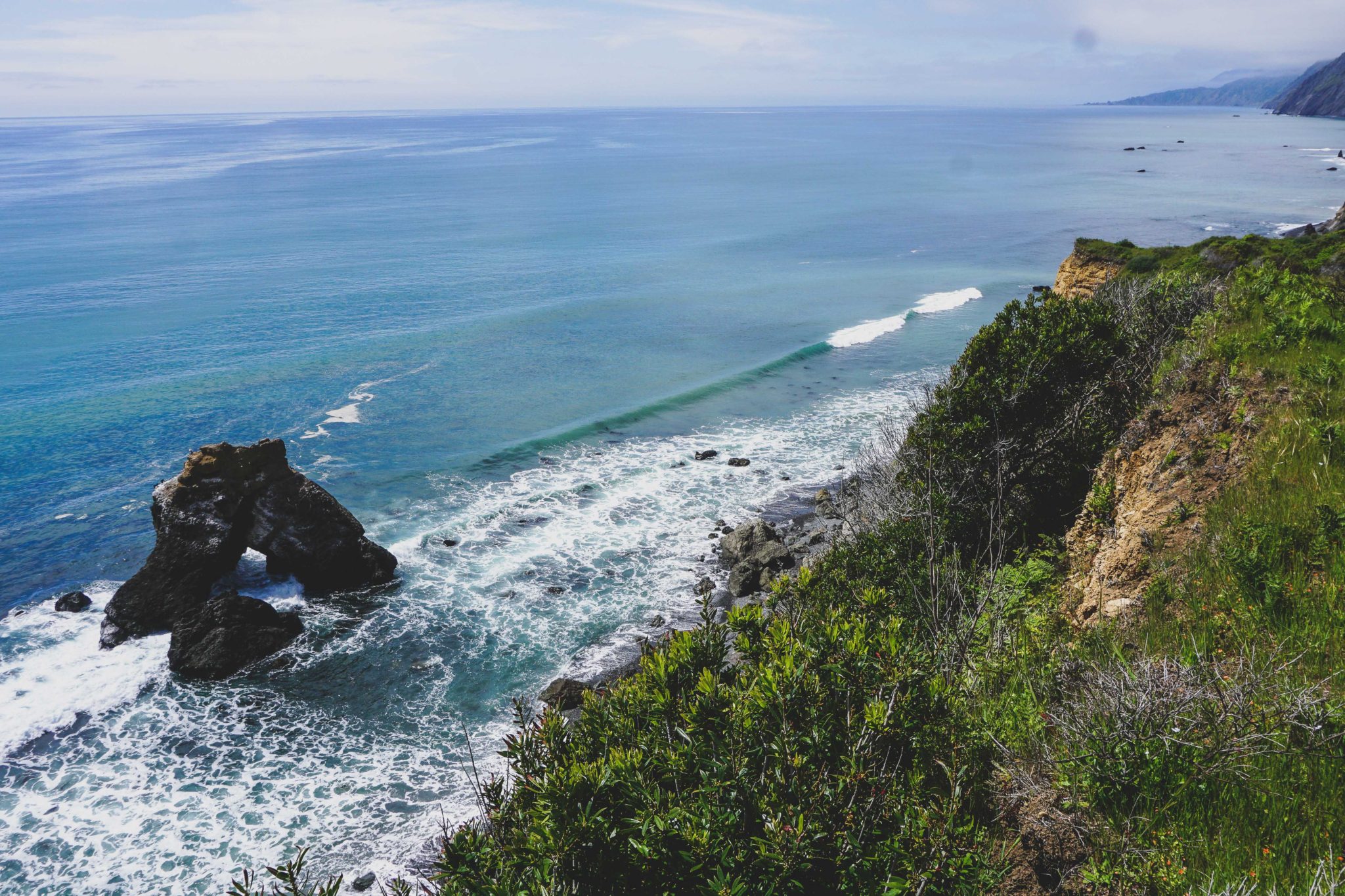
Four and a half hours earlier, we had stood at Mattole Beach on the periphery of a vast coastal wilderness. Jordan snapped a photo of me and I gave her a nervous high-five. A shiver coursed through my body as I turned and started running into the pre-dawn darkness. Miles ticked off as I slipped silently past sleeping seals, sea lions, and unsuspecting slumbering campers. To my left, sea-spray coated cliffs vaulted out of the sand. Above them, the King Range rose thousands of feet into the star-studded night sky. To my right, the Pacific Ocean crashed onto the rocky shore, jostling pebbles, a musical pattering. I ran on a narrow strip of earth between sea and summit. 

After an hour of running, I clicked off my headlamp to watch the pinkening sky bring the severity of the mountains before me into focus. I gazed down the peak-lined coast. I had traveled perhaps seven miles and was about to enter the first of two four-mile impassible zones, where the high tide consumes the Lost Coast Trail twice a day. Ahead of me lay 18 more miles of beach and rock running, followed by 32 miles (and over 10,000 feet of climbing) in the mountains. I settled in for 50 more unforgiving miles on Northern California’s fabled Lost Coast. As footstep after footstep sank into damp sand, I mused over how I had come to find myself in this situation.

For nearly seven months, I had been living an hour and a half south of Usal Beach, the southern end of the Lost Coast, in the small coastal town of Fort Bragg. From Usal, another four and a half hours of nausea-inducing driving would take a determined traveler to Mattole Beach, the northern terminus of the Lost Coast Trail. The 57-miles in between these two beaches proved to be too gnarled for the ambitious builders of California’s famous coastal highway. These miles were “lost,” and with the absence of a road, the Lost Coast was born. 

Throughout the winter, I was working for the state as a seasonal fisheries technician, probing coastal streams and rivers to collect data on the endangered salmon returning to spawn. Twice, my coworkers and I had to abandon plans to backpack the northern part of the Lost Coast due to weather on the notoriously stormy coastline. But the Lost Coast remained just north, a wild adventure nagging in the back of my mind. 

Out of the blue in early April, my supervisor texted me a video of Dylan Bowman running the complete Lost Coast Trail (both the southern and northern sections), setting a new fastest known time (FKT) on the route. I stared at my phone and wondered if I might be able to best Dylan’s time of 11 hours and 12 minutes. Waves of self-doubt and excuses came over me. Any hard effort would be physically draining and mentally brutal, not to mention logistically baffling. The reasons why I was destined to fail began to pile up. I quickly shook these insecurities before they could settle, and instead stoked a fire inside myself. I looked at my phone again and began typing without thinking. “Is this a challenge? Because I am SO down.” And that is how I ended up, a month and a half later, shivering in the dark at the Mattole Beach trailhead at 4:30 in the morning.

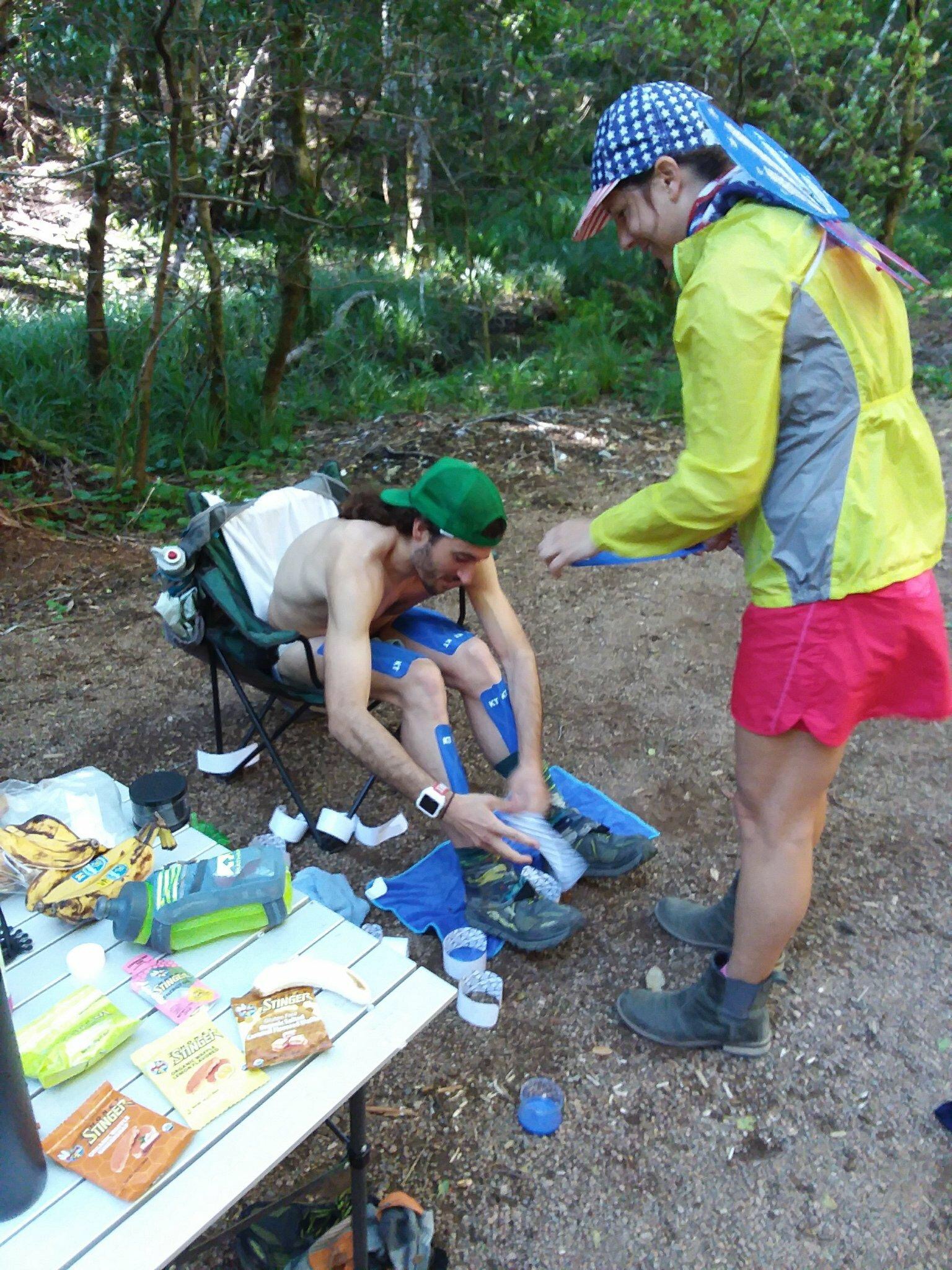
The next time I saw Jordan and Dana, they had their clothes on, and I had taken mine off. The sun had blasted me on the 2,000-foot road climb out of Shelter Cove. I quickly shed my shirt as the temperature rose in sync with the topography. I had left the bluff-lined beach below and just finished the first major climb of the 32 rugged King Range miles to come. Jordan and Dana, now sporting butterfly wings and other dollar store accessories, helped me as I prepared to enter the labyrinthine trail that stretched south to Usal. This was my final pit stop before entering the southern wilderness. It was also a chance to once again drink water from a plastic pineapple. 

A scouting run I had done a few weeks earlier revealed that much of the next marathon would be heinously overgrown with stinging nettle, thistle, poison oak, and blackberries, commingled into thickets of doom intent on ripping anyone who dared pass to shreds. As a Hail Mary precaution, I covered my legs in strips of KT Tape, praying they would form some kind of barrier against the angry vegetation. 

A few miles later, hands on my knees, sweat dripping into my eyes, I grunted up yet another steep climb.  In the absence of my exuberant crew, my tired mind settled on appreciation. I circled back to the fact that my crew had been nude a few hours before and insisted on giving me water only through a now-beloved plastic pineapple. Not to mention, they had driven over a dozen hours to help me spend a day throwing myself against one of the gnarliest chunks of coastline in the country. 

Forty miles in, 17 miles to go, on this sinuous redwood coast. I crested the top of a ridge and gleefully let my legs spin as I descended a rooty trail winding through a grove of towering conifers. Running out of the woods, I navigated a steep, grassy hillside that plummeted into the ocean hundreds of feet below. The hip high grass was punctuated with tunnels of bushes and trees. I ducked, dodged, and fell to the ground for the fifth time in minutes. So much had gone into this attempt, and here I was falling on the ground and crawling on my knees. The trail was in such rough shape that I had no control over my pace, which had slowed to a literal crawl as I neared mile 57.

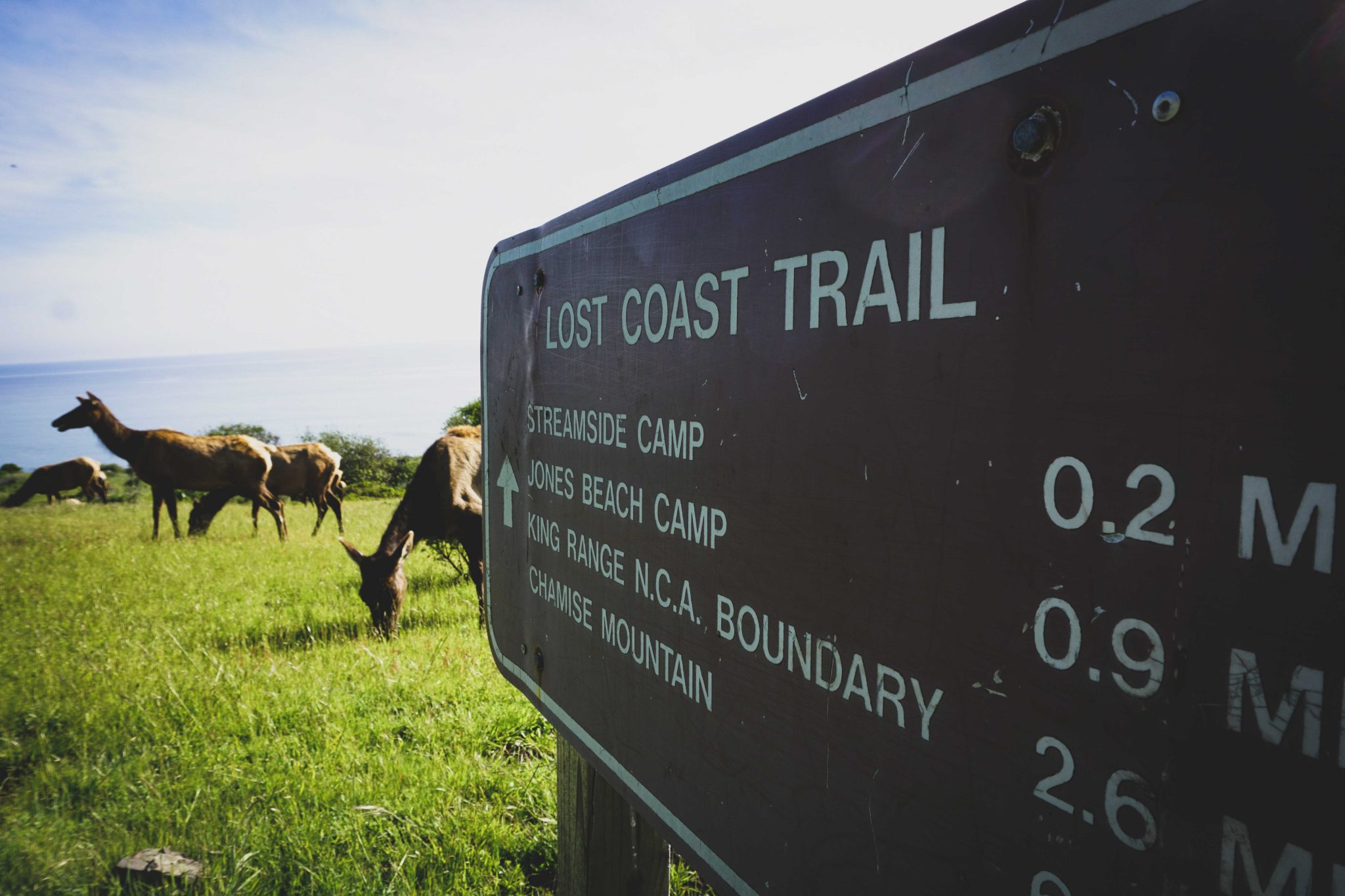
I was beaten, I was exhausted, and I was ready to be done. Even so, there I was moving my blistered feet and shredded legs. My mind floated to all of the things I had seen that day. I had run through the middle of a herd of 30 elk (in hindsight, not recommended) and listened to elephant seals barking in the dark. As the trail conditions eroded, my love for this place grew. Despite the adversity, I was enraptured by the most beautiful and diverse route I had ever traversed. 

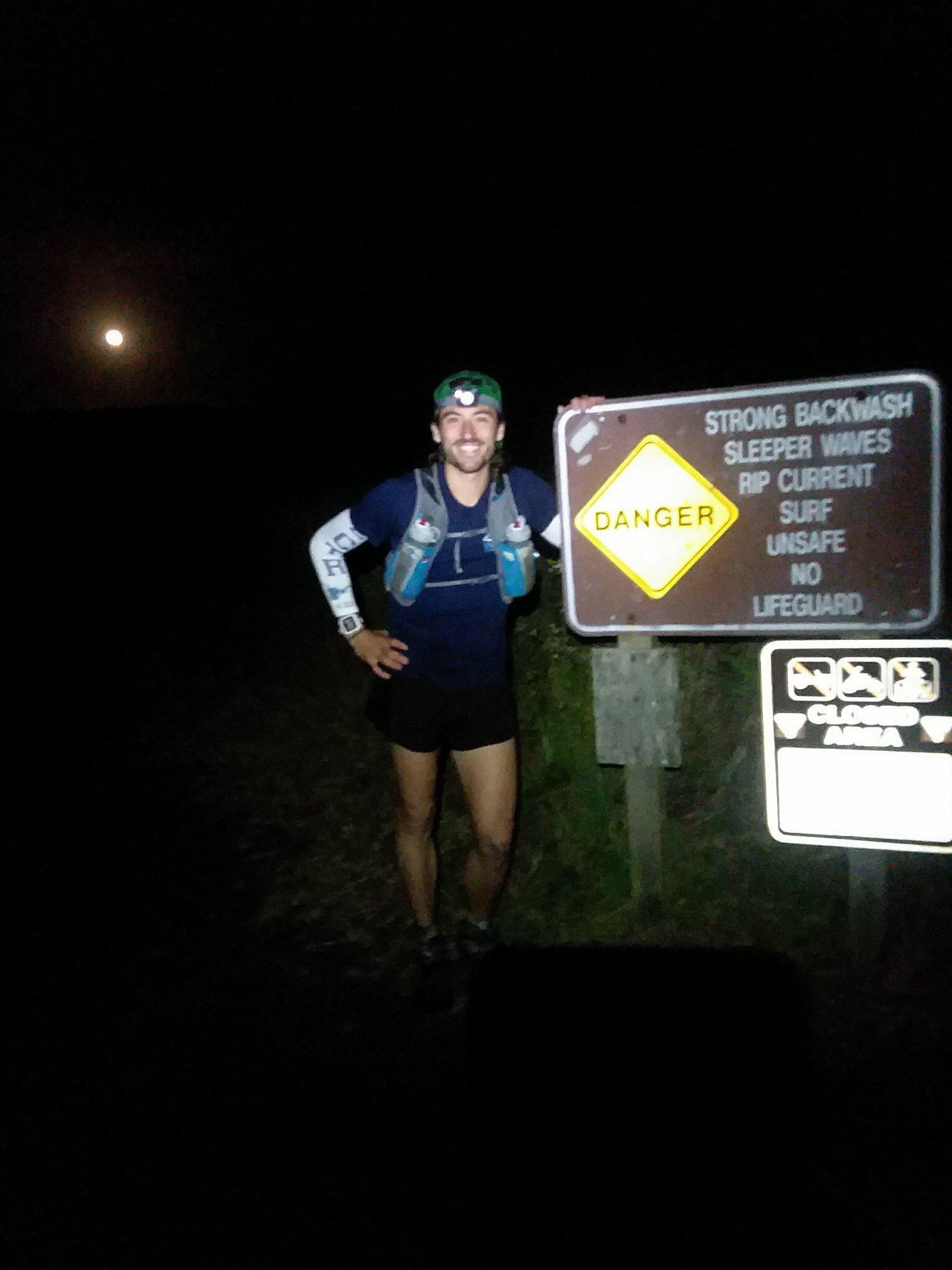
Rolling into the Usal trailhead exhausted and thrilled, I glanced at my watch. I had managed to travel the 57-mile Lost Coast Trail in a new fastest known time of 10 hours and 10 minutes, over an hour under the old record. 

Traveling the Lost Coast Trail in a day gave me a brief yet powerful glimpse at a truly remote and wild land tucked within the most populated state in the nation. For an FKT attempt like this, there was no fanfare or hoopla. Instead, there was just a text message from a supervisor and three people that did not know what they were getting themselves into. As Jordan and Dana handed me a comical “certificate of achievement” complete with sequins and glitter, I realized what the ultrarunning community can do when it comes together to support one another. Armed with nothing but a plastic pineapple, and perhaps clad in nothing, strangers can help new friends chase dreams.

Jeff Mogavero is a runner, writer, wildlife biologist who’s running and ramblings bring levity, insight, and passion to our community. Read his full FKT report and other writings at https://www.jeffmogavero.com/