Categories
Aspire Culture Blog Campaigns Culture Highlights Women's Adventure Scholarship Women's Adventure Scholarship Blogs

Women’s Adventure Scholarship Highlights: “What fears, barriers or challenges make it difficult for women to venture into wilderness spaces?”

THE 2021 WOMEN’S ADVENTURE SCHOLARSHIP APPLICATION PERIOD LAUNCHES SATURDAY, MARCH 6TH. WELL OVER 200 WOMEN APPLIED FOR THE SCHOLARSHIP IN 2019, AND WE WERE OVERWHELMED WITH THE POWER OF THEIR INSPIRING WORDS, STORIES, AND EXPERIENCES. OVER THREE BLOGS, WE’RE SHARING ANSWERS TO SOME OF THE APPLICATION QUESTIONS TO RAISE THE STOKE AND INSPIRE OUR NEXT ROUND OF APPLICANTS.

One of our leading questions in the application was “What fears, barriers, or challenges make it difficult for women to venture into wilderness spaces?”  The answers were dynamic, yet clear themes emerged. Read on for reflections on empowerment, clarity, community, freedom and processing emotion.


Being Alone on the Trails:

“Honestly, being alone on a trail run terrifies me. I have done it, but I’m always nervous and never relaxed. I’m not so much scared of wildlife, but of being alone and injured on the trails or being attacked by someone while I’m somewhere remote. Therefore, I just avoid too remote or long trails when I’m alone.”

“I am a survivor of sexual assault and have spent years working through that trauma and pushing past my own fear barriers. Fear of sexual assault is a real fear for many women and a big reason why I have not done solo wilderness adventuring. It’s something I want to challenge myself to work through.”

“I think society places fears in many women’s heads that it isn’t safe for us to venture outside, especially alone. There are animals, dangerous people and other things lurking around every corner. I think safety is always a priority but fear shouldn’t stop us from doing something we love.”

“The perception that women are not safe when they are venturing into wilderness spaces alone. This can create fear in women that prevents them from venturing into the wilderness. I am often scrutinized when I go off hiking or running in the wilderness, while a man going out on the same solo venture is not. This obstacle doesn’t always exist, but when it does it can be very difficult to overcome. It undermines a woman’s confidence and can discourage her from venturing out at all.”
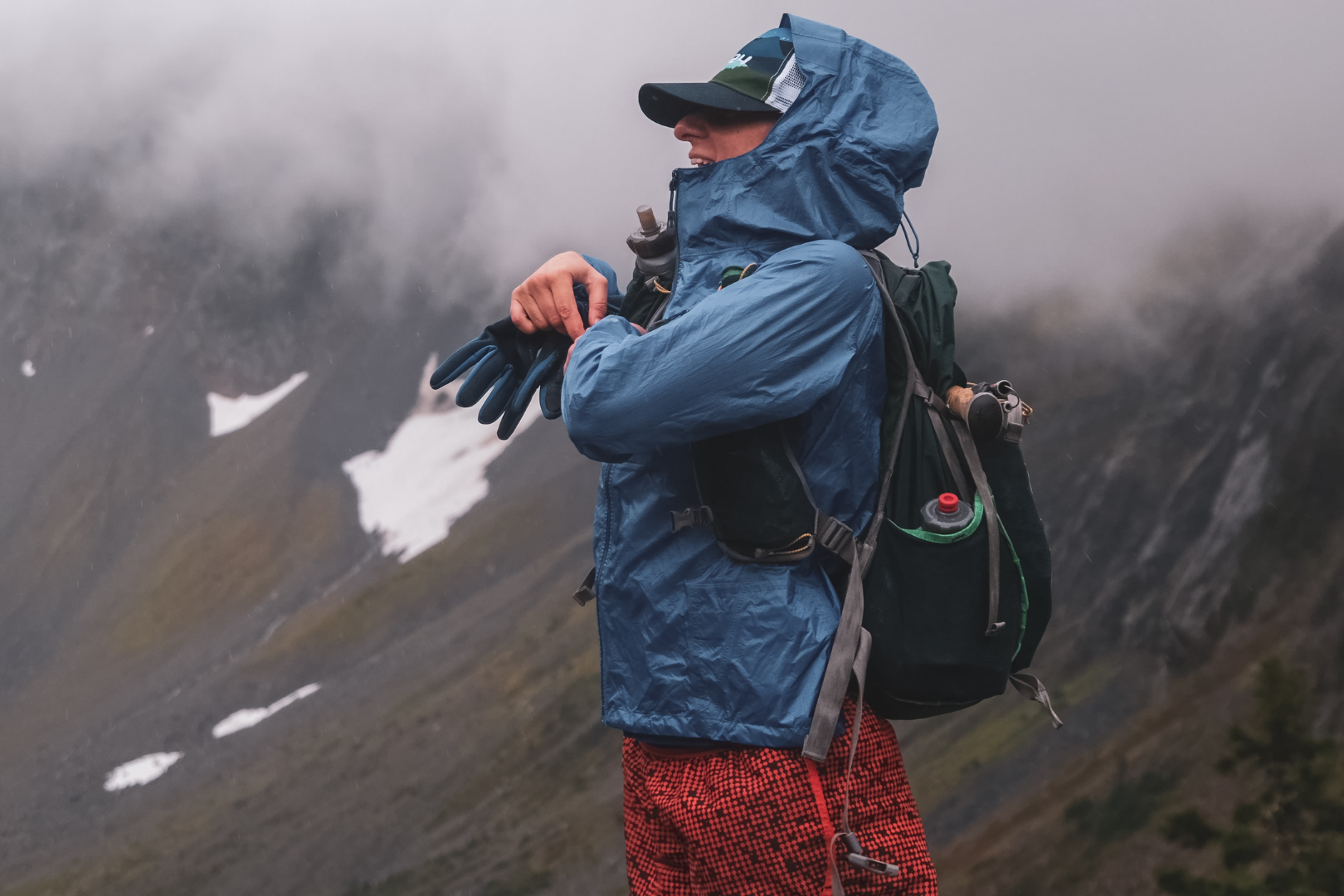
Feeling You Don’t Belong:

“Fear, humiliation, rejection, inaccessibility — for so long this has been seen as “man’s” domain, and there are still many barriers that keep women from accessing outdoor education and experience. To build change begins with a community that gives women a safe place to go knowing that we’ll not only be accepted, but empowered, supported, educated, and inspired.”

“There is also that feeling that you have to look a certain way, or run super fast to be able to accomplish the terrain and the distances. The more I run with women the more I realize that these are misconceptions. We come in different shapes and sizes, our ability to conquer the trails comes from within as much as it does from physical exertion. We need to continue to build each other up and remember that confidence comes before competence!”

“I think there’s an incorrect line of thinking that suggests women don’t enjoy being in the wild. And fear of judgement is a real thing. If a woman believes she is going to be judged by her ventures into the wilderness, despite an ache to be in the outdoors, she may not go.”

Societal Expectations and Barriers:

“Breaking societal stereotypes as a woman in the wilderness, particularly from a minority group, is difficult.”

“Social pressures to conform to gender roles, and assumptions that the outdoor space is not safe for women, creates a gendered geographic fear limiting female participation.”

“Women (especially women of colour) already have so many other worries – we are constantly worried about our safety, well-being, what the intentions of those around us are, how we are going to feed our children. Wild spaces are supposed to be a break from this, but in order to access those wild spaces we must deal with these constant barriers and prejudices in our daily life (i.e., at the grocery store getting food for the trip, going to the outdoor store where we get mansplained about buying a tent even though we’ve already bought several). Any additional barriers can make it impossible to overcome.”
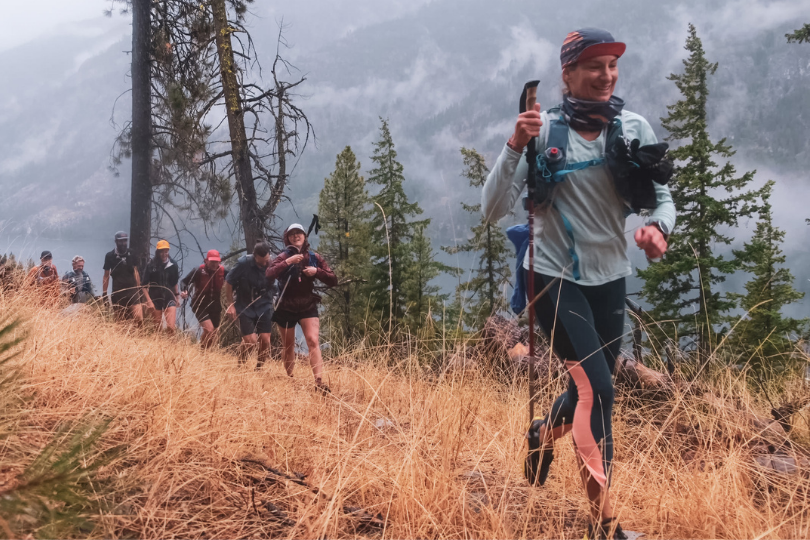
Women Mentorship and Finding other Female Running Buddies:

Wilderness spaces can make it seem harder for women without the proper training and preparedness. The only way to get this is by trying, going with someone more knowledgeable and learning. If you don’t have a mentor it can be extremely challenging, daunting. As a woman it can be hard to find a woman mentor and male mentoring relationships are very difficult: avoiding romantic advances or spouses not getting the wrong idea are just a few of the difficulties. Finding a respectful mentoring relationship is the holy grail”

“Difficulty finding a woman buddy who wants to adventure, explore and run with me!”

“One massive problem is that many adventure-minded women lack other women to adventure with and learn from. We end up relying on romantic partners to learn the skills to be self sufficient in the outdoors. Our adventures rely on continued positive relationships with these persons, and if a relationship ends, it can compromise access to the outdoors”

Other Commitments and Time:

“I think for me the biggest obstacle is time, both logistically finding the time for it and feeling like it’s okay for me to make time for it given my other roles in life (especially being a parent).”

“As a runner and a mom with two young children the biggest obstacle is time. Long gone are the days from my twenties when a beautiful empty Saturday stretched out before me. Now there are soccer games and birthday parties and laundry that needs to get done. There is negotiation that needs to take place with my husband for who gets what time when. There are conversations that continually take place with my family and MYSELF reminding all of us that the time out on the trail makes me a better mom, a better wife, a better friend. It’s what makes me feel whole and happy, and able to handle the inevitable chaos of parenthood with a little more equanimity”

“A barrier is being willing to prioritize my running over other commitments in my life, such as caring for and playing with my two little boys.”

“Time is the biggest challenge. As a mom of 3 with a full time career, it can be hard to take time for myself and to find someone else free to go with.”

“One of my challenges is not feeling guilty of the time I spend away from home. I find that on days when I know my family is home that I may cut my run short or change my plans to run closer to home. Being a wife, mother, and grandmother you occasionally have to put the needs of others above your own.”

Lack of Representation:

“There are so many trail running films out there about dudes setting FKTs or running races, and comparatively much fewer about women doing similarly amazing things. Because “regular” women don’t have as many highly visible role models to get into trail running or mountaineering or other wilderness pursuits, we may be more hesitant to try, and can be intimidated by the “white boys’ club” that the outdoors has historically been.”

“Historically, running has been a male-dominated sport and I believe this still poses an influence. This is why supportive female-based groups are so important!”

“One of the barriers that makes it difficult for women to venture into wilderness spaces is the lack of female representation in outdoor sports and wilderness activities. It can be more difficult for women to envision themselves venturing into wilderness spaces if they do not have female role models to look up to.”

“Role models can come from media representation, local wilderness guides, and peers. It can also be intimidating to venture into these spaces because they are often dominated by men. It can seem like you don’t belong because you are a woman in a group of all men or because it’s something that you don’t typically see other women doing.”
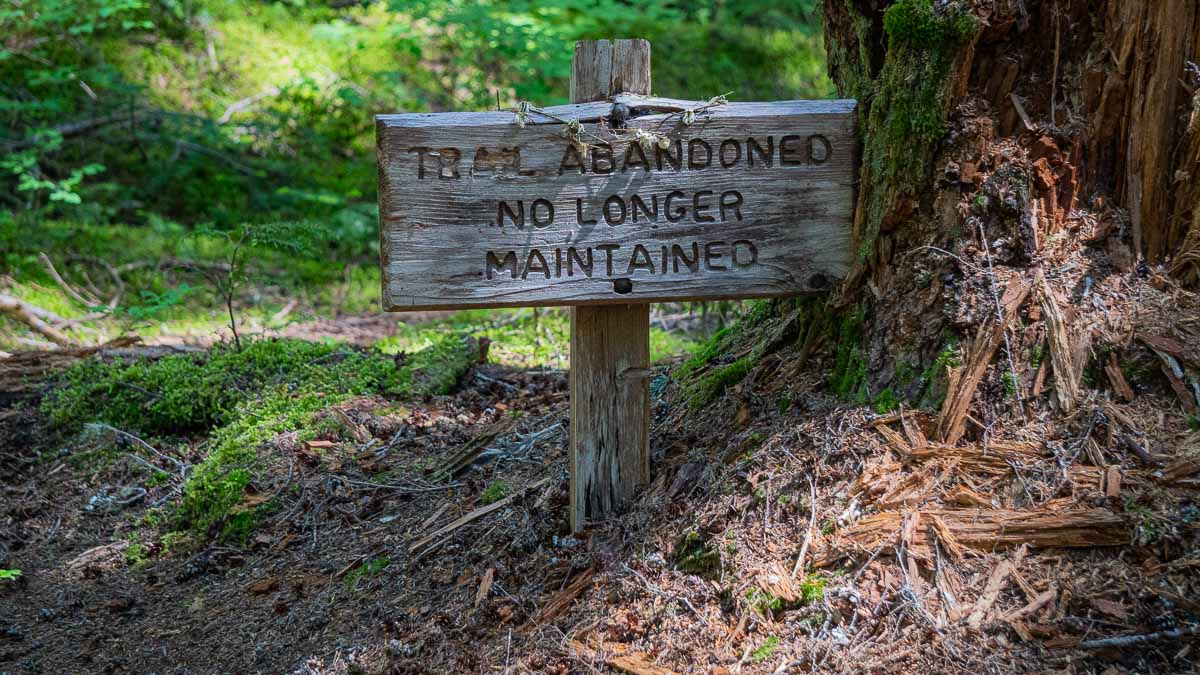
Lack of Backcountry Experience: 

“For many women, a barrier or challenge to venturing into wild places is probably the knowledge and information about how to safely and respectfully be in those remote locations. I feel fortunate that I have had solid experiences and past mentors who taught me those lessons, but it’s not the same for everyone.”

“I feel like boys are more often taught about the wilderness and how to interact with it. This knowledge is less often provided to girls while they are growing up.”

“I think women are often brought up with less opportunity to go into the wilderness from a young age. I feel very fortunate that my family took me camping throughout my childhood but I think too often, girls aren’t exposed to such adventure and later in life don’t see how wonderful being in the wilderness can be from lack of knowing how to just get out there and get started.”

“I think the major barriers to women venturing into wild spaces include lack of confidence in orienteering forest trails and a fear of wild animals. I believe that with more guided runs through these wild spaces, more women will get comfortable with these adventures. With education and increased exposure to wild spaces, the fear of critters may abate. A little.”

“Lack of skill sets, comfort level with terrain or exposure, fear of taking risk or perceived risk.”
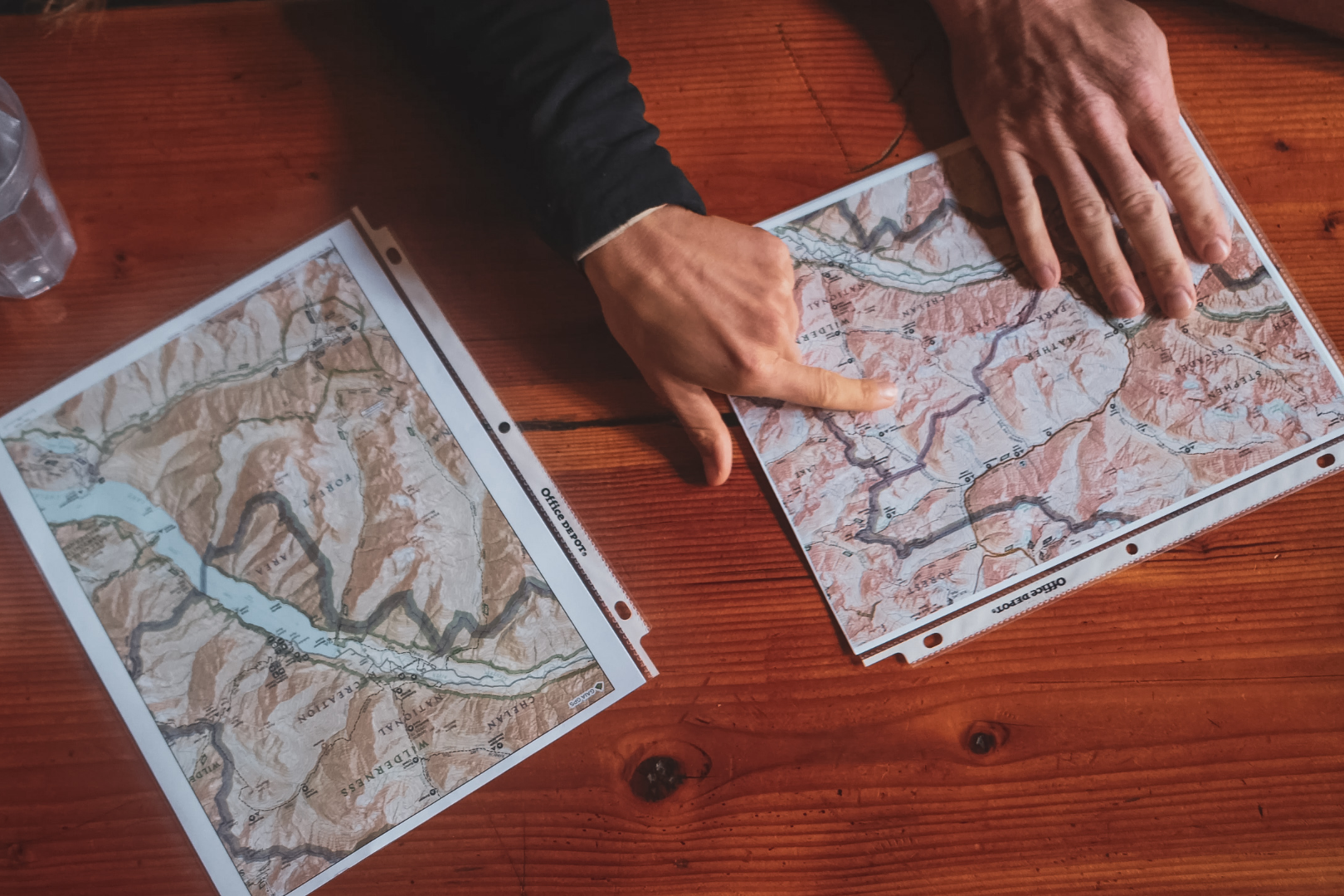
OUR HOPE IS THAT THE WORDS AND EXPERIENCES SHARED HERE INSPIRE 2021 APPLICANTS WHO ARE READY TO SHARE THEIR STORIES AND EMBRACE THE FRIENDSHIP AND COMMUNITY THAT COMES FROM BACKCOUNTRY MILES.

Thinking of applying for our 2021 Women’s Adventure Scholarship?!

Scholarships are intended to support individual female athletes venturing into wild spaces. Our hope is that as scholarship recipients share their stories of adventure, they will contribute to inspire and grow the culture of female-focused wilderness exploits.

THE 2021 WOMEN’S ADVENTURE SCHOLARSHIP APPLICATION PERIOD WILL OPEN ON MARCH 6TH. MORE DETAILS TO COME SOON!

Aspire’s All Women’s Trips

All Women’s Trips are a celebration of community and connection shared among women who love and aspire to play in the mountains. Each stunningly beautiful trip is enhanced by the uniquely awesome vibe of ladies-only adventures.

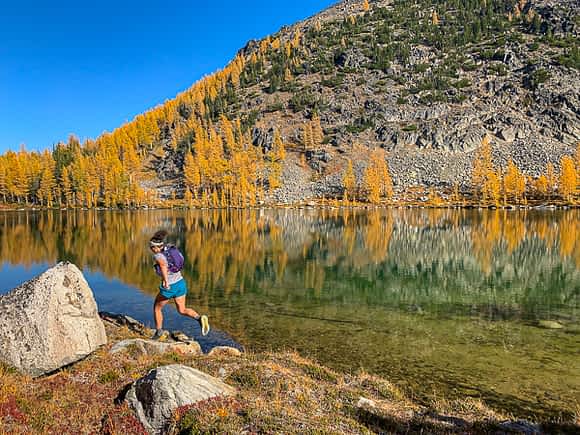
Larches, blue sky, and alpine lakes in the Sawtooth Backcountry
Categories
Aspire Culture Blog Campaigns Culture Highlights update Women's Adventure Scholarship Women's Adventure Scholarship Blogs

1st Annual Women’s Adventure Scholarship Winner: Bobbi Barbarich

1st Annual Women’s Adventure Scholarship Winner: Bobbi Barbarich

With growing anticipation and excitement for our Second Annual Women’s Adventure Scholarship for the 2021 season, we wanted to highlight the incredible women who were chosen from our first scholarship round.  With over 250 women sharing their insights, experiences and motivations as runners, it was deeply humbling and inspiring to read the applications for women all across the globe who have found a great sense of meaning and connection to lacing up their runners and hitting the trails!

One of three Women’s Adventure Scholarship winners was awarded to Bobbi Barbarich from Nelson, British Columbia, joining us for Aspire’s Women Sawtooth Backcountry Trip! 

For Bobbi, getting out on the trails has been a beautiful way to “experience the outdoors, and feel gratitude in moving through nature”  When speaking of general fears and barriers for women out on the trails, she spoke in depth about the challenges faced when running solo and the differences between female and male experiences on the trails. 

“The general belief that women are at risk when they are alone, or without men. That women who do adventure alone or with other women are somehow special or have specific traits that make them more successful than other women and that is the only reason they can adventure alone. That there is space for only a few women adventurers, and they must compete with each other or be better than men in order to be out there. That gear must be specific to women, rather than just good quality gear. That we must look good while using it. That we are constantly expected to be desirable to men, to society, in order to appreciate what our bodies are capable of. We must overcome all these innate perceptions, expectations impressed upon us since birth, before we even put on our shoes”

However, regardless of these barriers, Bobbi has overcome incredible feats in her own running experience. 

“Completing an ultra trail race 15 years after a compression fracture and herniated disk. I was told I’d never be able to run again and I felt a strong disconnect from nature for a very long time. I did a lot of other sports, but nothing felt like running. When I finally shed ideas of old injuries and worked to make them a strength, running came back to me and I haven’t looked back. It’s harder than it used to be, but I’m more fulfilled and grateful for what our bodies and minds are capable of doing. I have a new, respectful relationship with myself.”

With Bobbi’s insight, passion, and resilience we want to share her final essay submission from our Adventure Scholarship. 

When I was little, I would explore animal trails that snaked up and down the valley around our house in the wilds of northern Alberta. I was an adventurer discovering new lands; comfortable with being lost, confident that the home I built from branches was sturdy.  

But as I grew up, I learned that the valley was stalked by murderous bears,  that the creek could possibly swell and swallow me whole, and my shelter wouldn’t keep out the rain, much less someone coming to hurt me. I learned I should never be there alone. The wild was no place for a girl. 

When I got older, I started running. I ran because someone said I was fat because I was expected not to be what I was because I was supposed to want boys to want me but they couldn’t if I was like this.  

I did not run on the trails I knew well, where the grass tickled my ankles and the ground underfoot was soft. I ran on the road where people could see me if I  needed help, where my parents could come get me when it was time to do the chores. I ran where I could measure just how far I was going, so I could fit onto a  boy’s lap without hurting him. 

On one particular day, the road stretched forever in front of me. Heatwaves rippled from the gravel, into the endless blue sky where the raging sun bore into my head. It struck me the road was part of a constructed world. And I realized that running further would not change the reasons why I was running on the road.  

So I stopped. And I walked home, but I stayed on the road because I did feel unsafe. I did feel I could not go where I wanted, though I couldn’t remember where that was. 

Slowly, I felt for the piece of me that was missing. I started looking for it. I  read books about wild adventures that told me this female body was capable of great things. I rode bikes and played roller derby and started my own business and left the man who told me I had become too intimidating for him to love.  

I found a river valley in the city with paths that felt impossibly familiar. I  started running again, following dirt trails that snaked below city maps. I learned this body I struggled so hard to confine was powerful. It would carry me through dark forests and onto windy peaks. I ventured safely into shady corners on mountainsides. Not only was I okay there, but it where I could grow, unconstructed. 

I found the piece that would get lost in the wild, the part of me that would find her own way home, was right where I had been told to leave her. And she was happy I’d come back. 

As one of three chosen Adventure Scholarship winner’s Bobbi joined us for our Women’s Sawtooth Backtrouny adventure. Her post-trip report is below:

Running is a nearly universal experience. Whether it was playing tag in elementary school, knocking out 5km for a charity or chasing after the bus this morning, most of us have run at least a few steps in our lives.

This universality is also why running makes a good metaphor: many people have some familiarity with what it feels like to run, whether or not they like it. I completed the Sawtooth Backcountry Women’s Retreat with Aspire as the culmination of a year of pushing through mental and medical barriers. Fittingly, Sawtooth was rife with metaphorical opportunities. Here are my top three musings from a long, challenging and totally gratifying journey:

We’re all in this together. I consider running a solitary endeavor and it indulges my introverted insecurities. Alone, I cannot compare my perceived weaknesses to others. Although I signed up for a group running trip with Aspire, I did so to feel comfortable in a new landscape, without the obligation of running with others. 

However, a few days prior to the trip Abram sent us a message: the trail would be snow-covered and to stay safe, we would need to stay together. Alarm bells screamed through my head. I would frantically try to keep up, then I’d bonk, and everyone would be annoyed with me.

Instead, our guide gave us the lead and together, we settled into a pace to manage the challenging terrain. We commiserated together through miles of frozen post-hole footsteps from a previous hiker and skidded down an icy luge a dirt bike had left on the trail. Many times I swore as I caught myself from falling on my butt. Yet in hearing others’ near misses, I realized this was as difficult for them as it was for me. And somehow, that made it better. Had I been alone, I would have thrown down my poles in a tantrum and walked out of there. Instead, after a comical eternity, we were back on dirt and elated, laughing at what a disaster we’d just ran through.

One step at a time. There’s no greater truth while running long distances. You can stand still and stay where you are, or you can take one more step and get a little closer to where you’re going. Because of the snow, we rerouted to another trail and had planned on a shuttle to get back to camp. Later during the day, we opted to cancel the shuttle and just run back to camp. We weren’t sure how far from camp we were, but it seemed close

The road descended out of the subalpine for not two or three, but seven unexpected miles. This was the furthest several of us had ever run, and without the comfort of camp in sight, we’d have to keep running. My legs were rubber and the naysayers in my head yelled at me to stop. But as the sun disappeared behind the mountain, cool shadow drifted over my shoulders, and we kept moving. The world suddenly felt very simple. I could keep running, or I could stay right where I was. I could push through this challenge, or give up and have someone come save me. Without a word, we chose to keep moving. And eventually, inevitably, we returned to camp. Cheers from the crew, copious salty snacks and a warm fire greeted us. I was exhausted, but with an unexpected confidence in what my body was capable of doing. I’d run the furthest of my life simply by taking another step.

Where there’s pain, there’s growth. The first time I ever went running, I managed to go about 200 metres. It was the longest I had ever run at once. And it hurt like hell. I was crying and sweating and full of agony. I had wanted to run beyond the horizon, so I vowed to keep running those 200 until I could run 400. Then it was a mile. When I ran my first marathon, I almost didn’t toe the line because that would be the furthest ever. Four kilometres from the finish line, when I could barely muster the next step, a woman near me kept repeating, “Anyone can run 4km.” I knew I could do that, so I did. Running my first ultra, I thought I would die after a bad reaction to caffeine and poor nutrition. But I somehow made it and now I was running in the Backcountry of the Sawtooth mountains. In every pain cave is an opportunity to get stronger.

My weekend at the  Sawtooth Women’s Retreat was the furthest I’d ever run, with people I’d never met and beyond any comfort level, I’d encountered. I’m more comfortable and confident with discomfort… And the journey is just getting started.

With applications for our Second Annual Women’s Adventure Scholarship open, we’d love to hear from you! Head on over to ____ to apply!!

Categories
Aspire Culture Blog Campaigns Culture Highlights update Women's Adventure Scholarship Women's Adventure Scholarship Blogs

1st Annual Women’s Adventure Scholarship Winner: Janel Lanphere

1st Annual Women’s Adventure Scholarship Winner: Janel Lanphere

With growing anticipation and excitement for our Second Annual Women’s Adventure Scholarship for the 2021 season, we wanted to highlight the incredible women who were chosen from our first scholarship round.  With over 250 women sharing their insights, experiences and motivations as runners, it was deeply humbling and inspiring to read the applications for women all across the globe who have found a great sense of meaning and connection to lacing up their runners and hitting the trails!

One of three Women’s Adventure Scholarship winners was awarded to Janel Lanphere from Flagstaff, Arizona. Janel joined us for three epic days running around Mount Rainer along the Wonderland trail! 

Janel has a powerful story. As a victim of teenage abuse, running through remote and wild spaces has taught her ‘the importance of play and the calm confidence of the flow state’ while being a powerful tool to combat her ‘inner demons’. Her passion for running has become an integral part of her life as it ‘fuels [her] creative energy, dispel stress, is [her] time alone, time with friends, lets [her] be competitive, adventurous and above all feel free, strong and connected to nature”. 

a trail runner selfie

With women facing many fears, challenges and obstacles to get out and explore wild places, Janel believes it’s still possible, especially with other women along your side. 

“Fear will stop all of us if we let it. Challenges can be overcome with experience but are best in small steps. Wilderness spaces can make it seem harder for women without proper training and preparedness. The only way to get this is by trying, going with someone more knowledgeable and learning. If you don’t have a mentor it can be extremely challenging, daunting. As a woman, it can be hard to find a woman mentor and male mentoring relationships are very difficult: avoiding romantic advances or spouses not getting the wrong idea is just a few of the difficulties. Finding a respectful mentoring relationship is the holy grail. I have preferred to learn on my own over time. I’m sure this approach has slowed my progress, I hope to change that for up-and-coming women.”

Janel has also allowed her own experiences in trail running to inspire and show other women we are so much more capable than we often believe!  Reflecting back on her experience at the Moab Trail Marathon 2018 Masters Woman National Champion, she had quite the day!

“I started the race extremely nauseous from some medication I stopped taking without weening appropriately, by mile 11 I had solved the nausea with ginger and tums, but hadn’t eaten much or hydrated properly. By mile 20 I felt amazing and finished the second half of the race faster than the first. Winning the National Championship Masters Woman’s Division was never in my mind that day, but it happened and I still can’t fathom it. It was a day defined by not giving up and problem solving. That race flipped a switch in my brain that we CAN INDEED do more than we think we are capable of and now I know for sure. I’m proud of racing well, but most of all I am proud of finally finding the space in my brain to accept exactly what is happening instead of listening to the negative voice and giving up!”

With Janel’s grit, resilience, and passion we want to share her final essay submission from our Adventure Scholarship. 

Adventuring through remote and wild spaces has taken my life from a teenage abuse victim attempting to be small and invisible, to conquering my inner demons.  It has taught me the importance of play and the calm confidence of the flow state.

Growing up in a blue-collar family, the values taught to me included a perceived lack of opportunity, the need to work hard just to get by, and a negative association with play (play was for the rich).  Long hours at manual labor jobs with added DIY projects at home were common.  With these values, I started working at 8 years old and have never stopped.

I started running in college and through the miles of pack running, sharing failures and success with sweat and tears, the comradery of the Cross-Country Team drew me out of my depression.  Slowly I started to see myself in a different light, as a person who could set an intention and live a little bigger.  I moved across the country to Arizona where I didn’t know a soul and persevered when acclimating to high altitude running at 7000’.  I started running mountain races such as Imogene Pass Run and TransRockies Run.  Each exploration removed fear and with increased success in problem solving, I started really believing in myself.  

The personal growth continued upon meeting and marrying my husband, I now had the confidence to take the leap and become a wife and stepmother.  Together we explored remote areas of the Southwest such as Canyonlands National Park and I felt a new inner hum while staring at the night sky with no artificial light in sight.  I started seeking out more remote trails, running longer hours feeling the state of flow.  Often alone, I explored more inaccessible locations and relished the hours playing.  Longer hours on the trails required increased physical and mental strength.  General physical bad-assery doesn’t carry you by itself, we also need to control our minds.  Often after many hours on the trail, when the body starts to break down, old demons would crawl to the surface and remind me of the small life from which I came.  

Recently, when hopelessness set in at the start of a race, I pushed the demons away without any reason to be confidence.  My start at the 2018 Moab Trail Marathon found me badly nauseous from a prescription I stopped taking for the race.  The nausea prevented me from eating my usual pre-race nutrition, I felt things were stacking against me.  When the nausea subsided at mile 11, I was so far back that I didn’t think I could compete.  By accepting the situation, I broke through a mental barrier and ended the race 1st place woman in the Master’s Division of the USATF field.  Consequently, by adventuring in the remote and wild spaces in nature, I’ve been able to accept the remote and wild spaces in my mind.

As one of three chosen Adventure Scholarship winner’s Janel joined us along the Wonderland Trail, stretching 93 miles over three days around the majestic peak of Mount Rainer.  Her post-trip report is below:

What do you do when something scares you?  Avoid it or confront it? What about those events that look amazing, but you don’t have the confidence?  Do you make a training plan and stick to it, like you know you should? Or do you put it off for when you have more time, or the kids are older, or when you have the money saved?  Well, none of these excuses worked for me. I won the 2019 Women’s Scholarship Award for the Wonderland Circumnavigation around Mt. Rainier in Washington State. I had to get on board, fast.

I learned that I won the Wonderland trip only a few months before the mid-August trip, giving me mere weeks of preparation time. It was a bit too close for comfort. The short story is that my training did prepare me well for the trip, but this discussion is about the mind.  The preparation I really needed was to start to believe in myself.

Piecing a big goal into smaller steps has always worked for me in the past, so I decided to try it here. Working on my training plan, I added two extreme days that were similar time commitments to the expected days on the Wonderland trip.  

On my first extreme day I paced my friend Helen Galerakis in her first 100-mile race- The Bighorn 100.  Pacing her for around 20 miles wasn’t going to be enough of a time commitment, so I added a warm up/research run and a run to and from the last aid station. The cumulative running over the two days was eleven hours, which qualified as the most running I had ever done over that short time period.  My mindset was expanded on this run. Not only were the muddy conditions something to be endured, but pacing throughout the night and into the dawn was challenging, as well as beautiful. I was inspired by my friend’s grit and strength, and my body and mind handled it fine. I was feeling lighter and not as concerned about the Wonderland Trail.

For my second extreme day, I registered for a 12 hr lap-style race.  The Parhelic Circle Trail Race is hosted by local company Sundog Running.  I was a little concerned that this event was just two weeks before the Wonderland Trail trip, and would be my longest amount of time running.  It scared the crap out of me! In past long runs, the pain started to set in around the 20-mile mark. The thought of continuing on for hours and hours after that seemed unfathomable.  In the end, I made it to 36 miles- which not only was the farthest I had run in a single day, but it also matched the longest distance (day 1) on the Wonderland Trip.  

In my essay submission to the Women’s Scholarship, I wrote about conquering my inner demons from childhood abuse.  In last year’s Trail Marathon Championship race, I had no reason to be confident as I hadn’t been able to eat/drink due to nausea and in spite of that, I was able to quiet those demons for the first time.  Accepting the situation and taking the Championship race one mile at a time allowed me to solve the nausea problem and get back in the race to finish as Master’s Women’s Champion. In the 12-hour Parhelic I dissected the race one lap at a time. This allowed me to put energy into the task at hand, instead of succumbing to anxiety and fear. I could feel a shift. I was starting to believe in myself and I wanted to do more.

The night before the start of the Women’s Wonderland Trip we shared some of our stories and experiences that led us here.  The apprehensive tension was in the air but instead of hierarchical competitive energy focusing on things like who was the best among us, who had the most experience or fastest time, a sense of community was developing.  In the company of women I didn’t hear these intimidating questions. Each of us entering an unspoken pact to take care of one another and make our way together, each at their own pace.

While training for this trip I spoke with several people. Some men who had taken on big goals and found their way to make it happen.  Those conversations focused on developing strength, finding my edge and taking chances. When I spoke to my female ultra-running friends the conversation was again, different.  The conversations focused on what was I going to find out about myself during the event and how this experience was going to change me. All of these points of view were helping me change the inner dialogue from one of fear from this unknown territory to preparing a space for something else. 

Ready or not, it was time to put one foot in front of the other.  Starting out with nervous energy, I had the good fortune of having a similar overall pace to Sarah and Paula-two inspiring women I got to know well over the trip.  We leapfrogged many times over the miles, each having our strengths and accepting each other’s decisions to push or hold back the pace based on the terrain at hand.   Day one ended with a mind-melting climb up to Mowich Lake Campground. I struggled hard. Having only taken one pole with me (with the inaccurate idea that one pole is really all you need) I was losing the battle.  Paula kindly lent me one of her poles as I was ascending at a much slower pace than she was. It was my turn to accept the community Paula, Sarah and I had developed over the miles on the trail.  

two trail runners crossing a bridge in Mt. Rainier National Park

Day two went off without a hitch. Paula, Sarah and I again ran together.  It was a beautiful run in such amazing country with great company. For day three Paula, Sarah and I discussed our plans: Paula planned to push to do the entire distance. I planned to stop early at Box Canyon and Sarah was going to see how she felt.  Even though we had differing plans, we decided to start the day together. Within the first few miles, I caught my last glimpse of Paula and Sarah and never met up with them again. This made for a day alone on the trail, and although my familiar mental demons stayed away, new anxiety came in its place.  

One of the challenges for me on this trip was the point-to-point nature of circumnavigating a mountain. While Aspire provided maps and route information, and the Wonderland Trail was marked at junctions,  I struggled more than I expected with the lack of trail markings and flags. As my mental control was declining on day three after hours of being alone in unfamiliar country, I had a long low point.  Fear of bears and cougars set in and took hold. As I neared the end of the day my mind starting playing tricks on me, but then I saw a pencil on the ground and my heart leaped at the idea that someone else was up ahead!  Seconds later I discovered it wasn’t a pencil, after all, just a stick. It happened again with a rock- it looked like a pack. But it wasn’t, I was hallucinating objects of civilization just to calm my anxiety of being alone. 

Even though there was a trail sweeper behind me, I had completely forgotten about them. I sure was happy to find myself in Box Canyon at my chosen end to day three and to see the Aspire Adventure Running crew waiting. I sat down, started to eat and immediately felt myself falling asleep. I was more fatigued than I realized.  I was so happy with what I had accomplished and at peace with my decision to stop a few miles early.

Grit, intelligence and community are just a few of the qualities of the women I met on this amazing trip.  The qualities of people who work their way up, take on big challenges and find a way to make them happen. They speak up or provide care for the greater good. These are my people.  It was an honor and a privilege to share in the collective shift in consciousness as each of us moved into a space unknown, redefining how we think about running and really how we think about ourselves.

With applications for our Second Annual Women’s Adventure Scholarship open, we’d love to hear from you! Head on over to ____ to apply!!

Categories
Aspire Culture Campaigns courses Culture Destinations Highlights on the fence Runner Resources Stage trip report Trip Reports and Trip Styles Trip Styles What to Expect on Trips WL Women's Adventure Scholarship Women's Adventure Scholarship Blogs Wonderland Circumnavigation Stage

Confronting Fear on the Wonderland Trail

Janel Lanphere was one of three recipients of our 2019 Women’s Adventure Scholarship. We were inspired by her essay about the power of adventure to accept her internal wild and remote spaces. We caught up with her this fall, after she ran the Wonderland Trail with us.

What do you do when something scares you?  Avoid it or confront it? What about those events that look amazing, but you don’t have the confidence?  Do you make a training plan and stick to it, like you know you should? Or do you put it off for when you have more time, or the kids are older, or when you have the money saved?  Well, none of these excuses worked for me. I won the 2019 Women’s Scholarship Award for the Wonderland Circumnavigation around Mt. Rainier in Washington State. I had to get on board, fast.

Wonderland trail stretches in front of Mt. Rainier
A rare flat section on the trail. Photo: Janel Lanphere

I learned that I won the Wonderland trip with only a few months before the mid-August trip, giving me  mere weeks of preparation time. It was a bit too close for comfort. The short story is that my training did prepare me well for the trip, but this discussion is about the mind.  The preparation I really needed was to start to believe in myself.

Piecing a big goal into smaller steps has always worked for me in the past, so I decided to try it here. Working on my training plan, I added two extreme days that were similar time commitments  to the expected days on the Wonderland trip.  

The Wonderland Trail doesn’t disappoint. Photo: Janel Lanphere

On my first extreme day I paced my friend Helen Galerakis in her first 100-mile race- The Bighorn 100.  Pacing her for around 20 miles wasn’t going to be enough of a time commitment, so I added a warm up/research run and a run to and from the last aid station. The cumulative running over the two days was eleven hours, which qualified as the most running I had ever done over that short time period.  My mindset was expanded on this run. Not only were the muddy conditions something to be endured, but pacing throughout the night and into the dawn was challenging, as well as beautiful. I was inspired by my friend’s grit and strength, and my body and mind handled it fine. I was feeling lighter and not as concerned about the Wonderland Trail.

For my second extreme day I registered for a 12 hr lap style race.  The Parhelic Circle Trail Race is hosted by local company Sundog Running.  I was a little concerned that this event was just two weeks before the Wonderland Trail trip, and would be my longest amount of time running.  It scared the crap out of me! In past long runs the pain started to set in around the 20-mile mark. The thought of continuing on for hours and hours after that seemed unfathomable.  In the end, I made it to 36 miles- which not only was the farthest I had run in a single day, but it also matched the longest distance (day 1) on the Wonderland Trip.  

In my essay submission to the Women’s Scholarship I wrote about conquering my inner demons from childhood abuse.  In last year’s Trail Marathon Championship race, I had no reason to be confident as I hadn’t been able to eat/drink due to nausea and in spite of that I was able to quiet those demons for the first time.  Accepting the situation and taking the Championship race one mile at a time allowed me to solve the nausea problem and get back in the race to finish as Master’s Women’s Champion. In the 12-hour Parhelic I dissected the race one lap at a time. This allowed me to put energy into the task at hand, instead of succumbing to anxiety and fear. I could feel a shift. I was starting to believe in myself and I wanted to do more.

trail runners after a long day on the Wonderland Trail
Sarah and Paula sharing the last piece of pie. Photo: Janel Lanphere

The night before the start of the Women’s Wonderland Trip we shared some of our stories and experiences that led us here.  The apprehensive tension was in the air but instead of hierarchical competitive energy focusing on things like who was the best among us, who had the most experience or fastest time, a sense of community was developing.  In the company of women I didn’t hear these intimidating questions. Each of us entering an unspoken pact to take care of one another and make our way together, each at their own pace. Looking back on it now, it makes me think of the lyrics:

I see you over there, on the internet. Comparing all the girls who are killing it.

Taylor Swift, “You Need to Calm Down”

 While training for this trip I spoke with several people. Some men who had taken on big goals and found their way to making it happen.  Those conversations focused on developing strength, finding my edge and taking chances. When I spoke to my female ultra-running friends the conversation was again, different.  The conversations focused around what was I going to find out about myself during the event and how this experience was going to change me. All of these points of view were helping me change the inner dialogue from one of fear from this unknown territory to preparing a space for something else. 

two trail runners crossing a bridge in Mt. Rainier National Park
Sarah and Paula happy to be getting started on day 1. Photo: Janel Lanphere

Ready or not, it was time to put one foot in front of the other.  Starting out with nervous energy, I had the good fortune of having a similar overall pace to Sarah and Paula-two inspiring women I got to know well over the trip.  We leap frogged many times over the miles, each having our strengths and accepting each other’s decisions to push or hold back the pace based on the terrain at hand.   Day one ended with a mind melting climb up to Mowich Lake Campground. I struggled hard. Having only taken one pole with me (with the inaccurate idea that one pole is really all you need) I was losing the battle.  Paula kindly lent me one of her poles as I was ascending at a much slower pace than she was. It was my turn to accept the community Paula, Sarah and I had developed over the miles on the trail.  

a waterfall amidst glowing green moss
A beautiful creek on the Wonderland Trail. Photo: Janel Lanphere

Day two went off without a hitch. Paula, Sarah and I again ran together.  It was a beautiful run in such amazing country with great company. For day three Paula, Sarah and I discussed our plans: Paula planned to push to do the entire distance. I planned to stop early at Box Canyon and Sarah was going to see how she felt.  Even though we had differing plans, we decided to start the day together. Within the first few miles I caught my last glimpse of Paula and Sarah and never met up with them again. This made for a day alone on the trail, and although my familiar mental demons stayed away, new anxiety came in its place.  

a trail runner selfie
Day three on the Wonderland Trail. Photo: Janel Lanphere

One of the challenges for me on this trip was the point to point nature of circumnavigating a mountain. While Aspire provided maps and route information, and the Wonderland Trail was marked at junctions,  I struggled more than I expected with the lack of trail markings and flags. As my mental control was declining on day three after hours of being alone in unfamiliar country, I had a long low point.  Fear of bears and cougars set in and took hold. As I neared the end of the day my mind starting playing tricks on me, but then I saw a pencil on the ground and my heart leaped at the idea that someone else was up ahead!  Seconds later I discovered it wasn’t a pencil after all, just a stick. It happened again with a rock- it looked like a pack. But it wasn’t, I was hallucinating objects of civilization just to calm my anxiety of being alone. 

Even though there was a trail sweeper behind me (likely hours back), I had completely forgotten about them. I sure was happy to find myself in Box Canyon at my chosen end to day three and to see the Aspire Adventure Running crew waiting. I sat down, started to eat and immediately felt myself falling asleep. I was more fatigued than I realized.  I was so happy with what I had accomplished and at peace with my decision to stop a few miles early.

the clouds fill valleys in Mt. Rainier National Park
Above the clouds. Photo: Janel Lanphere

Grit, intelligence and community are just a few of the qualities of the women I met on this amazing trip.  The qualities of people who work their way up, take on big challenges and find a way to make them happen. They speak up or provide care for the greater good. These are my people.  It was an honor and a privilege to share in the collective shift in consciousness as each of us moved into a space unknown, redefining how we think about running and really how we think about ourselves.

Join Aspire Adventure Running in 2020 for a circumnavigation of Mt. Rainier. Dates, pricing and more information can be found on the course page.

Categories
Aspire Culture Blog Campaigns Culture Diverse Voices Highlights Women's Adventure Scholarship Women's Adventure Scholarship Blogs

Bobbi Barbarich

Winner of the Sawtooth Backcountry 2019 Women’s Adventure Scholarship

When I was little, I would explore animal trails that snaked up and down the valley around our house in the wilds of northern Alberta. I was an adventurer discovering new lands; comfortable with being lost, confident that the home I built from branches was sturdy.

But as I grew up, I learned that the valley was stalked by murderous bears, that the creek could possibly swell and swallow me whole, and my shelter wouldn’t keep out the rain, much less someone coming to hurt me. I learned I should never be there alone. The wild was no place for a girl.

When I got older, I started running. I ran because someone said I was fat, because I was expected not to be what I was, because I was supposed to want boys to want me but they couldn’t if I was like this. I did not run on the trails I knew well, where the grass tickled my ankles and the ground underfoot was soft. I ran on the road where people could see me if I
needed help, where my parents could come get me when it was time to do the chores. I ran where I could measure just how far I was going, so I could fit onto a boy’s lap without hurting him.

On one particular day, the road stretched forever in front of me. Heat waves
rippled from the gravel, into the endless blue sky where the raging sun bore into my head. It struck me the road was part of a constructed world. And I realized that running further would not change the reasons why I was running on the road. So I stopped. And I walked home, but I stayed on the road because I did feel unsafe. I did feel I could not go where I wanted, though I couldn’t remember where that was.

Slowly, I felt for the piece of me that was missing. I started looking for it. I
read books about wild adventures that told me this female body was capable of great things. I rode bikes and played roller derby and started my own business and left the man who told me I had become too intimidating for him to love.

I found a river valley in the city with paths that felt impossibly familiar. I
started running again, following dirt trails that snaked below city maps. I learned this body I struggled so hard to confine was powerful. It would carry me through dark forests and onto windy peaks. I ventured safely into shady corners on mountainsides. Not only was I okay there, but it where I could grow, unconstructed.

I found the piece that would get lost in the wild, the part of me that would
find her own way home, was right where I had been told to leave her. And she was happy I’d come back.

Categories
Aspire Culture Blog Culture Diverse Voices Highlights update WL Women's Adventure Scholarship Women's Adventure Scholarship Blogs

Janel Lanphere

Winner of the Wonderland 2019 Woman’s Adventure Scholarship

Adventuring through remote and wild spaces has taken my life from a teenage abuse victim attempting to be small and invisible, to conquering my inner demons.  It has taught me the importance of play and the calm confidence of the flow state.

Growing up in a blue-collar family, the values taught to me included a perceived lack of opportunity, the need to work hard just to get by, and a negative association with play (play was for the rich).  Long hours at manual labor jobs with added DIY projects at home were common. With these values, I started working at 8 years old and have never stopped.

I started running in college and through the miles of pack running, sharing failures and success with sweat and tears, the comradery of the Cross-Country Team drew me out of my depression.  Slowly I started to see myself in a different light, as a person who could set an intention and live a little bigger. I moved across the country to Arizona where I didn’t know a soul and persevered when acclimating to high altitude running at 7000’.  I started running mountain races such as Imogene Pass Run and TransRockies Run. Each exploration removed fear and with increased success in problem solving, I started really believing in myself.

The personal growth continued upon meeting and marrying my husband, I now had the confidence to take the leap and become a wife and stepmother.  Together we explored remote areas of the Southwest such as Canyonlands National Park and I felt a new inner hum while staring at the night sky with no artificial light in sight.  I started seeking out more remote trails, running longer hours feeling the state of flow. Often alone, I explored more inaccessible locations and relished the hours playing. Longer hours on the trails required increased physical and mental strength.  General physical bad-assery doesn’t carry you by itself, we also need to control our minds. Often after many hours on the trail, when the body starts to break down, old demons would crawl to the surface and remind me of the small life from which I came.  Recently, when hopelessness set in at the start of a race, I pushed the demons away without any reason to be confidence.  My start at the 2018 Moab Trail Marathon found me badly nauseous from a prescription I stopped taking for the race. The nausea prevented me from eating my usual pre-race nutrition, I felt things were stacking against me.  When the nausea subsided at mile 11, I was so far back that I didn’t think I could compete. By accepting the situation, I broke through a mental barrier and ended the race 1st place woman in the Master’s Division of the USATF field.  Consequently, by adventuring in the remote and wild spaces in nature, I’ve been able to accept the remote and wild spaces in my mind.

Categories
Aspire Culture Blog Campaigns Highlights update Women's Adventure Scholarship Women's Adventure Scholarship Blogs

Anna Brown

Winner of the Stehekin 2019 Women’s Adventure Scholarship

Whether it is through social conditioning that is deeply rooted in the norms of our culture or whether it perpetuated by the generational rituals of our families of origin, we learn from a young age our “place” in society. It’s a way for our collective brains to categorize individuals as part of our tribe and to “other” those who are not; evolutionarily speaking, this is how societies survived famines, wars, religious persecution, etc. My earliest memories of being “othered,” was in kindergarten. My family lived on the edge of the wealthiest school district in the city. We were working class. In addition, my mother was a large woman and did not look like the other moms. My fellow 6-year-olds would laugh at our old, ugly, yet reliable car, my gently used clothing, my made-with-love sack lunches, and my beautifully fat mother. It broke my young heart. I would experience this “othering” continually as a child, young adult, and even now – snide remarks on my weight, on my lack of wealth, on my family name, and on being a woman. This is part of the human condition; the price we pay for living in societal groups, but I believe woman experience some of the harshest forms of criticism; as such, we fade away, break, or develop unbending backbones. Personally, I am the latter; I learned how to be tough, independent, and resilient.


I once had a yoga teacher say to me that the goal of yoga was not to be perfect, but to breathe ourselves through the stuck spaces around our lives so that we could reveal our tender hearts hidden under layers of protective armor and to finally make peace with who we are. For me, an overheated studio with 50 strangers is not the place for me to find this type of vulnerable self-discovery; I would rather embark on this endeavor in the wilds the pacific northwest. Here is the thing about being tough, it serves a much-needed purpose in the moment of surviving, but it does little for building true strength and creating the vital connection we all need to live with meaning. In my experience, the most empowering thing I have done as a woman is to be vulnerable, to lay my heart bare for others, and to reach for the light of human connection. I could not have learned how to do this with others, if the mountain trail hadn’t first taught me how to do it with myself.


There is a raw honestly that one finds among the dusty July mountain paths of Eastern Washington – a truth that is realized once you force yourself to breathe in deeply the smell of hot pine needles. There is a feeling of connectedness and belonging that one can only get from standing alone on an alpine mountain top in October while looking at the newly turned colors of the larch blazing like wildfire below. Getting to these places require something more than physical strength and sheer will. It requires the ability to find those supposed human weaknesses that many women have buried deeply – vulnerability, reliance on others, and ultimately, self-love. I have experienced the depth and breadth of human emotion on the mountain trail; I once screamed until my throat was sore because of sheer panic at basecamp in the Pasayten Wilderness; I have cried the heaving sobs of grief on the hardpacked earth of an ultra-race course on the high-desert outside of Ellensburg; I have shared in the side-splitting laughter that comes after sheer exhaustion with other women under the shadow of the Sawtooth range; and, I have stood in stunning awe looking down at the mist shrouded valleys on a mountaintop in the North Cascades. For me, the most empowering experience I have had and continue to have in nature, is giving in to my need to be connected to this earth and others; I have to breathe into those spaces of vulnerability, and in doing so, I am learning to live a life of meaning, and not just survival.