Categories
art Aspire Culture Blog courses Culture Highlights Reverb update YOSE

Paint the Trails

Capturing Light, Shape and Color in Yosemite NP

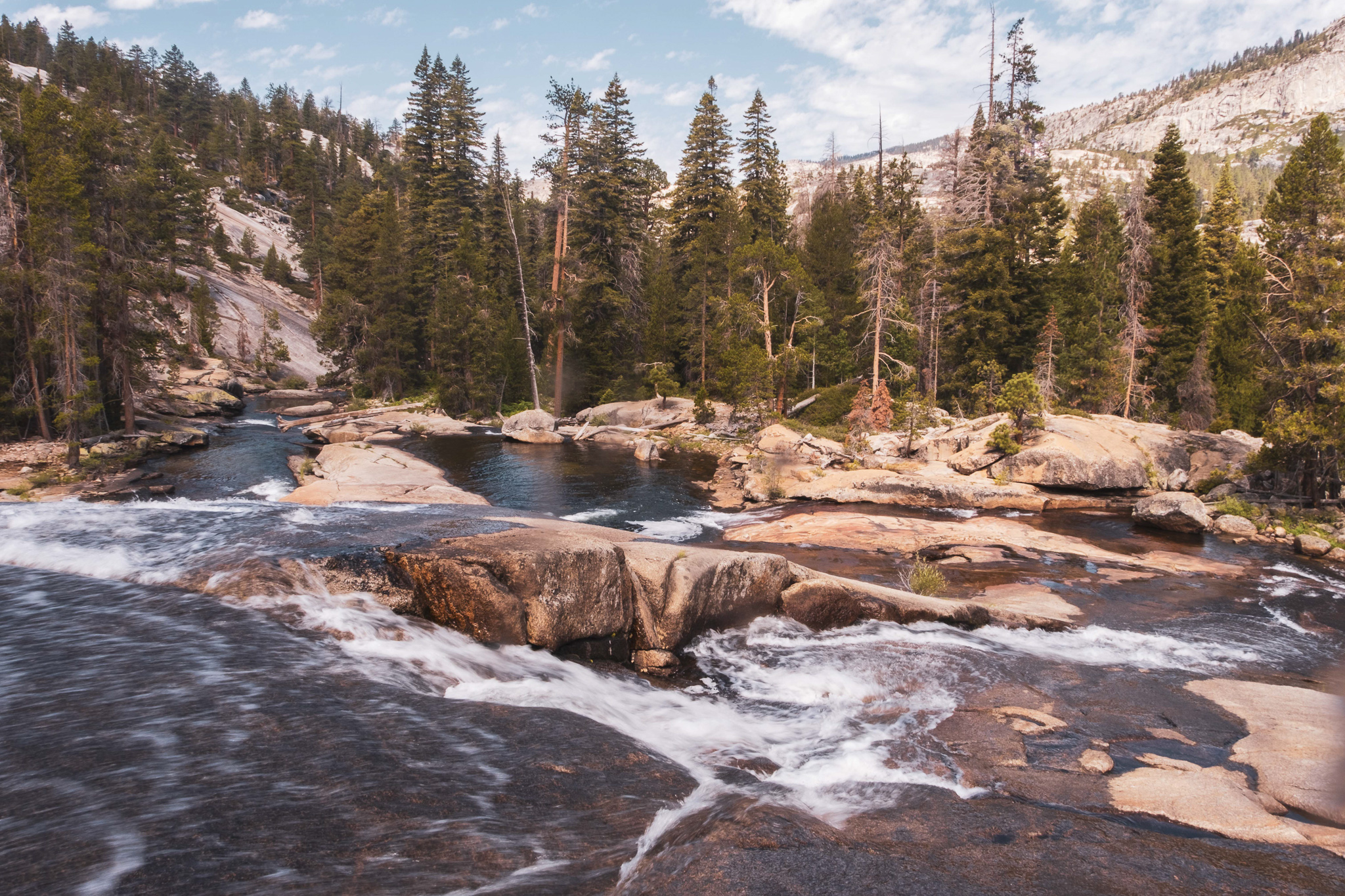
This summer, painter and trail runner Paige Klugherz joined Aspire’s Yosemite Valley Views trip, balancing long days of trail running with time spent painting Yosemite’s monolithic granite peaks their surroundings. In this Q&A Reverb entry, we explore Paige’s approach to wilderness travel, painting on the go, and finding inspiration in the details.

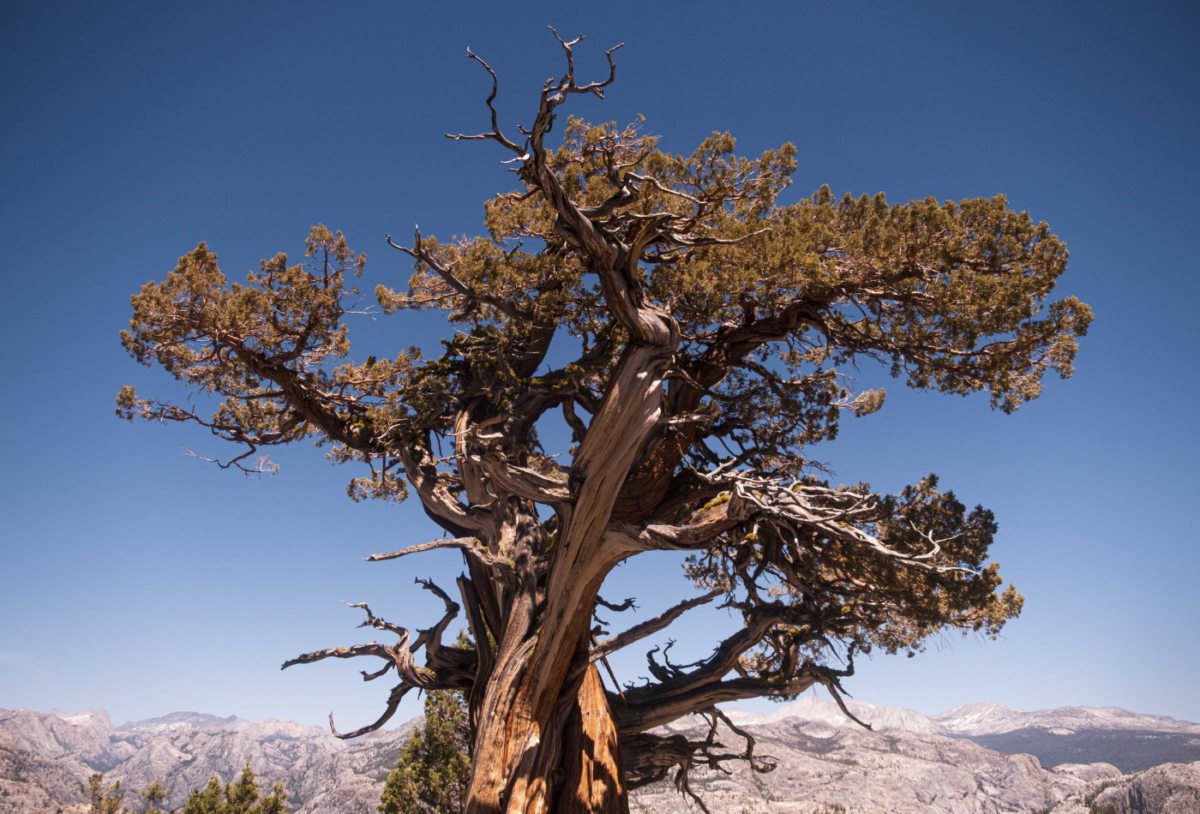
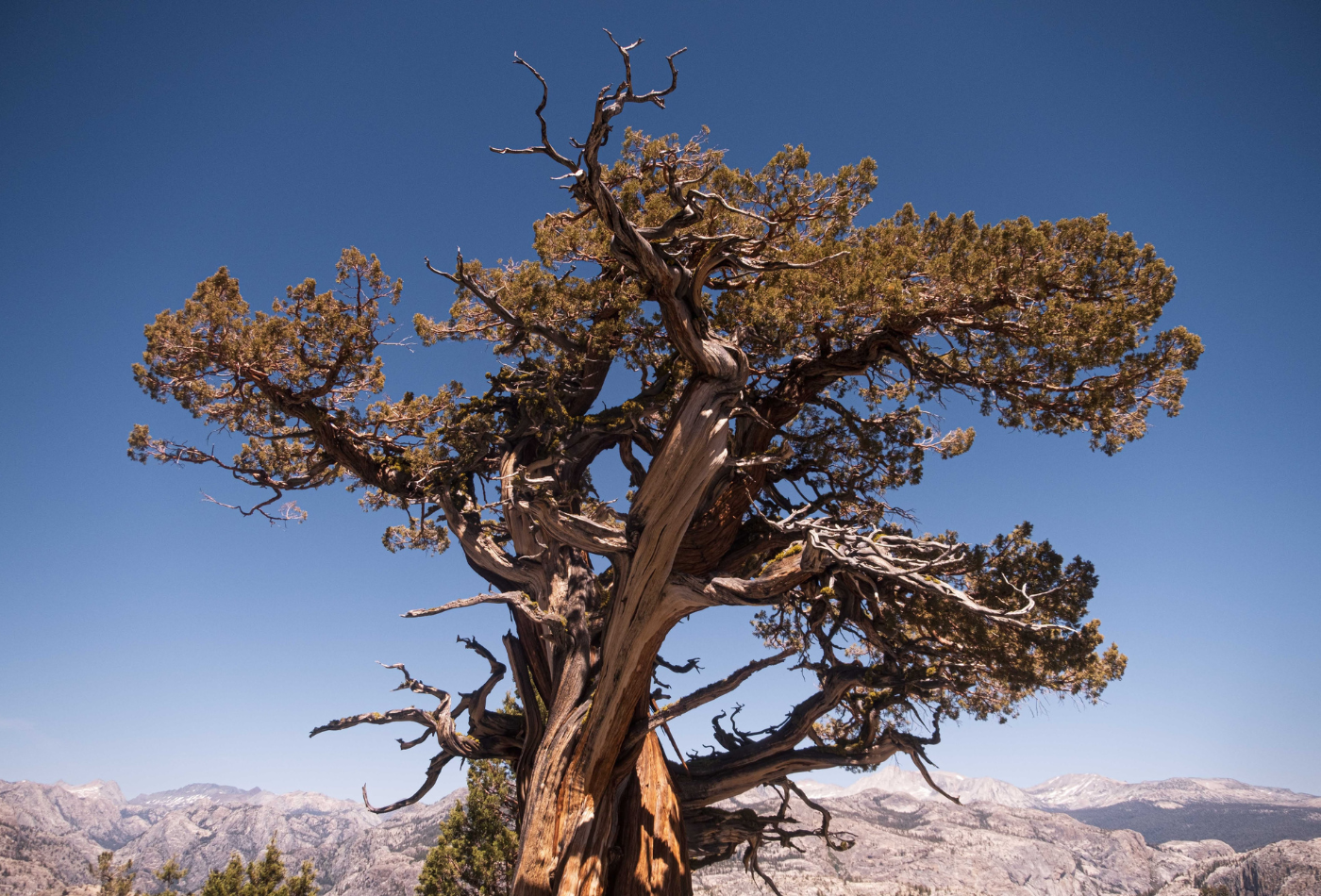
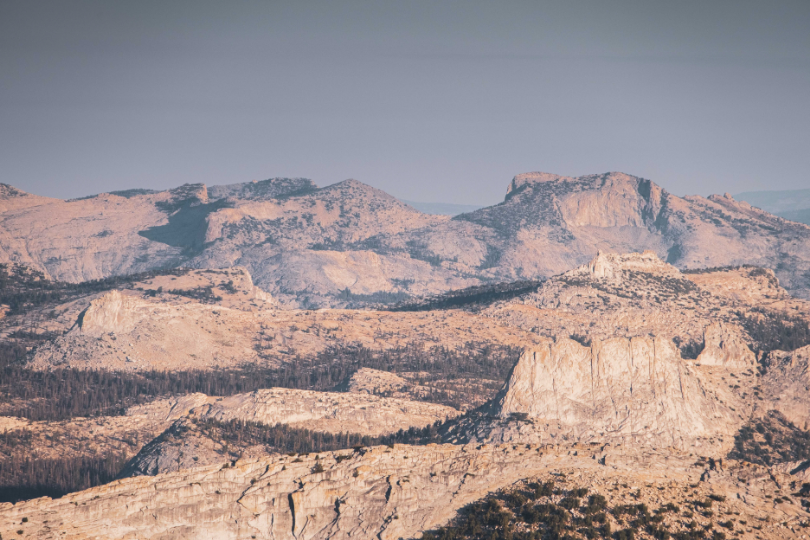
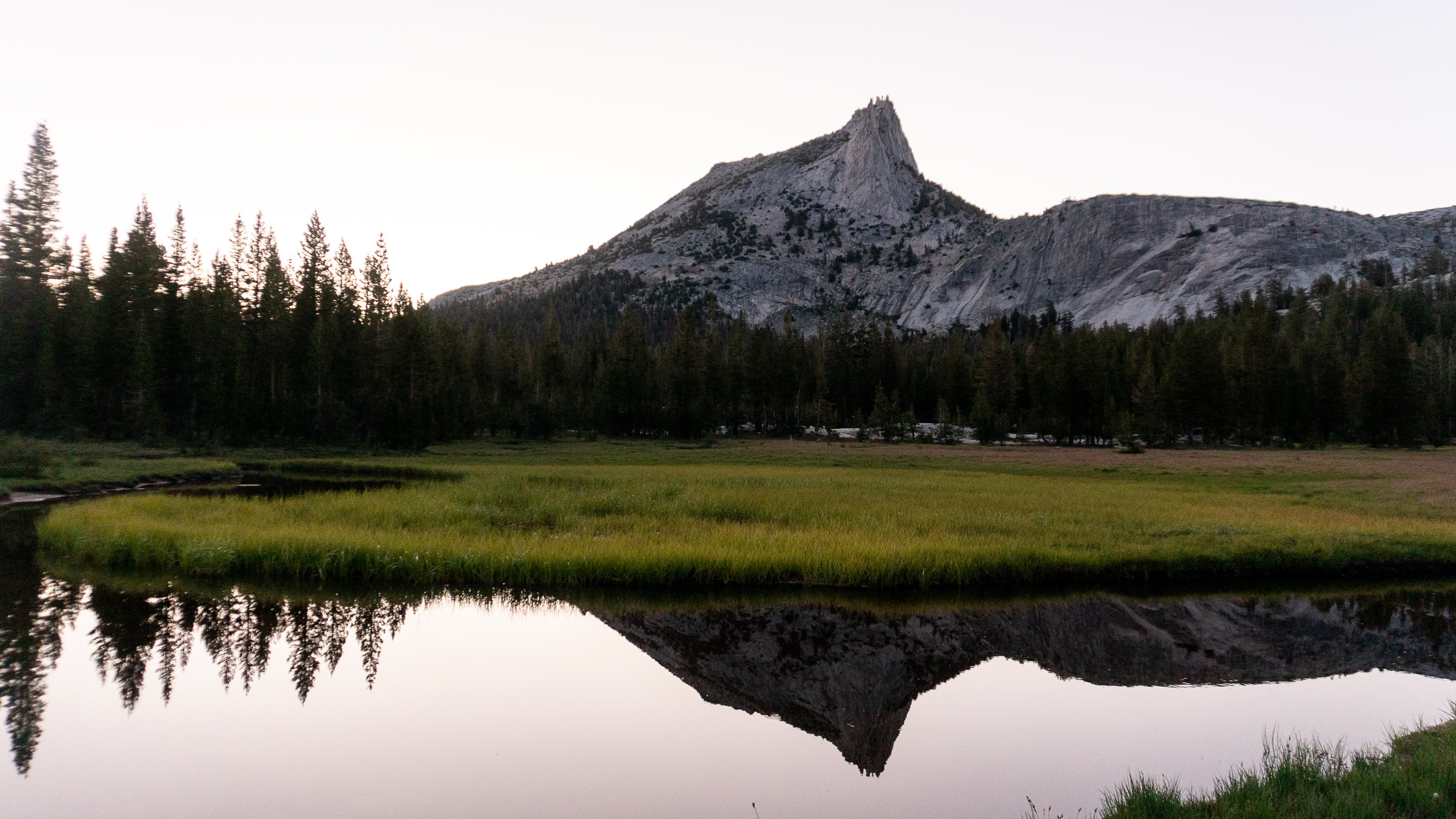
All photos captured by Sarah Attar.

How does running/movement connect you to a place? 

I’ve always loved the feeling of moving through places. There’s a unique satisfaction that I get from crossing big swaths of terrain, especially in a single day. The High Sierra is my favorite place, and because you can spend so much of the day above tree line, you can turn around hours later and see just how far you’ve come- the high rocky passes, the meadows, the lakes. It makes me feel like I was actually within that landscape, fully experiencing it by moving through it.

Paige on trail in Yosemite National Park.

How does painting connect you to a place?

Whether I’m making a plein-air painting on site or working from a reference photo in my studio, it changes how I experience a place. When I’m running or hiking, I’m always thinking about what might make a good painting, and I’ll take lots of photos to look through later. Inevitably, when I bring to mind a place that I’ve painted, it becomes some combination of my actual memory of being there and the memory of painting it and the visual decisions I made in the process- mixing colors, simplifying forms, tweaking composition, etc. My connections to those places feel deeper and more layered.

Paige shows her painting of Half Dome.

Tell us about your connection to Yosemite National Park.

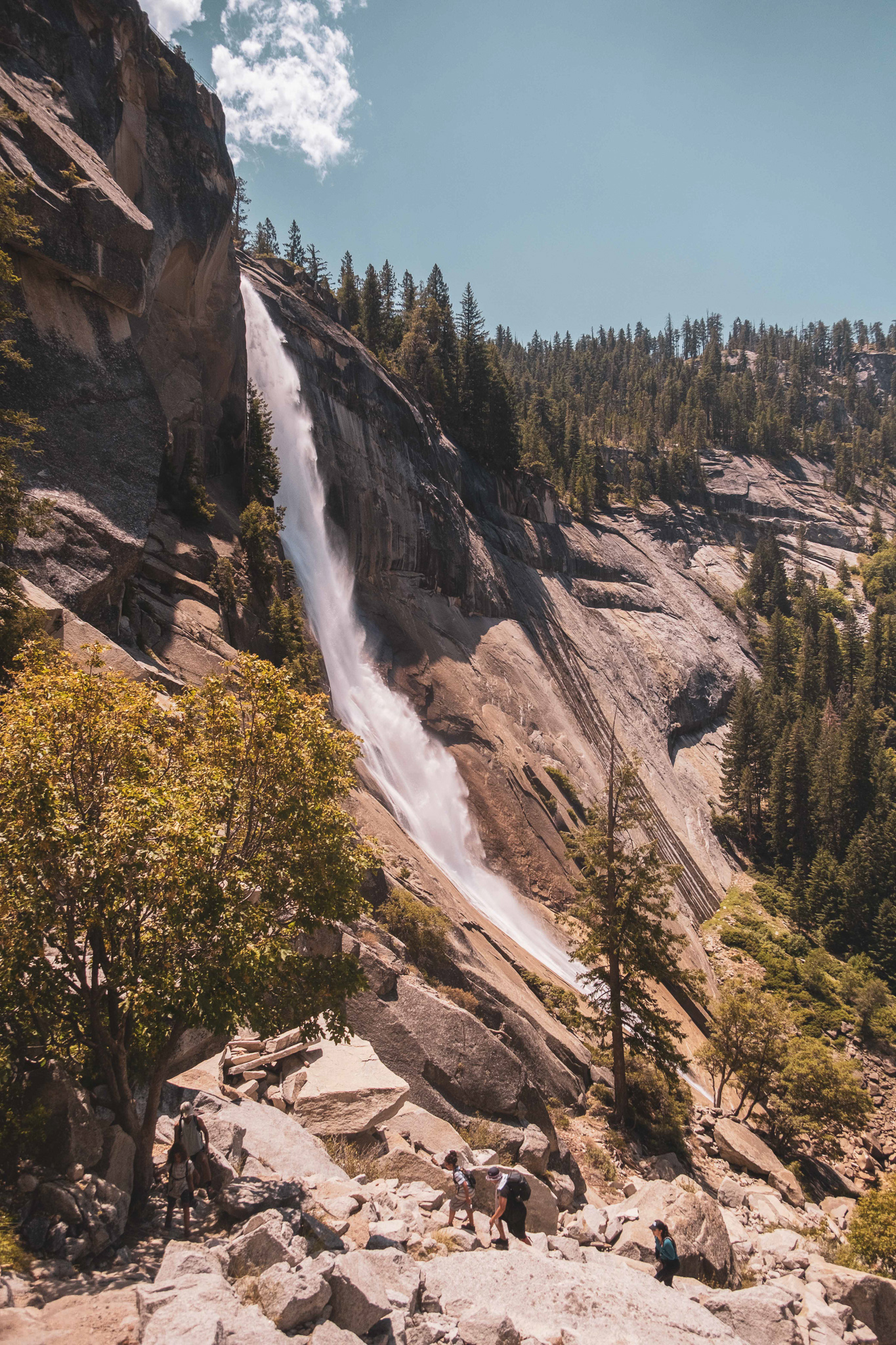
Growing up in Northern California, I took numerous family vacations and class trips to Yosemite over the years. I have such great memories of staying in the tent cabins at Curry Village, watching rock climbers on El Cap through a telescope from the meadow below, special dinners at the Ahwahnee, and exploring in the woods with my cousins. One of the first hikes I ever did was the Mist Trail, and I can still remember the awe I felt standing at the top of Vernal Falls watching the water plummet over the edge! 

What type of painting kits did you bring to yosemite? Do you bring paints in your running pack? How does that work?

I brought both my tiny watercolor setup and my plein air oil setup. You can get away with a lot less when painting with watercolors, and my kit practically fits in the palm of my hand, so that’s easy to bring along in a running pack for a quick sketch.

Although I have a pretty minimal oil painting setup, it’s definitely too bulky to bring on a trail run! I use a thin pochade box that holds my palette and supports my painting as I work on it, but I also need multiple brushes, solvent, oil, a rag, sometimes a tripod to attach the pochade box to, and the oil paints themselves, which can be quite heavy! And then the extra difficulty in working with oils is that they stay wet for a long time, so you can’t just stick it back into your bag where the surface would get smudged. For this trip, I had taped some canvas paper to cardboard and punched holes in the corners so that I’d be able to strap it to the outside of my hiking pack with cord when I was done painting.

Paige’s oil paint set up.

Can you tell us about your painting process outside?

Before I start, I generally just wander around a bit until I find something that speaks to me. Maybe it’s the way the light is hitting the side of a peak, a patch of snow that’s melted into an interesting shape, or a particularly vibrant color that I want to replicate. But there are also other considerations such as needing to be in the shade so that you can mix paint colors accurately or how quickly the light is going to change on your subject. I try to get down the large shapes and important blocks of color fairly quickly and then do my best to fill in the rest and either adjust as the light changes or try to remember how it was when I first started. It often feels like a race against time!

For the painting I made on this trip, I was drawn in by the verdant green of the meadows and the distinct shadows striping across them. It was mid morning on what was going to be a very hot day in the Valley, the sun was hitting the side of the main tree with strong, warm light, and I continually find the form and shadows of Middle Cathedral to be an interesting subject to paint.

Paige protects an oil painting while on trail.

What was it like to be on this trip and to balance both running and painting?

I haven’t spent much time in Yosemite in recent years, and it was very special to be back in a place I know but exploring new-to-me trails with a group of people who were as excited to be there as I was! Quite a few runners on this trip were from out of state and were visiting Yosemite for the very first time, so it was extra fun to experience it all through that lens.

Going into the trip, I wasn’t sure how’d I’d balance the two activities, but it ended up working out perfectly! I ran with the group on the days that had routes I was most excited about or hadn’t done before, and then I spent one of the days in the Valley painting by the Merced River before joining up with the group as they finished their run. It felt like a really lovely combination of activities- and since I hadn’t been running big mileage weeks, the painting day was a well-enjoyed rest for my legs! 


Paige Klugherz is an artist, trail runner, and climber. She lives in Reno, NV with her husband where they enjoy great access to the Sierra Nevada.

You can buy prints of her artwork, including “Higher & Middle Cathedral from Leidig Meadow” (pictured above) at paigeklugherz.com.


Yosemite Valley Views
Away from the Crowds into the Yosemite Backcountry

The granite walls, ponderosa pine and pristine swimming holes of the Yosemite backcountry are rivaled only by the profound views offered on our “Yosemite Valley Views” itinerary. There’s no better way for an endurance athlete to experience the wilderness this park has to offer.
Explore THE “YOSEMITE Valley Views” TRIP
Categories
Assorted Blog courses Culture Highlights Preparation Runner Profile Runner Profile Runner Profiles Stage Trip Styles update WL

Runner Profile: Mario Scalcucci

“Who goes on Aspire trips?”
It’s a question we hear often. The truth is, the runners who show up for our trips come from diverse backgrounds and bring a wide range of running and mountain experience with them to the trails.
We all relate to mountain spaces in unique and personal ways. We are excited to add some depth to our response to the “Who?” question with a series of Aspire trail runner profiles. We enjoyed hitting the dirt and building friendships with these runners on our trips, and we think you’ll enjoy hearing their stories!

Name: Mario Scalcucci Age: 33 Hometown: Westfield, Indiana

Which Aspire Trip(s) have you participated in?

Wonderland Trail 2020

What is your favorite trail snack?

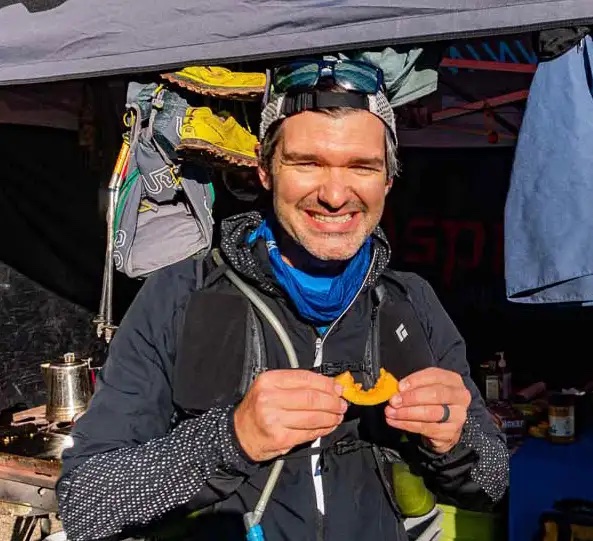
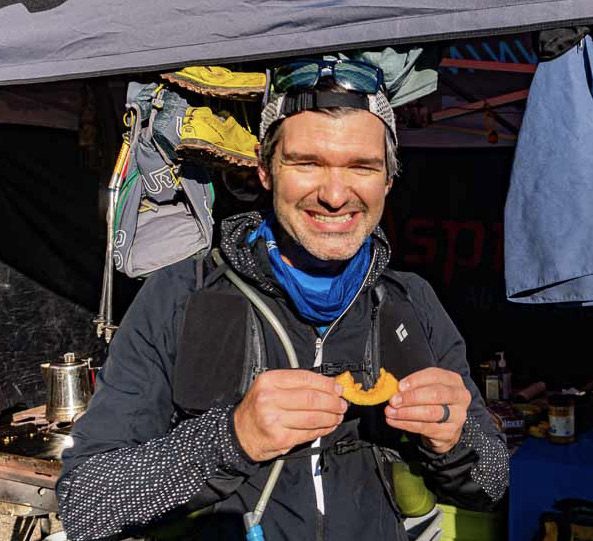
Peach rings

Describe your experience, background, and enthusiasm for running and/or wilderness and backcountry experiences?

I’m very new to the sport of trail running, love being outside, and away from heavy traffic. Being supported makes these remote trips doable.

What questions, concerns, or unknowns did you have going into your trip? How were they resolved?

Ha! Our unknown was Covid-19. Resolved our worries with professional guidelines and procedures. Campsites were also up in the air and again, Aspire rolled with the changing reservations and made it work. All we had to do was run/hike to the next campsite.

How did you prepare for your trip? Given your experience would you prepare differently, if so how?

I prepared for this trip like any other long distance run. With the amount of elevation gain and distances each day, it was important to be ready. But the support we had put us at ease if a long day turned a bit longer.

What story or description would you give to represent the group dynamic on your trip?

As a person with a quiet personality, it was out of my comfort zone to camp with a group of people who I’ve never met before. But with everyone sharing the same enthusiasm for the outdoors and adventures we all fit in quite well.

What was the most difficult moment from your trip?

Leaving at the end after celebratory drinks and an amazing dinner.

What advice or thoughts would you offer to someone considering signing up for an Aspire trip?

This is a must try for all adventurous people. The amount of support received was above any expense we put in.

Facebook: Mario Scalcucci

Categories
Blog courses Culture Highlights NCT Preparation Runner Profile Runner Profile Runner Profiles Stage Trip Styles update WL

Runner Profile: Gerald O’Keeffe

“Who goes on Aspire trips?”
It’s a question we hear often. The truth is, the runners who show up for our trips come from diverse backgrounds and bring a wide range of running and mountain experience with them to the trails.
We all relate to mountain spaces in unique and personal ways. We are excited to add some depth to our response to the “Who?” question with a series of Aspire trail runner profiles. We enjoyed hitting the dirt and building friendships with these runners on our trips, and we think you’ll enjoy hearing their stories!

Name: Gerald O’Keeffe Age: 53 Hometown: Arlington Heights, Illinois

Which Aspire Trip(s) have you participated in?

Wonderland Trail 2020, North Cascades Traverse ’22

Describe your experience, background, and enthusiasm for running and/or wilderness and backcountry experiences?

After running a number road marathons, I started getting more into back-country experiences like backpacking and wilderness camping. I did a trail run and immediately realized that trail running combined my love of running and my desire to spend more time in wild and natural places. I was hooked.

What questions, concerns, or unknowns did you have going into your trip? How were they resolved?

Mainly, I was concerned about the vertical gain. I live in Illinois and it is quite challenging if not impossible to run in nearby areas and get significant vertical gain. Every week, I traveled to Wisconsin to run in the hilly terrain of the Kettle Moraine State Forest and also supplemented with incline runs on the treadmill but the treadmill runs ended once the pandemic hit and I couldn’t go to my health club. Fortunately, I did do a lot of training in the heat and humidity that is typical for the Chicago area in summer. Then, my partner Christine and I did a 55 mile backpacking trip on the Northern Loop in MRNP the week prior to the run. This was extremely helpful in terms of familiarizing me with the terrain and getting my legs ready.

How did you prepare for your trip? Given your experience would you prepare differently, if so how?

I used a six month 100k training program from Training Peaks and also ran a 54 mile ultra in the Colorado mountains three week prior to the WT run. The ultra was at average elevation of 10,500 feet and had about 8,500 feet of vertical gain, so once I finished that, I was more confident that I was in good enough condition for the 93 mile Wonderland Trail. If I were to do this again, I would find a way to spend more time running in the mountains, maybe do a few 50k races in the months leading up to the Aspire stage run. I would also be more disciplined about doing core and strength work as part of my weekly running program. I did some core work but could have done more. Last, I would do more back to back long runs. I typically did my long run on Saturday and would then do a 5-10 mile recovery run on Sunday. I never managed to do something like a 25 mile run on Saturday followed by a 20 mile run on Sunday. Given this, I did wonder whether I would be able to handle multiple days of ultra distances on the Wonderland Trail.

What story or description would you give to represent the group dynamic on your trip?

The six of us were all pretty evenly matched in terms of our running ability. We didn’t all run together but we weren’t hours and hours apart, either. This was nice because it was possible to visit with different people at various points throughout the day of running.

What was the most difficult moment and/or a surprising episode from your trip?

On day 2 we ran from Mowich Lake to White River via the Spray Park route. It started raining a few hours into the day and even though I was wearing a long-sleeve Smartwool shirt, I was worried about getting a chill. I put on my windbreaker so I had another layer but everything was soaked with the rain. Fortunately, my legs were feeling surprisingly strong and I was able to keep cranking at a good pace and this helped me stay warm. Getting to the heated Aspire tent at White River was quite wonderful!

What advice or thoughts would you offer to someone considering signing up for an Aspire trip?

Spend time talking with your fellow runners and Aspire guides and getting acquainted with them. They are interesting people! Go with the flow, stop and at any waterfall or glacial stream you find interesting and take in the moment by splashing your face or soaking and resting your feet. Water is a very prominent and awesome part of the Wonderland Trail. Most important, enjoy the journey.

Facebook: Gerald O’keefe

Instagram: okeeffegerald

Categories
Art art Aspire Culture Assorted Blog courses Culture Highlights NRL Rendezvous Runner Resources trip report Trip Reports and Trip Styles Trip Styles

Mountain Songs and Alpine Legs

Music and mountains. Both have an incredible ability to create real connections.
Aspire Rendezvous trips are mountain running parties where runners develop a relationship with an incredible wilderness zone and the other runners they’re with. Incredible days on trail are bookended by a vibrant basecamp scene that may include music, yoga, swimming and more. Musician David Burchfield shares his experience as camp musician for 2022’s Nooksack Ridgelines Rendezvous for the journal.

Listen to David’s album “State to State” while you read!


My first day of the Nooksack Ridgelines Rendezvous I found myself deep in flow, rolling down Ptarmigan Ridge near Mt. Baker. Some smoke from nearby fires had drifted through that morning but was clearing up as the day went on – dramatically unveiling luscious green forests, stark peaks, and alpine lakes in true North Cascades glory.

I’d started out with another runner, Melissa, but she had cruised ahead while I drifted back until I was between groups. I was just far enough from other runners that I felt safe belting, I mean absolutely shouting, along with the song I’d been jamming to in my earbuds. It had been a pretty tough year for me, full of huge personal disappointments that left me feeling gridlocked inside. There was a twisted knot in my chest of regret and a bleak, uncertain feeling about where and when I might ever find deep joy again. In that moment, I was surprised and delighted to find the freedom to unlock my heart, open up my lungs, and move my legs over some really beautiful terrain was just what I was needing. I found myself supported, once again, by two of my oldest friends: the mountains and music. 

Kulshan (Mt. Baker) from the Ptarmigan Ridge Trail.

Making the final descent to the waiting Aspire van (complete with cold beers and watermelon) I put on an album I’d been saving all year for just this opportunity, although I didn’t know it until then. Hiss Golden Messenger’s “Quietly Blowing It,” inspired by the artist’s own feelings of internal lockdown and finding release and freedom  in the midst of pandemic, was the perfect balance between hopeful beats and sober lyrics. I danced down the forest trail, capering sideways, high stepping short steps, and playing with fun flowy arms – and a huge smile came across my face. I have always felt a strong connection between breath, running cadence, and rhythm in the music that I listen to while out on longer days, but this particular run was special. I let go and let the mountain music flow through my legs.

A nutritious bowl – Aspire fare.

Back in camp, while Aspire guides doled out super tasty appetizers, runners dipped their legs in the rejuvenating water of the Nooksack River as part of their recovery rituals. Nearing dinner, folks began to gather and prepare for the feast – sharing stories of the day. At some point, Kim said “Were you… singing up there?” A short pause followed as looks of recognition dawned on the faces of Kim’s running companions of that day and my own. We burst out laughing as we realized that my solo karaoke session was anything but private. Luckily, I love singing mountain music for other people and later did exactly that with my guitar around the campfire while runners relaxed and stretched. Playing mountain music for the group was, in fact, what brought me onto the trip in the first place. 

Musician David Burchfield sings sounds to runners on the North Cascades Rendezvous.
David Burchfield play guitar to the runners at the Nooksack Ridgelines Rendezvous.

Because the rendezvous experience is all about gathering at a central location each evening, there’s a uniquely relaxed and communal spirit to the post-run hang in camp. The crew often brings along a musician or two to provide some evening entertainment and that night I was lucky enough to play the bard. After the first night, I took requests from other runners and prepared them for the next evening’s “performance.” Performance? More like, singalong, arms around the shoulders, smores and beers kind of hang out. You may think I’m exaggerating, but I promise I am not – it’s that kind of picturesque good time. 

Mineral Mountain in the North Cascades
A view of Mineral Mountain from Copper Ridge, North Cascades National Park.

Over the course of our three days out there, the members of my trip went from perfect strangers to new friends – forming small groups to run together and encourage each other through long, beautiful days in the mountains. By day three, we left from the trailhead practically all together in one supergroup. I’d made friends, played some mountain music, found refreshment in my spirit, and learned just how far I can really run. Day three found me without headphones at all – instead I spent most of the day chatting in the little running groups that I found myself in, or pushing my pace to catch the next group of friends ahead of me. You can be sure that between groups I will still belting out a tune or two.

Fields of wildflowers in North Cascades National Park.

All photos by Jessica Vandenbush.


Join us for four days of incredible running and camping on the Nooksack Ridgelines Rendezvous!


David Burchfield is an adventurer, trail runner, and touring musician based for now out of Salt Lake City, Utah.

Categories
Aspire Culture Blog courses Culture Destinations Diverse Voices Highlights LCT Lost Coast Trail Stage Native update

The Lost Coast: The Ancestral Lands of the Sinkyone

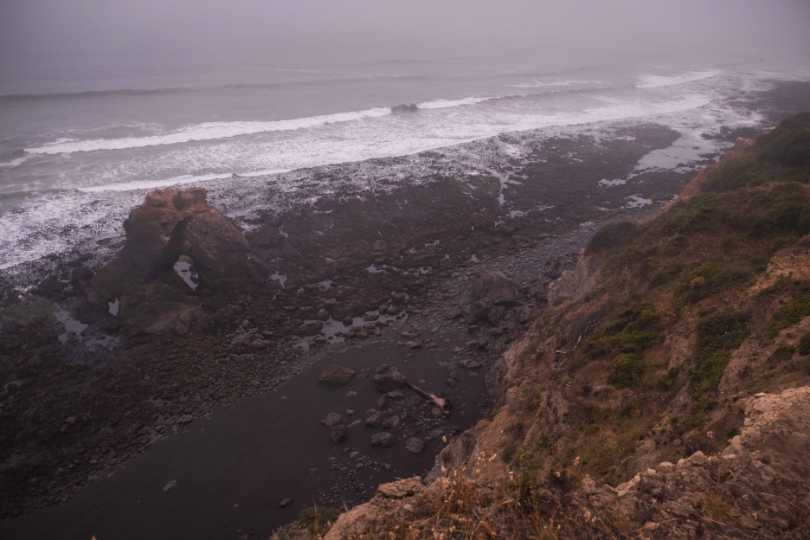
When we run along the Lost Coast Trail, we’re immersed in wild remote beaches, bold headlands, the salty scent of the North Pacific and the barks of sea lions.  In the King Range Wilderness, we navigate the rhythm of tides and the constantly changing landscape of sand, meadows, redwood forest, and rocky cliffs. We may even be aware that we’re on the southern edge of a coastal temperate rainforest ecosystem-the Cascadia Bioregion- that extends all the way into Alaska. We may know that the cornerstone species of that ecosystem is the Pacific Salmon, and that in recent decades, as the ecosystem has been threatened, a fierce bioregional culture of salmon and forest restoration as grown up in the Lost Coast area, with hundreds of activists and ecologists working hard to preserve the Salmon, Redwoods, and surrounding ecosystem. What we should also acknowledge is that we are traveling through the ancestral homelands of the indigenous Sinkyone people, who live on, and have sustainably managed this region for thousands of years.

Needle Rock on the Lost Coast

Despite such an honorable and beautiful legacy, much of the last two centuries has been a story of tragedy for the Sinkyone, who suffered cultural genocide from settlers and soldiers during the nineteenth century and into the twentieth. Despite such horrors, in recent decades, their story has taken a better turn: after nearly two centuries of dispossession, a consortium of ten federally recognized tribes has created the first intertribal wilderness park of its kind in this region: the Sinkyone Wilderness Park.

Sinkyone History

For millennia, the Sinkyone people of northern California (named for “Sinkikok”-their name for the Eel River watershed) lived in this mountainous, fertile, foggy coast 150 miles north of present-day San Francisco Bay area.  With about seventy villages by the time of European contact, they would winter inland along the South Fork of the Eel river, and in summer, travel to the coast (south of the current area of Spanish Flat) to gather fish, acorns, berries, seaweed, kelp, roots, nuts and seeds.

As part of their sustainable management practices, they would rotationally burn coastal prairies and woodlands to maintain the health and productivity of the ecosystem, and to ensure their sources of food and medicinal plants. Based on cultural practices informed by centuries of evidence-based observation, they also hunted and gathered rotationally, carefully transplanted various plants and animals, and integrated those activities with spiritual practices. The Redwood tree  (called “Kahstcho” in Sinkyone) was considered especially sacred, and was used to create baskets, fish traps, boats, houses, and clothing.


Arrival of Settlers

Starting with the California gold rush of the 1850s, the Sinkyone-along with many other California native peoples-were massacred in less than two decades. Bounties were paid for the scalps of Sinkyone men, women and children. The few remaining Sinkyone were forced into slavery, moved to reservations, or absorbed into surrounding tribes as their land was claimed by mining and timber companies, and logged of most of its best Redwood and Douglas Fir trees.  During the ensuing century-and-a-half, native peoples continued to visit the area for hunting and gathering and ceremonies, but often at their own peril. In the middle of the twentieth century, as chainsaws, bulldozers and skidders changed harvest methods, the rate of logging dramatically increased, resulting in clear-cuts which destroyed the ecosystem, resulting in landslides, and the severe diminishment of the native salmon fisheries. 

Fortunately, the story of the Sinkyone has moved in a better direction in recent decades: Beginning in the 1970s, as logging intensity increased in Mendocino County, a nascent environmental movement was also growing, both nationally and locally. As young environmentalists began to work toward saving the last of the old-growth Redwoods, they began to listen to native people’s stories-both ancestral and more recent-about the land and their relationship to it. During that time, the Sinkyone Wilderness State Park was created.

Environmental Stewardship

In the 1980s, Earth First protestors blocked bulldozers and sat in trees to prevent logging in Sally Bell Redwood Grove-named for a Sinkyone woman who watched American soldiers murder her family. By 1985, Native people and environmentalists won an historic court case- the Sally Bell lawsuit- to stop clearcutting, and the Trust for Public Land acquired thousands of acres of contested land from the Georgia Pacific Corporation, including coastline and old-growth Redwood groves, and some of that land was added to the Sinkyone state park. 

Over the next decade, various government agencies, conservation organizations, and a consortium of ten local tribes-who created the Intertribal Sinkyone Wilderness Council- worked to reconcile different agendas and figure out what to do with one large, remaining upland tract of second-growth redwood and Douglas Fir. The result is the 4000 acre Sinkyone Wilderness Park, created in 1997, which redefines “productive” as more than merely extractive, and also includes ecotourism, salmon and forest stewardship, and wilderness where native people can practice ceremonies and hunt and harvest traditionally. This groundbreaking venture represents the first time tribes have come together to establish a nonprofit organization to acquire land, the first time a government agency has transferred land to Native people under a conservation easement, and it is one of the first times that an easement has tried to specify how forestland can be harvested while simultaneously preserving old growth ecology and forest health. This collaborative easement-which guarantees public access to the adjoining Sinkyone Wilderness State Park while managing the land to support old-growth forests- represents the beginning of a healing, ecologically, culturally, and socially.  It ensures both the continuation of Native culture and the restoration of the land, while creating a model of cooperation between Native people and environmental collaborators that might be used around North America.


When we run the Lost Coast Trail, we run not only through a beautiful landscape. We are guests in the home of people who lived here for millennia, and who are moving forward, despite unbelievable challenges. And because of the efforts of these Native people and their collaborators, we have the chance to run through the part of the longest stretch of permanently protected coastal wilderness in the continental United States. As trail runners, as lovers of wild places, it is important that we honor the history and culture of these people, and the beautiful, ecologically rich land that they share with us.


To learn more about the Sinkyone and the work of the Intertribal Sinkyone Wilderness Council. 

https://www.sinkyone.org/


Ian Ramsey

With three decades spent exploring the PNW and Alaska, Ian is based in Maine, where he directs the Kauffmann Program for Environmental Writing and Wilderness Exploration, and teaches writing, ecology, brain science, music and mindfulness to high school students. With over two decades leading trips and expeditions across the US, Alaska and internationally, he loves empowering people to take agency in their lives and discover new places. Ian is a poet and graduate of the Rainier Writing Workshop, and his writing has been featured in places like Terrain.org, Orion and High Desert Journal.  He also directs a community steelband, loves kayaking big water, drinks copious amounts of coffee, geeks out around nutrition, literature and fitness, and was once a member of an Inuit Dance Troupe.

Check out his website at Ianramsey.net

Categories
Aspire Culture Blog courses Culture Destinations Diverse Voices Highlights Native YOSE Yosemite Backcountry Stage

Running on Stolen Land: Yosemite National Park

Developing a sense of context provides support for the deep connections to ourselves, each other, and the land that we celebrate on our trips. As part of our commitment to community and context, we are educating ourselves on the indigenous lands where we run trips… learning about the people who call these lands home, the forced succession of their homelands, their traditional lifeways , modern challenges, and the roles they play in land stewardship and conservation.

Coming off of a month of beautiful trips in Yosemite National Park, we share what we’ve learned Miwok people who inhabited the valley for thousands of years before the arrival or white settlers in the 1850’s.


Yosemite National Park is known for its dramatic natural landscapes boasting incredible waterfalls, giant sequoia trees, and towering granite domes.  It became a National Park in 1890 and continues to hold its sense of awe and appreciation among those who visit.

While Yosemite is known as a world-class destination for climbers and outdoor enthusiasts alike, the history and unfortunate harm of the Indigenous communities in the Valley is important for present visitors to acknowledge and also have an increased awareness of the Indigenous land management and cultural practices that make these natural areas a better place for all.  


History

The area we now refer to as Yosemite National Park is the traditional homelands of the Ahwahnechee people, a Southern Sierra Miwok Indigenous Nation who lived in the Ahwahnee (Yosemite) Valley.  Ahwahnee was a Miwok word to describe the open mouth of a bear, similar to how the First Peoples viewed the open end of their valley. 

For over 5,500 years the valley had an abundance of natural resources that allowed the Indigenous people to thrive off the land. This drastically changed around 1848, when word of gold in the area brought a flood of settlers to Yosemite. This gold rush resulted in a violent clash between the Native Americans and the new coming colonists, driving the Miwok Nation out of their homeland to mine the area for gold. 

During this period, the Southern Sierra Miwok Nation suffered from violent dispossession, relocation, and economic disadvantage in their ancestral homeland from the militia group, Mariposa Battalion.  This state funded militia group waged a seven month war, systematically burning villages and food supplies, thus forcing the Indigenous Communities from their land. The Native Americans eventually relented, were captured, and were forced to relocate to a reservation, ending the tribal habitation of Yosemite Valley and beginning a new era of the settlers.

Within a year’s time, the Ahwahneechee resettled throughout the valley, but in 1864, President Abraham Lincoln designated the Yosemite Valley as a protected area.  While the efforts were made to conserve the natural environment, the newly protected region brought a rush of tourism to the valley, which further lessened the control the Miwok had of their ancestral lands. 

Petitions for Yosemite to become a National Park began in 1889 when John Muir came to the valley.  At the time, the area was preserved as a forest reserve by the State Government but officially became a part of the National Park Service in 1890.

While the creation of the Park meant environmental preservation in the Valley, it further restricted the Ahwahneechee people from using their land for cultural and traditional purposes. By 1935 the South Sierra Miwok Nation was completely relocated from their lands and were threatened with fines, arrest, and further banishment from the park if not obeyed.


Fighting for Federal Recognition

Despite a dark past of displacement, the Indigenous groups of Yosemite have continued to advocate and lobby for federal recognition and use of their ancestral lands by working with the National Park Service. In 1980, the American Indian Council of Mariposa County (AICMC) was approved for the construction of a new Indigenous Cultural center in the Valley. In 1987, they were approved for the first Native American Relationship Management Policy to outline the importance of Indigenous Americans in the National Park management. 

While Yosemite works with the AICMC to better explain the Native American history of the Valley, most of the information and museums in Yosemite still highlight the settlers’ history instead of the Ahwahneechee history. 

Currently, the Southern Sierra Miwok people are “seeking self-determination, self-governance, and acknowledgment through the federal recognition process. This designation will allow [their] tribe to acquire tribal sovereignty rights. Federal recognition allows access to further health benefits, scholarships for higher education, funding opportunities to support [their] wellbeing and cultural continuance.” (Southern Sierra Miwuk Nation). 

As explained by the Miwok Nation, the motivation for the federal acknowledgement is to support and work with the underlying issues of fundamental justice for their people.  The hope is to “significantly enhance and facilitate this interaction by establishing a formal government-to-government relationship” through self-sovereignty, child welfare, additional federal support programs, revenue sharing trust funds, educational assistance, environmental protection and land acquisition, and protection of Indigenous cultural sites, and traditional gathering and other interest in their ancestral lands.

Ultimately, with the number of people traveling to Yosemite rising each year the importance to acknowledge, support, and campaign for the preservation and rights of the Southern Sierra Miwok Nation increases.  As trail runners and outdoor enthusiasts, it’s important we not only learn the true history of these wild spaces, but also support and help in the federal recognition of the first inhabitants of these regions we enjoy so much. 


For additional information and ways to support the Southern Sierra Miwuk Nation see below:  

Southern Sierra Miwuk Nation https://www.southernsierramiwuknation.org/federal-recognition 

Native Land – Me-Wuk (Southern Sierra Miwok)

Yosemite Mariposa County 

Indian Country Today https://indiancountrytoday.com/archive/native-history-yosemite-national-park-created-on-native-homelands 

The Yosemite Valley Native Americans 

https://ppaccone.medium.com/the-yosemite-valley-native-americans-f89957da5f18

Kara Folkerts

Kara Folkerts is a plant powered trail runner, sustainable travel advocate, yoga teacher, and passionate about all things sustainability, travel, health, and outdoor movement.  Originally from Canada, Kara has spent the last few years exploring and living abroad in various countries across the globe before joining the Aspire crew in 2020. Kara has been guiding various trail running, sustainability, and health retreats internationally since completing her undergrad in Ecotourism and Outdoor Leadership.  With all of these experiences, she seeks meaningful connections with others, loves to learn of new cultures, and fosters the mindset of a lifelong learner.  With a big heart for trail running and exploring wild places, she’s always stoked to get out there with others. 

She writes about all her adventures on her blog at www.karafolkerts.com and on her instagram @karafolkerts

Categories
Blog Culture Highlights Preparation Runner Profile Runner Profile Runner Profiles

Runner Profile: Lauren Rock

“Who goes on Aspire trips?”
It’s a question we hear often. The truth is, the runners who show up for our trips come from diverse backgrounds and bring a wide range of running and mountain experience with them to the trails.
We all relate to mountain spaces in unique and personal ways. We are excited to add some depth to our response to the “Who?” question with a series of Aspire trail runner profiles. We enjoyed hitting the dirt and building friendships with these runners on our trips, and we think you’ll enjoy hearing their stories!

Name: Laurn Rock Age: 35 Hometown: Seattle, Washington

Which Aspire Trip(s) have you participated in?

Wonderland Traverse 2020

What is your occupation?

Architect

What is your favorite trail snack?

Inka corn and Swedish fish

What questions, concerns, or unknowns did you have going into your trip? How were they resolved?

I had done perhaps a bit too much research on the Wonderland Trail and totally psyched myself out about the many river crossings. I had read that the log bridges are often and unpredictably washed out, forcing runners to ford rivers and deal with varying water levels and currents. Not having much confidence in my balance, I talked through my anxieties with Abram in advance of the trip and felt better knowing that my fears were out on the table.

As it turned out, all of the river crossings during my trip featured beautifully in tact log bridges, thanks to the wonderful National Park Rangers. To kick things off on the right foot, the very first river crossing we got to, I believe it was Kautz Creek, had just been outfitted with a brand new log bridge. Meaning, there was fresh sawdust and rangers still finishing up the repairs, when we crossed. The second big win, was easily crossing the South Mowich River using a network of log bridges at the end of Day 1. After that, my anxiety was lifted and I could just enjoy the trail!

How did you prepare for your trip? Given your experience would you prepare differently, if so how?

I love training, following a plan, and having an excuse to spend long days out in the mountains. Especially during COVID, with everything else being cancelled, I loved having this trip on my calendar as something to work towards, and a training plan as the one constant in my summer. I roughly followed the 8-week training plan that Aspire sent out in terms of mileage, and tried to get in as much vert as possible while living in the city and only being able to get out to the mountains on weekends. I peaked with a few 50+ mile weeks. I enjoyed many trail training adventures with my friends Sarah and Cathleen who also joined me on this trip.

In terms of gear, I don’t typically run with poles, but they seemed like a good idea, so I brought them along attached to my pack each day. I ended up only using them for about 30 minutes total, on the last day as we were going across the snow near Panhandle Gap in extremely foggy conditions. Probably not necessary, but they were a nice security blanket.

What story or description would you give to represent the group dynamic on your trip?

Fun and supportive! Everyone on our trip had varying strengths and weaknesses, so while we didn’t all stick together each day, it was fun to pass or get passed by each other, often multiple times during each day, and exchange some words of encouragement and camaraderie along the way!

What info/advice/thoughts would you offer to someone considering signing up for an Aspire trip?

Aspire is a terrific organization with the best people. You are guaranteed to have a blast, meet incredible people, and enjoy some delicious food! The Wonderland Trail is really something special. I can see Mt. Rainier from my house and I am so inspired looking at it and reminding myself that I actually ran around it in 3 days. It makes me excited for more big adventures!

Categories
Blog courses Culture Highlights Preparation Runner Profile Runner Profile Runner Profiles WL

Runner Profile: Rebekah Mihm

“Who goes on Aspire trips?”
It’s a question we hear often. The truth is, the runners who show up for our trips come from diverse backgrounds and bring a wide range of running and mountain experience with them to the trails.

We all relate to mountain spaces in unique and personal ways. We are excited to add some depth to our response to the “Who?” question with a series of Aspire trail runner profiles. We enjoyed hitting the dirt and building friendships with these runners on our trips, and we think you’ll enjoy hearing their stories!


Name: Rebekah Mihm Age: 33 Hometown: Elmhurst, Illinois (Chicago Suburb)

Which Aspire Trip(s) have you participated in?

Wonderland Circumnavigation 2020, North Cascades Traverse 2021

Describe your experience, background, and enthusiasm for running and/or wilderness and backcountry experiences?

I am relatively new to the ultra trail running world. After seven years running road marathons, I was burned out and not enjoying racing. In 2017, I signed up for my first trail 50k and was instantly hooked. I love being in the outdoors and especially enjoy the challenges presented in an ultra distance and while running on trails. Mountain trails are my favorite, perhaps because I grew up in Idaho. There is something very peaceful and nostalgic about returning to run in the mountains.

What questions, concerns, or unknowns did you have going into your trip? How were they resolved?

I was anxious about the Wonderland trail due to my lack of back country experiences and my ability to train for so much elevation. I went on the adventure with my training partner as a way to ensure that I would not get lost or drown in a river. Experiencing the trail with my training partner was an incredible experience and gave me the confidence to go on the trip. I did learn that the sweeper with the Aspire crew is also always available to accompany the last runner, so that is a great option for others who may lack confidence to run the trail alone due to lack of experience.

How did you prepare for your trip? Given your experience would you prepare differently, if so how?

My training included weekly treadmill workouts at 15% incline and every Sunday I went to the local hill and ran up and down to hit my weekly mileage. I felt like I was reasonably prepared, however, next time I would do twice a week treadmill incline workouts as the other runners in the group who lived in the area were substantially better at the climbs. I also bought a book about the Wonderland trail and read it multiple times to prepare for everything I might encounter. I was very happy with my gear selection and found the course packet incredibly useful for packing.

What story or description would you give to represent the group dynamic on your trip?

I fully expected to be intimidated by the group, however, they turned out to be just like me…other runners setting out to accomplish an exciting (and a little scary!) first time goal. I loved the mix of multi-sport athletes, runners who had never done the mileage before, and runners coming back after breaks.

One moment that the group made very special for me was at the end of day two. I had not expected the day to take us so long, so as we arrived at camp after dark to the cheering of our group, it brought tears to my eyes. Our new friends that had been strangers a day ago were genuinely happy to see us and share stories about our shared adventures. The camaraderie created with the people we shared the trail with was very powerful.

What was the most difficult moment and/or a surprising episode from your trip?

The last day I was unexpectedly running alone, and as we had seen four bears on the trip up to that point, I was anxious about being a solo female in the wilderness. It was a foggy morning and I crossed a river after getting through Summerland Camp and for the life of me, I could not find the rock stacks to mark the trail. Nothing looked like a trail. Just rocks and more rocks. I wandered aimlessly crying for 10 minutes before I found the trail. Ten minutes later the Aspire crew caught up to me and I was so happy to see him, more tears came! It was scary in the moment but empowering to overcome the unexpected and finish the adventure.

What advice or thoughts would you offer to someone considering signing up for an Aspire trip?

Don’t hold back! Train hard and have confidence. There is something very special about these trips that is unlike any race you will ever run. The beauty about the Aspire trip is that you have all the options in the world to make the adventure magical for you. Whether you are speedy or come in every night with the sweeper like me, you will have the VIP treatment and support along the way to accomplish your goal. Read reviews and blogs. Check out pictures. You won’t regret it.

We welcome any insights or perspectives that illustrate the diverse people, abilities, and backgrounds that describe our community and how people experience our trips.

Our group had such a wide range of individuals from guys who had run many challenging mountain races and 100 milers, to me, the newbie mountain runner from Chicago who never ran more than a 100K, to an individual in his 60’s who had never run more than 34 miles, but had lots of back country experience. Some runners in our group were winter sports athletes who only ran in the summer. Some had only run 50Ks in the mountains but trained on the Wonderland trail. The group was very diverse in age (33-64) and location (Indiana, Illinois, Washington).

Also, we greatly enjoyed the tent rental option. I love to camp, but my experience is a bit limited, so the assistance from the Aspire team to set up and take down our tents made it great to not worry after a long day about how to prepare for the night.

Facebook: Rebekah Mihm

Categories
Blog courses Culture Highlights Preparation Runner Profile Runner Profile Runner Profiles Stage Trip Styles update WL

Runner Profile: John Kolman

“Who goes on Aspire trips?”
It’s a question we hear often. The truth is, the runners who show up for our trips come from diverse backgrounds and bring a wide range of running and mountain experience with them to the trails.
We all relate to mountain spaces in unique and personal ways. We are excited to add some depth to our response to the “Who?” question with a series of Aspire trail runner profiles. We enjoyed hitting the dirt and building friendships with these runners on our trips, and we think you’ll enjoy hearing their stories!

Name: John Kolman Age: 65 Hometown: Chicago, Illinois

Which Aspire Trip(s) have you participated in?

Wonderland Circumnavigation 2020

What is your favorite trail snack?

Almost anything (and everything) I start healthy and progressively eat junkier food as the day goes on.

Describe your experience, background, and enthusiasm for running and/or wilderness and backcountry experiences?

I have had a reasonable amount of backpacking and back-country experience.  I also have a good amount of running experience, but not at the ultra level.  Until this year I had never run more than 26.2 miles.  I like running, and I like the backcountry, it was nice to bring these two things into unity.

What questions, concerns, or unknowns did you have going into your trip? How were they resolved?

First, I was concerned the trip would be cancelled.  As the pandemic raged on I found it hard to motivate myself to train for a trip that probably wouldn’t happen.  Once I was convinced the trip was a “go” I was worried that I didn’t have much (any) hill training.  I was sure I could do the mileage, but the vertical was worrisome.  I really only got comfortable when Abram put out the estimated completion times for each segment.  I just had to avoid setting a new “slowest” record.  I felt I could do that. 

How did you prepare for your trip? Given your experience would you prepare differently, if so how?

Doing it again, I would up my mileage and especially try and get some more vertical either through traveling to a hilly region to train or purchasing a treadmill with a good elevation controls.

In terms of gear, I would totally and whole heartily endorse getting the “full package”. Even though I own 3 different tents and various sleeping bags and pads it was great having Aspire handle those logistics

What story or description would you give to represent the group dynamic on your trip?

The back of the pack group had great stories.  We needed them as we were on the trail for a lot of hours :).   (There were) many wide ranging discussions that made the miles almost fly by.  I still think about my discussions with Ian (Aspire staff) about the nature of time.

Even though, by its nature, the activity is a solo event, I found the group to be super supportive and friendly.

What was the most difficult moment or a surprising episode from your trip?

My most difficult moment was the last part of the first day, hiking up to camp in the dark, in a cold light rain.  It was followed by my most wonderful moment, when I got into camp and found dinner and drinks waiting in a HEATED!!! common tent.  Totally awesome!

“Running” into 4 bears on 3 separate occasions kept the days interesting.

What info/advice/thoughts would you offer to someone considering signing up for an Aspire trip?

Train as much as you can, then come and enjoy the scenery.  It will all work out!

Facebook: John Kolman

Categories
Blog courses Culture CYPRESS Highlights Preparation Rendezvous Runner Profile Runner Profile Runner Profiles Stage Trip Styles update WL

Runner Profile: Monica Burnside

“Who goes on Aspire trips?”
It’s a question we hear often. The truth is, the runners who show up for our trips come from diverse backgrounds and bring a wide range of running and mountain experience with them to the trails.
We all relate to mountain spaces in unique and personal ways. We are excited to add some depth to our response to the “Who?” question with a series of Aspire trail runner profiles. We enjoyed hitting the dirt and building friendships with these runners on our trips, and we think you’ll enjoy hearing their stories!

Name: Monica Burnside Age: 48 Hometown: Mercer Island, Washington

Which Aspire Trip(s) have you participated in?

Wonderland Traverse 2020, Cypress Island 2021

Describe your experience, background, and enthusiasm for running and/or wilderness and backcountry experiences?

I’ve run my whole life, but only starting running ultra distances in the past few years since I stopped working to be home with my kids.  I squeeze longer runs in when they’re in school or at activities.  I started out only running trails close to home, but have quickly gotten more brave about exploring less-traveled trails with each ultra race I’ve completed.  I am NOT fast, but my husband says my super-power is the ability to just keep going and going!  That said, I really enjoy stopping when I want to put my feet in lakes or take pictures.  Usually I run by myself or with my dog– I enjoy the solitude and quiet.  As for camping, I learned how to set up my tent the night before I left for my trip!

What questions, concerns, or unknowns did you have going into your trip? How were they resolved?

I had no idea how fit or fast everyone would be, or if I would be anywhere close to others with my own fitness and speed.  I was!  I was also concerned that everyone would come with a partner/buddy and I would be a constant 3rd wheel.  I was thrilled when everyone on my trip came solo, too.

How did you prepare for your trip? Given your experience would you prepare differently, if so how?

I averaged 40 miles/week for the months leading up to our trip.  I did one 50k and several 20+ mile runs.  Approximately 4 weeks before my trip I did back-to-back longer runs.  If I had to do it all over again (and I definitely want to sign up for another Aspire trip) I would replace some of my runs with steep hikes or weight-vest hikes.  Wonderland, at least for me, involved a lot of hiking!  In terms of gear, I felt like I packed perfectly following the guide Aspire sent me.

What story or description would you give to represent the group dynamic on your trip?

There were only six of us because of COVID.  We ranged in age from mid-30’s to maybe mid-50’s.  During our three days of running I spent about half my trail time on my own and half with others.  Everyone was warm, funny, friendly, interesting, and just really lovely to be with.  My favorite times were when we were all warm, cozy, and swapping trail stories while eating dinner together.  I also loved how close we all became with one another and with our fearless leaders by even the end of day one!

What was the most difficult moment from your trip?

About 20 miles into day one I started suffering from altitude sickness.  My head really hurt and I got nauseated.  I was on my own with only liquid and gels for energy, but those were just not staying down.  I kept moving (slowly) until Ian (Aspire guide) came upon me and gave me solid bars from his pack. These helped me get over my nausea and continue on to camp at mile 34.  Ian, you are my hero.

What advice or thoughts would you offer to someone considering signing up for an Aspire trip?

Do it!  My family had to hold me back from immediately signing up for the North Cascades trip that left two weeks after my Wonderland trip.  The feeling of running on gorgeous trails with kind folks knowing that each night I would get to eat TONS of delicious food– does it get any better than that?