Categories
Blog courses Destinations Goat Rocks Stage GR Highlights Reverb Stage Trip Reports Trip Styles

Running the Ancient Volcano

A Goat Rocks Stage trip report.

I’m a desert rat at this point, spending the last 20 years in Arizona, but I will jump at any chance to visit and explore the vastness of the PNW landscape. Last year, My Spring Energy reached out to me to see if I’d be interested in attending an Aspire Adventure Running trip in WA to shoot some promo images. I jumped at the opportunity as I had attended one of Aspire’s trips a few years back and that trip in the North Cascades, was so memorable for me.

Photos by Steven Mortinson

My takeaway from my first Aspire adventure? You just show up and run! Camp was all setup, food was prepared. It was bougie run camp. The morning of that first run they dropped us off via boat on the Canadian border and we had to run 50 miles back to camp up and over Desolation Peak. Aid was provided for us, but it was more about the adventure of just carrying everything on your back. When we got back, food and drinks were waiting. It was marvelous. Yes, I wanted to do that again.

Mt. Adams from the Goat Rocks Wilderness

Now, I had circumnavigated the Wonderland Trail around Mt. Rainier a few years back, but I really had no knowledge of the neighboring Goat Rocks Wilderness. The Wonderland was one of the most magical places I’d ever run, almost like an alien planet. Some quick research of the Goat Rocks showed that I’d be in for high alpine running, covering a section of the PCT that included glacial lakes and an extinct volcano wilderness. Aspire’s itinerary covered 50 miles over two days, including 14k of ascent? SIGN ME UP!

Upon arrival in Packwood WA, I was quickly greeted by other runners and some familiar Aspire faces including Abram Dickerson, who founded the guiding outfit back in 2014. Alyssa Clark, my Spring Energy teammate, was also there with Steven Mortinson, who was shooting photography.

Runner’s receive beta for the upcoming day’s run at basecamp.

You could feel the excitement amongst everyone. Everyone was there to have their own experience, but we were all there to run and take in the majesty of the Goat Rocks. After some spectacular dinner (they literally will cater to everyone), we got an early night’s rest preparing for the first 20 miles of the route.

Day 1 was an ascent up and over Angry Mountain to Goat Lake, then back down to Snowgrass Flats and Chambers Lake. After a short drive up the forest road, we unloaded onto the single-track trail that headed straight up Angry Mountain. Runners started to group up together, and I started to get to know Alyssa and Steve. Alyssa is an incredibly strong runner and after some quick conversation, I realized that we had run many of the same races, and sometimes at the same time. I knew quickly that if she shared the same love for insane vertical rugged ultramarathons as I did, it was going to be a fun couple of days.

Peter Mortimer and Alyssa Clark enjoy My Spring Energy gels on trail.

Although I live Flagstaff (Arizona with trees), the level of greenery is like nothing else in the dense forests of the Cascades. The green has green. It’s almost luminescent. After a punchy climb, we finally broke through the luscious tree line to bright blue skies and amazing views of Mt. Rainier and Mt. Adams. “This is why we’re here,” I remember thinking.

The single-track ridgeline down to Goat Lake was phenomenal. I had to stop frequently to take it all in. It’s moments like that when you feel so tiny in such vast beauty that you remember why trail running is like no other. After a short stop at the glacier lake for lunch, Alyssa and I decided to turn on the jets and bomb the descent back down to the Aspire group at the trails end, who were waiting with snacks and beverages. The evening was spent with a nice fire and some time by Walupt Lake relaxing. Day 2 would be longer. 30 miles and a touch more climbing.

An alpine lake in the Goat Rocks Wilderness.

Day 2 conveniently started from camp. Overnight a storm had blown in and with it, a tremendous amount of smoke from a fire north of us. Although it made the visibility a little hazy, we weren’t about to let it ruin our fun. The route would take us up to Sheep Lake, where we’d join the PCT up to the summit of Old Snowy Peak. From there it was ridgeline running all the way to White Pass campground where there was talk of victory tacos awaiting us.

Miles of single-track.

As we departed the campground, Alyssa reminded me that Karel Sabbe was currently attempting the FKT for the Pacific Coast Trail. We knew he was close, and wondered if we run into him? With a stroke of luck, it didn’t take long. I noticed a trail runner up ahead as we were starting our first climb. We passed and said hello. Karel and I looked at each other in passing, but I didn’t think anything of it in the moment. After a 1/4 mile I stopped and said, “I think that was him.”

Then he rounded the corner, and we started chatting. Karel and I both have history at the Barkley Marathons. He mentioned that he had read a race report of mine. I was star struck.
“Like, you know who I am?”
“No, I know who YOU ARE!”
I was very flattered and asked if he would let us tag along for a few miles. He was happy to have the company.

As we made our way to the ridgeline and summit, I was in awe in how fast he was moving. He was on the last stretch to the Canadian border, and he looked fresh. He was also days ahead of the record. I just couldn’t believe it. Alyssa and I departed with Karel at Old Snowy Peak as we wanted to tag the summit and we’d try and catch him on the way down.

Peter Mortimer and Alyssa Clark descend from Old Snowy Mountain.

The descent from Old Snowy was epic. Loose shale and rocks just fell apart under our feet. For a mile, it sounded like running on broken plates. As we made our way back down to the forest, I pushed ahead. I wanted to catch back up with Karel before the campground. With about a half mile to spare, I managed to close the distance and share some time with him and his family at the campground. Running into Karel just made the trip that much sweeter.

One by one, the Aspire runners started to roll in. Tacos for everyone! It was a wonderful running experience, but sharing it with staff and runners really made it feel special.

Lunch is laid out at basecamp for runners to pack, including an assortment of Spring Energy gels. Yum!

Aspire had done it again. They had wowed me with their kindness and hospitality, and they had showed me a side of Washington I had never seen. The group caters to all levels, and everyone has that opportunity to experience something special at their own pace. The camaraderie that the runners share, the friendships gained, and the remoteness of it all is why I’ll continue to go back.


Peter Mortimer is ultra runner, coach, My Spring Energy athlete, and someone who turned his life around through running and has since evolved into a seeker of the toughest races on earth. Races like the Georgia Death Race, the Dragon’s Back across Wales, the Orcas Island 100, and the HURT 100 on Oahu. Pete is passionate about inspiring others and sharing the beauty of trail running.


The Goat Rocks Wilderness is one of the most spectacular pockets of the Cascadia region. If narrow ridgelines, volcano views, and endless alpine single track is your jam, then this trip is your bliss.

Get the full itinerary, maps, .gpx, route descriptions and more in the COURSE PACKET:

Categories
Blog courses Culture Destinations Highlights Rendezvous Reverb Runner Resources Stehekin Rendezvous Territory Run Camp Rendezvous TRC trip report Trip Reports Trip Reports and Trip Styles Trip Styles

The Magic of Lodge Season

Fall comes early in the mountains. The fog hangs heavier over the valleys, the skies begin to welcome the familiar shifting clouds. The days are getting shorter, but there are still berry harvests to be had and some of the trail running’s most wondrous days awaiting. Aspire moves basecamp indoors to mountain lodges, turning up the cozy for a series of charmed autumn trips.


Last fall, I had the privilege of sharing in the magic of Territory Run Camp as a member of the Aspire staff. The luxury of having a lodge, as opposed to our usual outdoor glamping scene, was not to be understated in the midst of the many different types of weather we encountered. It’s quite difficult to imagine it was only a long weekend, the moments of run camp truly felt timeless. 

Settling into the lodge on the first night, we feasted on garlic toast and a hearty carrot-lentil soup, spiced to aromatic perfection. As night fell, runners retired to their bunks, only to be greeted with hot coffee and dutch pancakes at first light. 


These rendezvous trips offer runners many options for what kind of mileage or length of day they would like to have. As a member of the Aspire crew, we coordinate to ensure that each mile of trail a participant chooses to run is swept so that we can make sure everyone makes it home for dinner. 

On this first running day, I was lucky to get to run the traverse from Excelsior Ridge along the High Divide to Yellow Aster Butte. After a few steep miles, the trail breaks through treeline and leads you through miles and miles of blueberry bushes atop scenic rocky ridgelines with sweeping views of the valleys below. Throughout this particular day, the sky was with me. We moved together. Sweeping around turns in the trail and through small stands of cedars. The swirling mist rising from the valleys caught my gaze as a hawk took off from a nearby perch and swooped over a misty horizon. The colors of vibrant green moss, auburn red undergrowth, and pink bells of heather seemed to catch my eye more on this overcast and moody day. How awesome it is to move for hours and miles through these hills, feasting on plump huckleberries, knowing there is a smiling face, a bag of chips, and a cooler of beer awaiting my arrival at the trailhead.

The next day, NOAA forecasted an eighty percent chance of rain, offering us the clear decision to spend the day exploring the trails nearby to the lodge. Of these trails, there are mileage options anywhere from a few miles, to 20+ miles through beautiful mountainous terrain with alpine lakes, broad ridgelines, glacier views, and more. Some folks opted to run out towards Lake Ann and the west face of Mount Shuksan. Others ventured out towards Kulshan along the Ptarmigan Ridge. I decided to run an eight mile loop from the lodge, circumnavigating Table Mountain. The loop is one I have more often completed on skis, while there is a hefty blanket of snow covering the slopes. On this foggy day, with little spouts of rain here and there, I found so much enjoyment discovering the magic that this route holds in the summer months -–shimmering clear alpine lakes, waterfalls and meandering creeks, rock buttresses adorned in moss and lichen, boulder and scree fields with stones of swirly metamorphosed granite. 

The afternoon offered many a moment to connect with others at Run Camp as we all gathered to share stories, read books, and play cards or chess, while our gear dried downstairs. After dinner, we listened to a talk given by a veteran through-hiker named Bacchus. He offered his words of wisdom acknowledging the power of giving in to an “unfiltered” experience. He spoke of the magic that happens when you pay attention, and leave the distractions behind. He called into question the meaning behind why we run? –why we do the things we do? In his words, “It’s not about the miles or the gear, but how you have been changed by the experience.” He encouraged everyone to take a moment and consider our relationship to the external world –to see ourselves in context; in this moment, in this place, as this person. His stories and his message felt potent, and the questions he raised stayed with me through the night.

On the third day of running, we had the opportunity to choose between a climb up Goat Mountain, a trail up the riverbed to the Nooksack Cirque, a climbers trail to a lake at the toe of a glacier, or any combination of the three options. As a skier and lover of glaciers, I decided to explore the Nooksack Cirque and glacier fed lake. Emerging from the forest onto the large smooth cobbles of the Nooksack valley, I took note of my slowed pace. As I walked, the river wound, interrupting my route –- ushering me across and through its icy waters. Knee deep in glacial runoff, feet soaked with the ancient melt of glaciers… I felt a reverence come over me. The cirque remained out of sight –around a bend in the river– and so I walked on to get a view. Eager to witness the headwaters where the mighty Nooksack river originates. As the blue ice began to show, and the river curved towards the cirque, I felt a heaviness happen upon my chest. The thought crossed my mind, “Is this ALL there is?” …and soon after, “This is ALL there is!” How magnificent and how frail. How ancient and powerful! How withered and vanishing. 

In the moments that followed, I could feel the messages of Bacchus’s talk taking root in my mind. I could feel myself being overwhelmed with gratitude for an opportunity such as this, to feel human, to feel uncertain of the future, to fully feel any and all emotions that colored the next hours of my experience.


On the final day of Territory Run Camp, everyone awoke before first light and made our way up to the summit of Table Mountain to watch as the sun rose over the shoulder of the neighboring Mount Shuksan. Winding our way up the rocky switchbacks, we could see Kulshan in the distance, radiant in the blue hue of dawn. As the light began to change, a few solitary wisps of clouds became illuminated with orange and pink. The energy amongst the group was one of contentment and awe, underlain by a heightened sense of connection to this place; to these mountains. We were so fortunate to get to experience them in so many different temperaments: the moody days that turned to rain; the rain that turned to hazy sunshine; then to a final burst of sunshine on the clearest morning of all. Gratitude to this degree felt humbling.

To be offered such an opportunity as Territory Run Camp and a progression of experience is such a gift. I am so grateful for the running stoke, the exceptional food, and all the uplifting vibes from Aspire and Territory Running Co. And I also deeply appreciate the sense of adventure; of growing as a human; of discovering what it means to be in connection with wild places. Thank you, Thank you, Thank you! I’m already looking forward to lodge season next year!


Explore Territory Run Camp and the following lodge trips on the calendar this fall:

Stehekin Rendezvous

North Cascades Climate Summit

Territory Run Camp

Out Trails LGBTQ+ Running Retreat – North Cascades


Julie Ann leads Aspire’s mountain based skills courses and fastpacking missions, while also working as a mountain guide in the North Cascades, and teaching wilderness medicine courses.

Categories
Blog courses Destinations Highlights LCT Lost Coast Trail Stage Runner Resources Stage The Adventure Ethic trip report Trip Reports Trip Reports and Trip Styles Trip Styles update Wild

Expecting the Unexpected, Part #1: What Happened up Buck Creek

Adventures in Risk Management on the Lost Coast Trail

Risk management is a cornerstone of Aspire operations. Each trip’s unique variables call for a different approach to keeping runners safe and ensuring an enjoyable experience. Even so, when running through wilderness environments, nature makes the final call. Our “Expecting the Unexpected” series recounts times when things didn’t go according to plan, and the unique opportunities for bonding and adventure those moments create when risk is managed well.


There’s a mercantile in Leggett, CA, (population 56) that serves as a meet-up point and final outpost for adventurers heading off the grid and into the remote coastal wilderness. The shop offers basic provisions like you’d expect. It also sells a green-brimmed hat with a punchy message about the picturesque and famously twisted route nearby: “I survived Highway 1.”

A more accurate hat might say: “I survived Aspire’s Lost Coast Trail Run.” 

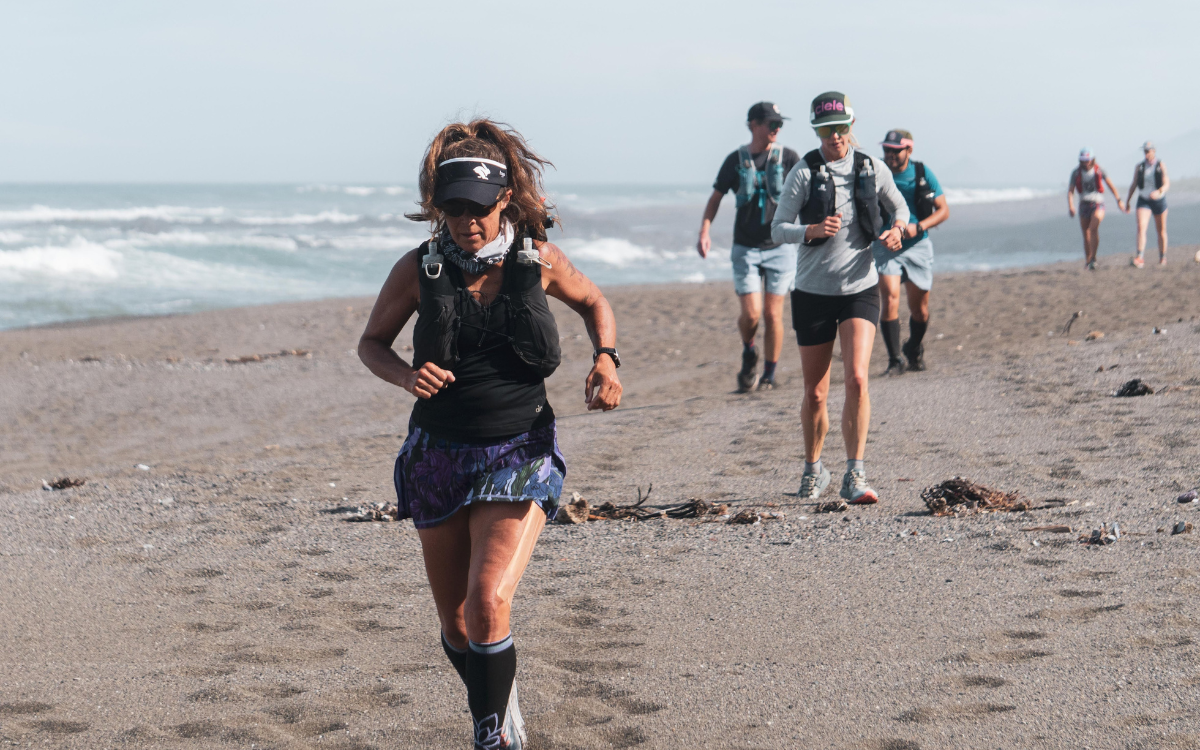
Running through sand, the joy of any beach trek.

It’s a given that things go wrong on long-distance backcountry excursions. Runners might like to focus on physical strength and race tactics. But problem-solving is the core of ultrarunning and outdoor adventuring. With the right mindset, risk management plan and a bit of luck, getting out of that tough time is also the root of the story everyone shares at the end-of-trip campfire. 

At least that’s how it went on Aspire’s unforgettable June trip along the Lost Coast.

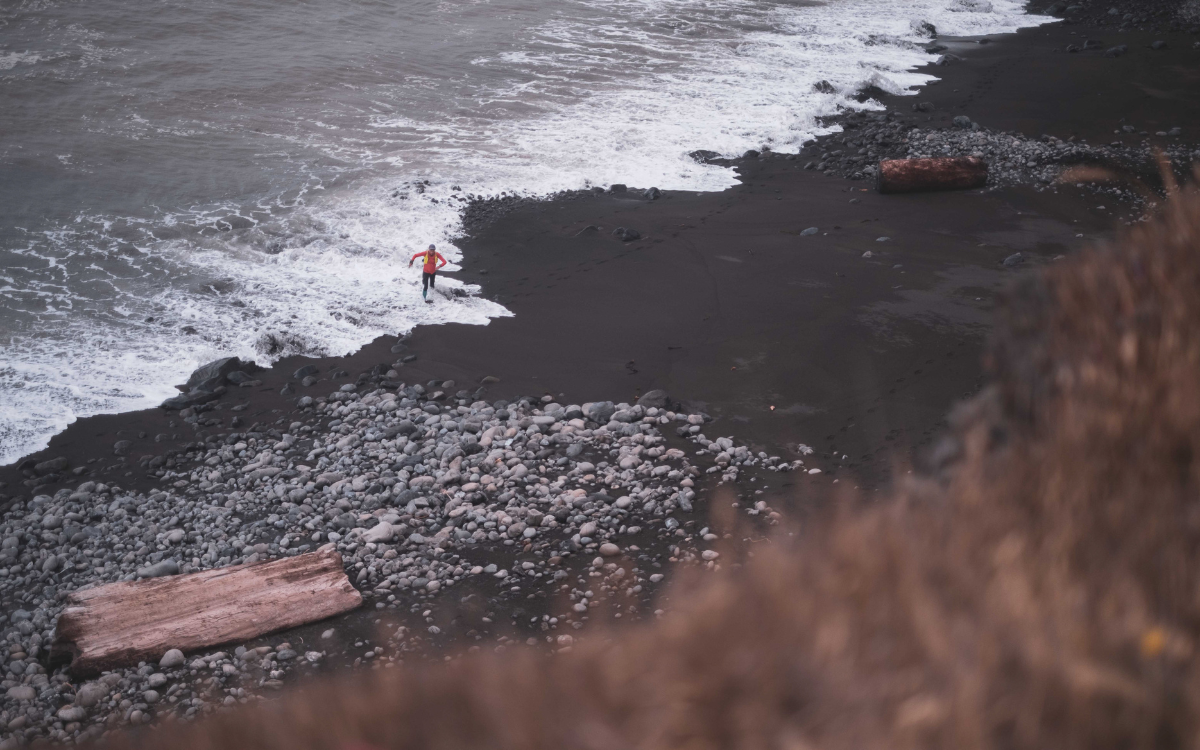
A runner dodges the tide.

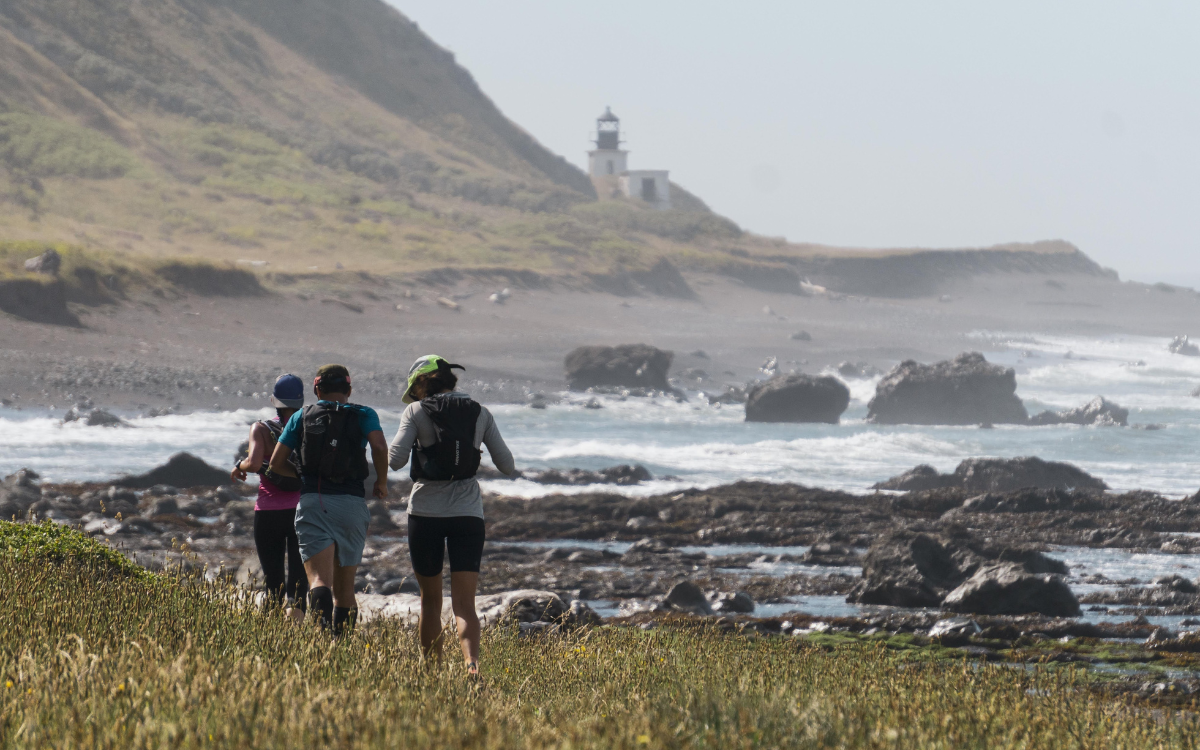
A three-hour’s drive north of San Francisco, this remote and wild slice of the King Range National Conservation Area and Sinkyone Wilderness feels more like a scene out of Jurassic Park than a protected patch of land in the most populous U.S. state.

Cell signal? Forget about it. Roads? Hope you don’t get car sick, don’t have to pass anyone, and have an hour or three to get where you’re going. People? Mostly just backpackers doing a sandy 25-mile beach trek in several days — a section Aspire runners will be covering on Day 1. And then there’s the thistle-berry-poison-oak bushwhack interspersed along the 60-mile route. 

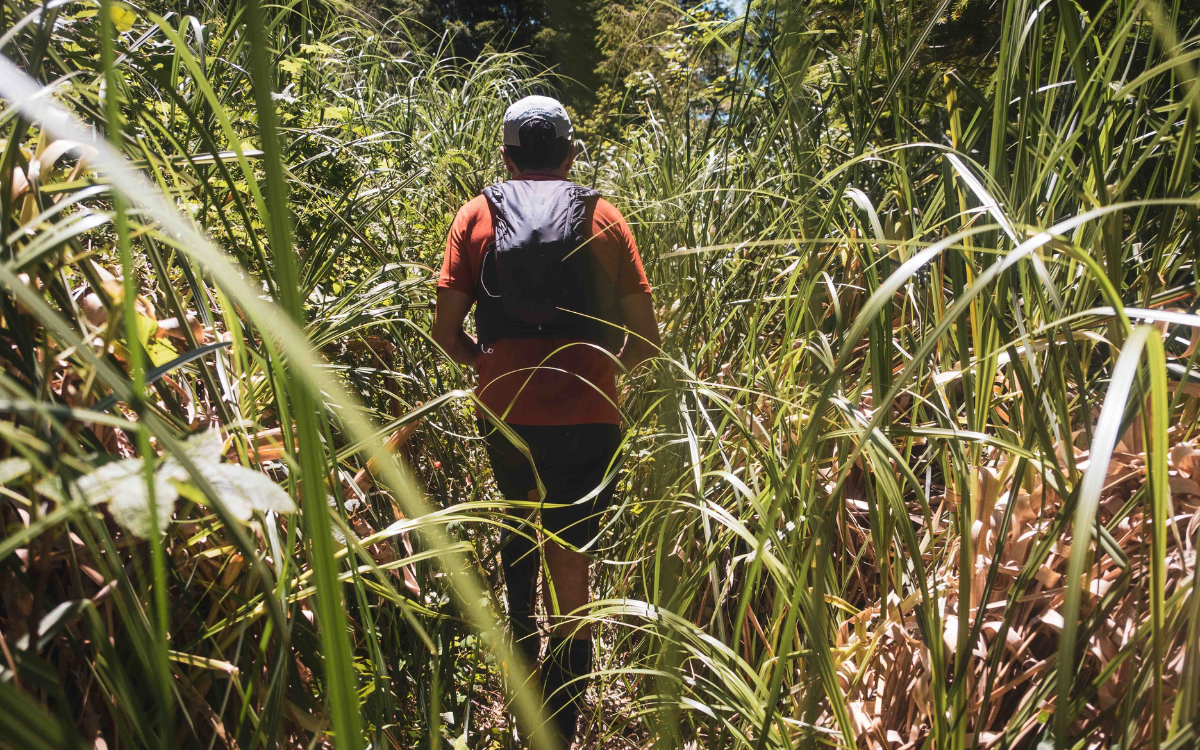
Infamously brushy sections abound on the Lost Coast Trail.

The 19th century Gold Rush brought death and disease to the indigenous Sinkyone people here. Then, timber harvesting and oil drilling carved up the land and left behind sawed-off redwood stumps and squiggly roads that seemingly go to nowhere. When the oil boom dried up in the 1930s, people left the region in droves, giving it the apt name. But by hour five on a trail here, it’s reasonable to think that the bluffs just don’t want to be found.

If things have to go sideways in such remote places, one hopes it’ll be something relatively minor. An irked knee after a 25-mile day on a slanted sand beach, perhaps, or a bent tent pole while rushing to pack up camp in the pouring rain. They’re the kind of things that in the moment can — and do — feel crushing. Managed with a well-stocked tool kit and a bit of know-how and they just become part of the experience. 

Where the real strength shines is when something bigger happens, when things really start to go off-script, and when a group is tested in bigger, more complicated ways. 

Welcome to Day 1.

The Lost Coast run begins with a near-marathon-length run through deep sand, slick rocks and precarious bluffs spanning Mattole River Campground to Shelter Cove. The route has three tide-dependent crossings that runners must traverse before a certain time or else risk being cut off from the trail until the water recedes. The longest crossing, the Rattlesnake High Tide Zone, is a 3-mile stretch that, on this particular trip, runners needed to be through by about 4:30 p.m. 

It would be a push for everyone. 

For the six who didn’t make it in time, it’d be the setting for a story that would dominate the trip.

An Aspire guide bringing up the back of the pack realized by about 3:30 p.m. that they were up against the clock and unlikely to make it through the tide zone in time. With waves inching higher, the group needed a backup plan. So they made one. 

High tides force runners to wait it out on the Lost Coast.
Runners wait out the tide on the Lost Coast Day 1.

One runner scouted ahead for a possible bailout route that was loosely sketched out on a map, a creek and possible trail that climbed toward the hills. Meanwhile, the guide bounded between runners and ensured everyone knew the plan — or, more to the point, knew that there was a solid plan to begin with. 

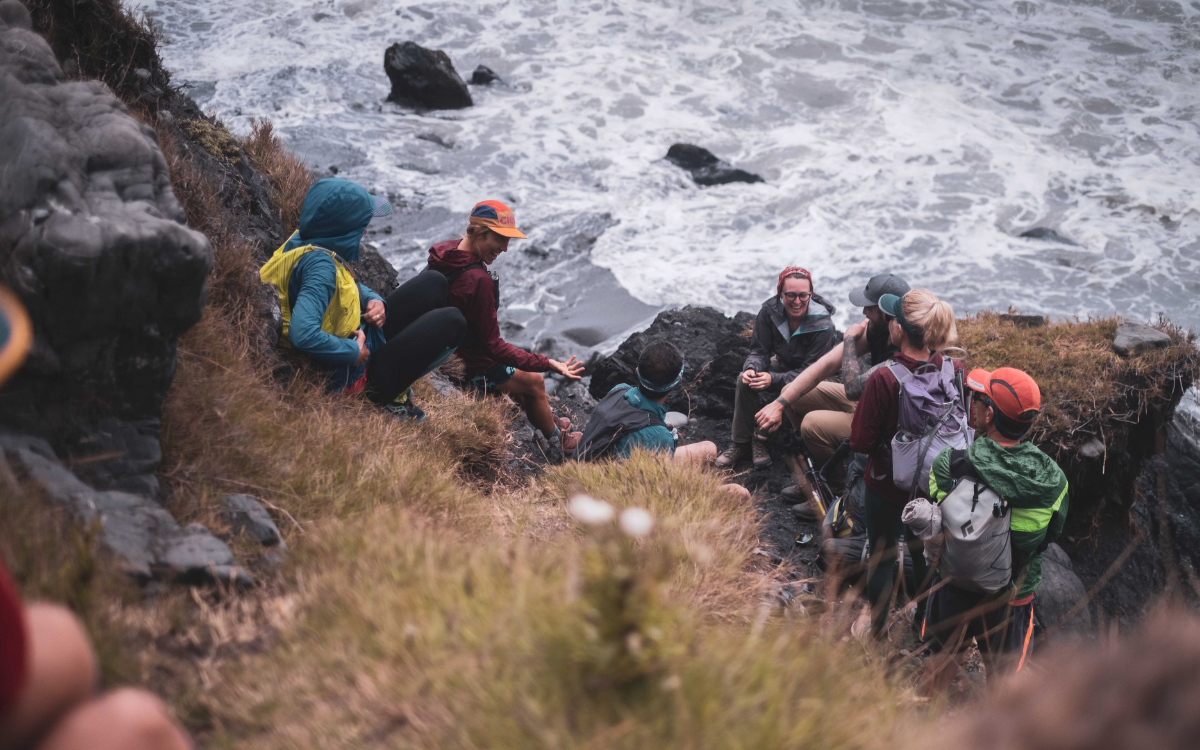
Before long, they’d made the turnoff, climbed above the water and hunkered down next to now-infamous Buck Creek. That’s where the problem-solving really began. 

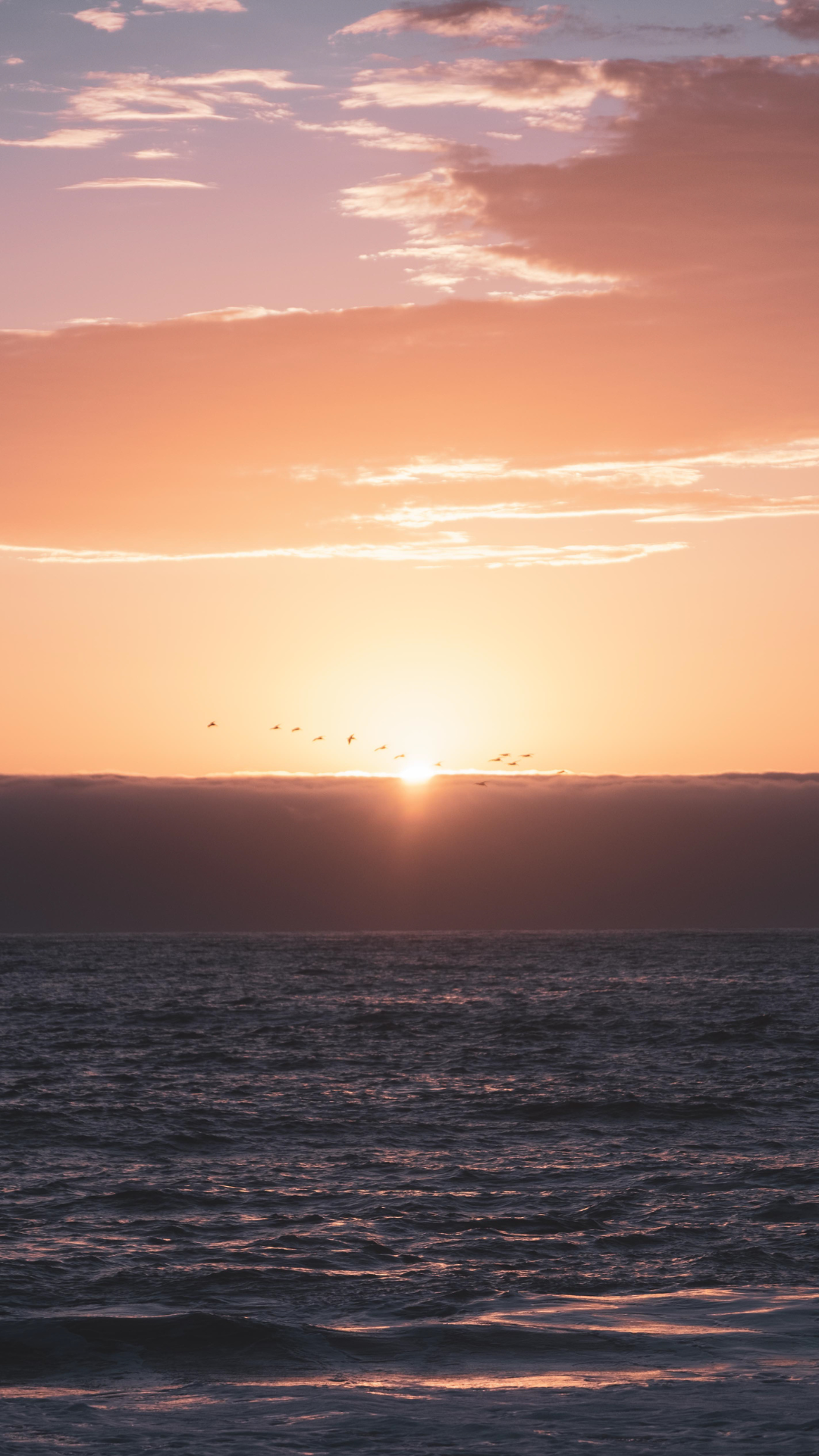
Sundown over the Pacific Ocean.

Realizing they would be out for at least twice as long as they had anticipated when they started running that morning, everyone emptied their running packs to share food. They inventoried supplies as it became clear they’d be bivvying on the bluff deep into the night. “What happens at Buck Creek stays at Buck Creek,” they’d say over and over, huddled in gold-colored emergency blankets as the sun dropped below the Pacific and turned the sky a stunning shade of orange. 

Unplanned and worrisome as it was at the time, it certainly could have been worse.

Aspire guides and many clients travel with Garmin inReach devices, which allow for some communication while in the field. By mid-afternoon on, the team shuttling camp toward Shelter Cove knew that nearly half the runners were taking an impromptu trek inland. So they made plans to meet runners who made the crossing in time and prepped backup plans for those who hadn’t. Even when things were uncertain and when communication became spotty, the situation never spiraled. It was one decision after another.

At one point that night, a guide loaded a van with food, water and beer and headed toward the beach group’s bail-out route in the event they abandoned the beach. The plan to meet them midway down the path was ultimately scrapped after the beach group decided to smartly wait out the tide and resume their beach trek at midnight. 

Alongside fresh bear prints, and with a renewed motivation to finish, the group pushed the pace and arrived at a twinkle-lit Sprinter van at 2 a.m. Hot food and beer awaited them, as did dry clothes, pitched tents and rolled-out sleeping pads back at camp. 


Situations like these are rare. They’re also where staying level-headed and thinking through decisions pays dividends, knowing that with proper risk management, it’s all-but-guaranteed everyone will stay safe and walk away with a story to tell. By breakfast some six hours later, the beach group was regaling everyone with stories of what happened, who stepped up and how well — all things considered — the night ended up going. Despite the lack of sleep, the beach group rallied and hit the trail for an abbreviated Day 2 trek. Everyone’s reward? Hammocks, lounge chairs, burgers and sunset over the Pacific, albeit this time from the comforts of a wooden camp bunkhouse alongside easy-going conversation and a bowl of dutch-oven-baked apple crisp. 

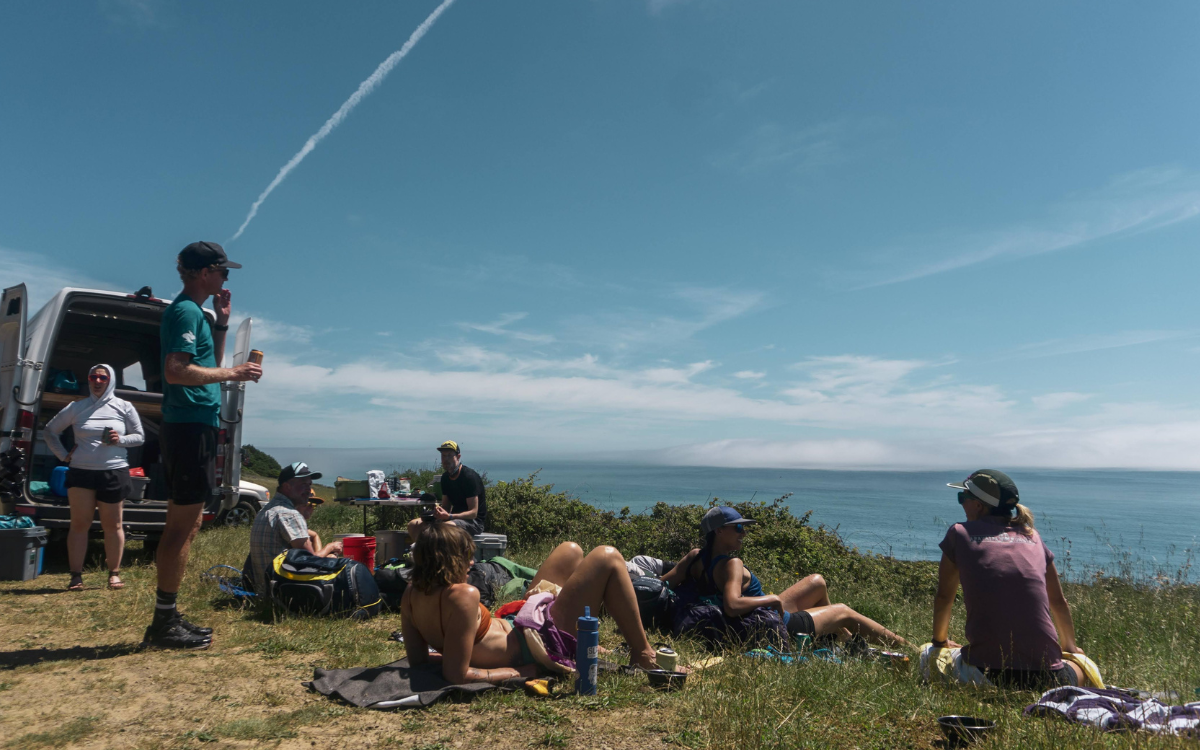
Aid station: Risk management in action.
Soaking in expansive Pacific Views at the aid station.

The first day set the tone for the rest of the trip, both in terms of things going wrong and finding solutions. Multiple runners’ water filters broke, so people worked together to share. On Day 3, when most of the beach group decided against making the 20-mile run/bushwhack to round out the trip, some pitched in on helping a guide navigate the harrowing narrow roads. Once everyone arrived at Usal Beach, the party at camp — complete with margaritas around the fire — lasted late into the night, up until a few raindrops began to fall… 

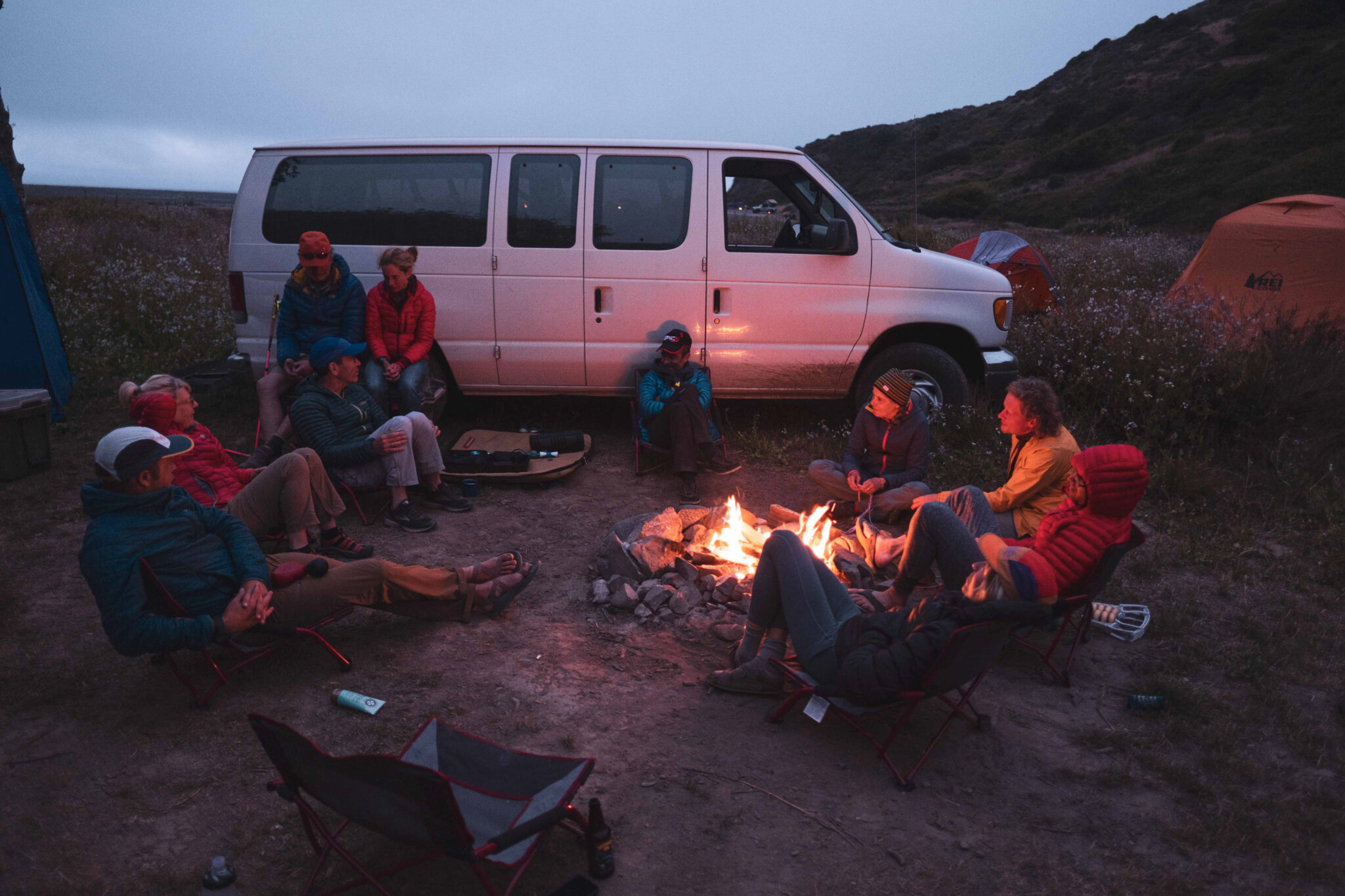
Image shows runners relaxing by the fire at Usal Beach.
Runners unwind by the fire after finishing the Lost Coast Trail Stage.

Raindrops turned to a downpour overnight. Bags and bodies were sopping wet by the time everyone piled into the vans to leave that final morning. But the rain had turned the campsite to tacky soup that swallowed Aspire’s loaded Sprinter van tire. 

For a moment, anxiety swept the group. Some people had flights to catch later that morning. Most everyone had “real lives” to return to. But the van went nowhere, even with a dozen runners attempting to shove the van forward. So much for Plan A. 

Plan B: Surely one of the 4×4 crews camped a half-mile away at the beach had some traction skids they could loan out. But one by one, the gruff beach campers told a guide that they didn’t have skids and hadn’t seen anybody with them, either. Despair deepened. 

On to Plan C: Build an improvised skid, replete with rocks that both guides and clients had scooped up from camp and smashed together into an improvised backcountry traction device. Some looked on skeptically. Others made the kind of nervous laugh someone makes when they know something will make a hilarious story someday when they’re dry and not off the grid hanging around camp in a downpour with a stuck van. 

One more hope-filled push from everyone and the Sprinter lurched forward and fishtailed through camp toward the hard-packed road. 

Cheers. Claps. Problem solved. 

Then gasps. 


Images shows the misty forests of the Lost Coast.
Running through dappled sunlight in the eucalyptus groves.

Exactly what happened before the Sprinter made it to that road will make for a helluva story on problem solving, that is, after the body shop gets a look at the dented side and damaged door, courtesy of a leaning tree.

At the Leggett mercantile where a group of strangers had met several days earlier, now everyone high-fived, hugged and swapped phone numbers after an unforgettable trip on the Lost Coast. 

The views and stories will no doubt outlive any “I survived” hat. 

There is talk, though, of making a t-shirt about what happened up Buck Creek…


Run the Lost Coast Trail Stage with Aspire.
2023 Registration opens November 1st, 2022.


Jason Pohl, 32, raced road marathons for a decade while also bagging peaks in Colorado’s high country and taking backpacking trips throughout the West. He ran the Boston Marathon twice and in 2012, largely on a whim, did a self-supported bicycle tour from Washington to Maine. He’s now all-in on trail running with a handful of 100k finishes in the books and a string of self-supported adventures on the horizon. He works in the “real world” as an investigative journalist in Sacramento, California, where he lives with his partner, Mel.

Categories
Blog courses Destinations Highlights Skills Sucia Island WFA SUCIAWFA Trip Reports Trip Reports and Trip Styles Trip Styles update

Sucia Island Wilderness First Aid: Trip Report

by Maryanna Brown

Our Sucia Island Wilderness First Aid course is a collaboration with instruction from Backcountry Medical Guides and the Aspire basecamp experience, creating an idyllic classroom where trail runners recieve sport-specific instruction on how to prepare for and respond to adverse events in the wilderness. Participant Maryanna Brown shares more in the following trip report.


Gearing up for a summer of mountain adventures, I knew it was time to refresh my rapidly deteriorating first aid skills.  I took a Wilderness First Responder course several years ago, but I hadn’t had to use any of the skills (thank goodness) and was feeling decidedly iffy about my abilities to respond to an emergency in the backcountry. If I packed a first aid kit at all, it was either mini pre-packed baggie of mystery items I wasn’t really sure what to do with or a behemoth first aid kit overflowing with dusty gauzes, ointments, a selection of picked over bandaids.  A Wilderness First Aid course geared towards trail runners seemed like just the ticket to kick off a summer of backcountry adventures. Not only would I feel more confident about going further into the backcountry solo, but I’d be a better partner for my trail running buds.

I had never heard of Sucia Island before the course and had no idea what to expect when the ferry pulled up to Orcas Island on Friday afternoon.  From the ferry terminal, we took a quick shuttle van ride to catch our chartered boat to the mysterious Sucia Island.  Speeding through splashing white-capped waves with dolphins breaching in the distance was sheer delight.  It truly felt like we were leaving the rest of the world behind, charting a bold new path to trails that weren’t even listed on Trail Run Project.  

Sucia Island did not disappoint.  It was a little slice of wooded paradise with enviable sunsets and zero cars.  It’s only accessible by small boats and it’s criss-crossed with a spider web of dreamy single-track with peek-a-boo glimpses of Kulshan (Mt. Baker) and the Olympic Mountains.   We had our own secluded group campsite which had the effect of making us think we were the only ones on the island.  Not until we started exploring Sucia on our morning runs, did I realize the island was a buzz of kayakers, sailers, and the happiest dogs I’ve ever seen.   I think almost everyone there remarked at least once that they would prefer to say goodbye to life outside the island and settle in for an extended stay of sunsets, otter parties, and lonely trail runs. 


We may have been on “island time” but we had a bit of routine to our days.  The early birds would start the day with 6:30AM exploratory runs around the island,  skipping down the little land fingers that jutted out into the sound and marveling at the blossoming succulents and seals bobbing just offshore. We’d roll back just in time for freshly brewed coffee (!!!) and a delicious homemade breakfast.  I’m vegan and Aspire did an amazing job providing plant-based alternatives that were just as tasty as they were nutritious – tofu pad Thai, ridiculously good potato breakfast burritos, and high protein snacks like edamame pods. We’d even have happy hour with cold beers, cider, and hard seltzer and appetizers while waiting for dinner every night.  Now I finally understand what glamping is. I like it.  

Backcountry Medical Guides ran such an engaging and fun course.  After breakfast, we’d have class on the beach (!!!) and while it was somewhat distracting to have a family of otters playing in the background, it was pretty amazing.  The course was a perfect mix of hands-on scenarios and mini-lectures.  

We started with the ever important patient assessment system – concrete steps to take when faced with any incident in the backcountry.  From there, I learned a ton of steps to take when faced with various trauma, medical, and environmental emergencies – with a particular focus on emergencies most commonly faced by trail runners such as rolled ankles, heat exhaustion, and wound care.   One of the highlights of the course was performing chest compressions on a mannequin while one of our instructors blasted Whitney Houston’s – I Want to Dance with Somebody, to keep the beat.  Hilarious, yet surprisingly helpful.  With the soaring temperatures in Seattle this week, I’ve already used what I learned about heat emergencies and their prevention to not only keep myself safe but monitor those around me. 

One of the most helpful lessons was on first aid kits and ways to keep the weight pared down by picking items that can have multiple uses.  Apparently honey can be used as an antibiotic, source of sugar for a diabetic emergency, and a tasty addition to a peanut-butter sandwich.  

I not only traveled back from Sucia with a keen interest in perfecting my first aid kit (add honey) but some new friends!   Some of the Seattle runners exchanged numbers at the conclusion of the course (Sunday) and by Tuesday morning, I was out for a dawn patrol lap around Green Lake with another woman from the course with plans to regroup at the Big Foot 20 miler in early July with a few more students.   All in all, I couldn’t have asked for a better Wilderness First Aid course experience. The Sucia Island WFA was a perfect blend of education, glamping, trail running, and hanging out and swapping stories with other runners.   


The Fall Edition of the Sucia Island Wilderness First Aid Course takes place August 27th – 29th. Learn more and register!