Categories
Aspire Culture Blog Campaigns Culture Highlights Preparation Women's Adventure Scholarship Women's Adventure Scholarship Blogs

Women’s Adventure Scholarship Winning Essay: Angie Madsen

For too long, wilderness narratives have focused on the lone (often white) male explorer pitting himself against the elements.

Through the Women’s Adventure Scholarship, we sought to elevate and amplify the stories of wild women. The essays written by the three recipients of the 2021 Scholarship set these experiences in stark relief, balancing the fears and challenges of their personal experience with celebration of what it is to be a woman in the wilderness . Take these words and go forth inspired!


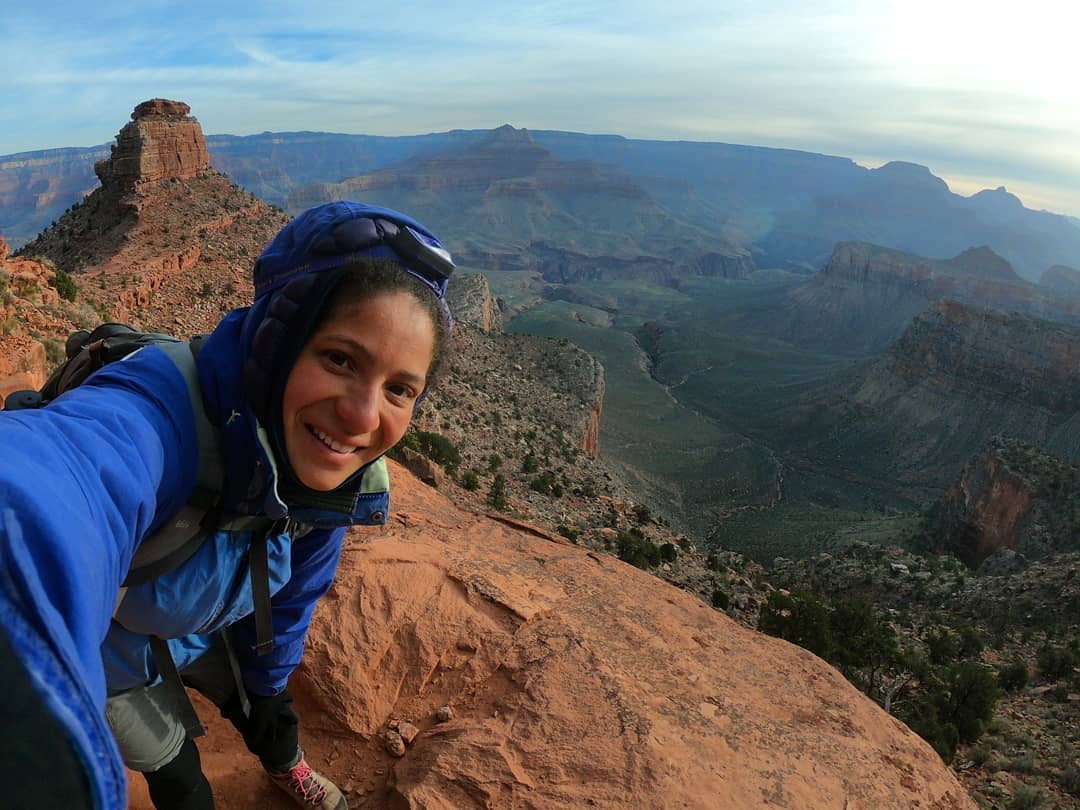
Angie Madsen tried to take life seriously, but ended up laughing instead. By day, she creates programming that helps youth girls become brave and confident in the outdoors. In the 5 to 9, she’s your period hype girl, teaching you to fuel your adventures by harnessing the power of your menstrual cycle. Even when she’s working, she’s secretly playing! See what Angie’s up to at www.TheHormoneHacker.com.

Angie is the recipient of the Sawtooth Backcountry Women’s Trip scholarship. We are both excited and honored to share her words here. Read her essay below.


To be a woman moving through wild spaces is to carry a backpack of items you didn’t ask for. Sure, we squeeze in our Ten Essentials, anti-chafe salve and the best of the best snacks (cheese and chocolate, duh). But, stuffed in the gaps between all our tangible gear, you’ll find the invisible items that weigh our pack down more than you’d notice. 

You know what you’ll find in my pack?

The echoing words of the man who took my parking fee and scolded, “I worry about seeing girls like you outdoors alone.” (Even though girls like me are more competent on the trails than boys like him.)

The glaring label of a “tease,” because I just wanted to be friends with the male guides.

The ache from the time a customer on my raft pulled me by my ponytail to dunk me in the water, after he told his group of boys that they didn’t actually have to listen to my safety rules.

The self-consciousness when I wonder whether a climber will see my hot pink nail polish and not trust me to hold the rope.

The jaded sigh of explaining, for the hundredth time, that a menstrual cup isn’t gross.

The silent fuming of attending a search and rescue meeting– indoors, in a classroom– and getting a lengthy explanation from a man about why I couldn’t wear those jeans if I ever went hiking.

The disappointment during a swiftwater rescue course scenario when, being the only woman, my higher-pitched commands were drowned out by the chatter of the men who decided we didn’t need a group briefing, after all.

Finally, there’s the worst weight of all that I carry in a male-dominated wild space: The pressure to represent all women. That if I mess up, it’s proof women don’t belong here. That if I have an off day, it’s just evidence that women and girls can’t be as strong, fast or worthy of the sport.

But you know what? All of those undesired items that I carry in my pack were created and put there by society. They’re not who I really am– who we really are, as women. The integrity of a woman in the outdoors is about what’s underneath the tanned (okay, burnt) skin and dirty fingernails. When I finally shrug off my dusty pack at the end of a long day, those burdens are cast aside and what I’m left with is my raw biology.

It’s a biology that holds nature’s secrets and whispers them to a select half of the population (shhh, don’t tell). A body whose rhythms and cycles parallel those of Mother Earth; just as the earth has four seasons, so does my hormonal ebb and flow. (And if that isn’t the coolest thing since zero-drop trail shoes, I don’t know what is.)

My innate nature gives me the superpower to tune so deeply into my connection with the planet that sometimes, I can’t tell where my body ends and the trail begins.

As a woman, when you shake out your well-worn pack and let the gear tumble to the floor, you discover the wild elements that you’re left with and can’t separate from yourself. To be a woman in the outdoors is to be the outdoors.

It took me far too long to realize that magic. I grew up thinking in terms of black and white as I attempted to learn my place in the world. In my naive eyes, you were girly, or you were a tomboy. You were tough, or you were weak. You could be shy or brave. You’d become an expert or never be good enough.

The comments and media I absorbed as a girl fueled the false dichotomies my brain forged. I came to believe that I could either be bossy and powerful, or quiet and submissive. Dresses and mascara, or jeans and bare face.  Either/or, no Option C. So, I ignored my womanhood altogether, and for a while, I lost my path.

What brought me back to my inner wild was being in the literal wild. Through trail running, paddling and mountaineering, I reconnected with the part of me that I had stifled in my attempt to be taken seriously.

Now? I thrive in the beautiful in-between. I adore the feminine, intuitive, creative side of myself who pairs up with the masculine, direct, goal-driven side of myself when I head into the wild.

I wear sparkly earrings as my shoes pound singletrack and my sweat soaks my tank top. I bleed on my period as I tighten my crampons and grab my ice axe. I carry knives and matches alongside flowy skirts and that weird all-natural bright red lipstick I love. This in-between is my Happy Place.

When I’m outdoors, I feel a delicate ferocity in my soul. It’s to be a kaleidoscope of contradictions, a fluid collection of traits that changes daily, seasonally, and at times unpredictably. A shifting spectrum of all kinds of wonderful things that can’t be qualified, quantified or tamed, as much as 9-year-old me had thought otherwise.

So yeah, moving outdoors as a woman might mean that my pack is more cumbersome than expected. But the extra work for the glorious payoff? It’s worth it to me. I’ll carry this heavy pack for five thousand miles if it means future generations will bear a lighter load.


Read the other Women’s Adventure Scholarship winner’s essays and check out a month’s worth of conversations with badass women on our Women’s Adventure Scholarship 2021 page.
Categories
Aspire Culture Blog Campaigns Culture Highlights Preparation Women's Adventure Scholarship Women's Adventure Scholarship Blogs

Women’s Adventure Scholarship Winning Essay: Bruna Moscol

For too long, wilderness narratives have focused on the lone (often white) male explorer pitting himself against the elements.

Through the Women’s Adventure Scholarship, we sought to elevate and amplify the stories of wild women. The essays written by the three recipients of the 2021 Scholarship set these experiences in stark relief, balancing the fears and challenges of their personal experience with celebration of what it is to be a woman in the wilderness . Take these words and go forth inspired!


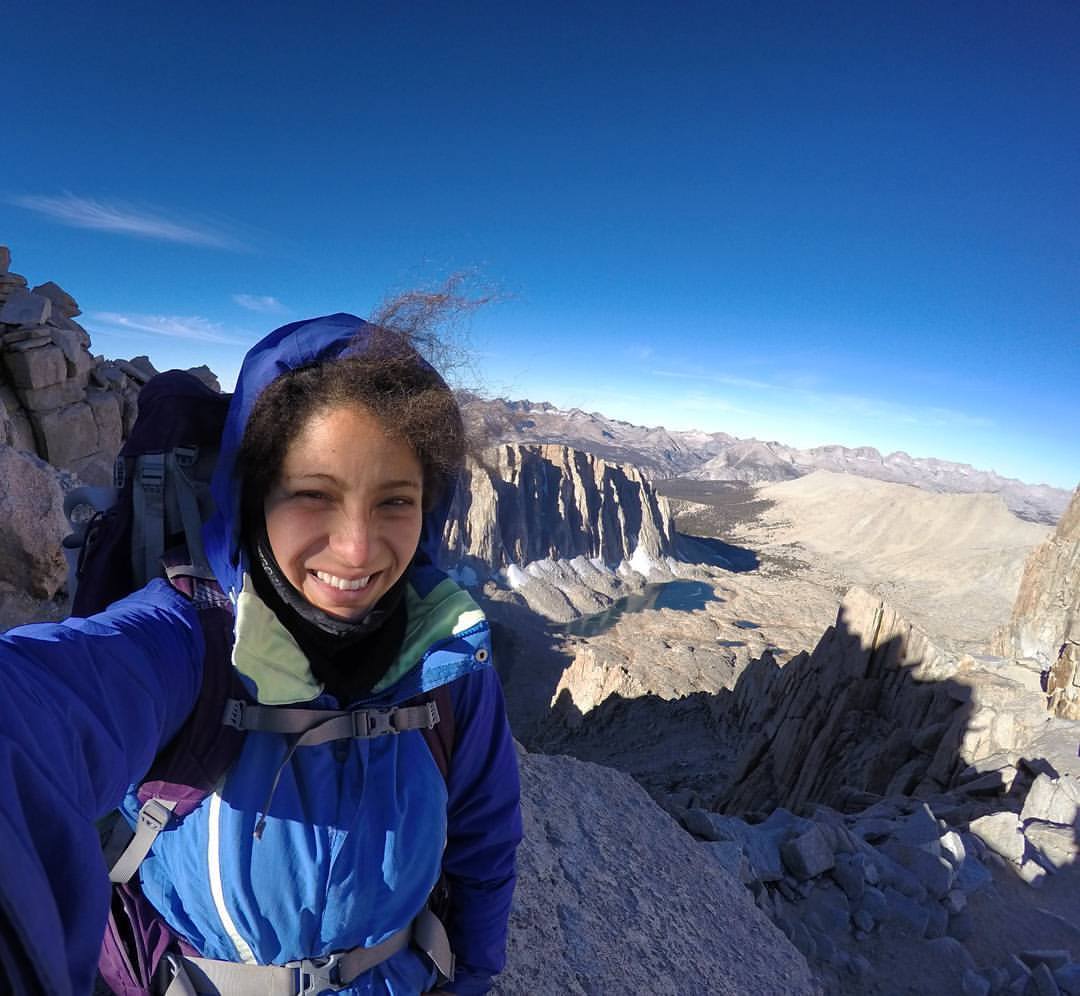
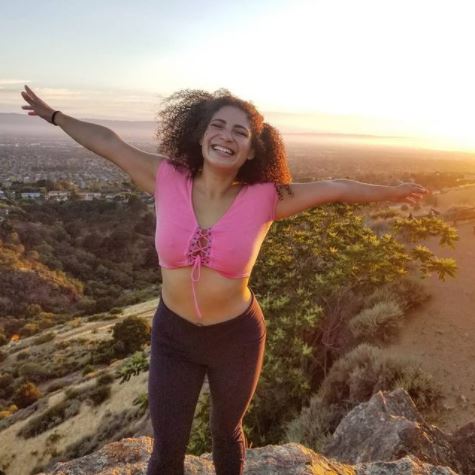
Bruna Moscol was born in Lima, Peru. Chasing the American dream, her family immigrated to Miami, Florida when she was 10. She then grew up under the Florida sun, calling the beaches home. At age 20, she moved north for college and discovered – and fell passionately in love with- the mountains. She has been running uphill ever since.

Bruna is the recipient of the Rendezvous scholarship. We are both excited and honored to share her words here. Read her essay below.


To be a woman athlete in the outdoors is to exist as a creature society has deemed an impossibility. “Women are like flowers,” they say. Beautiful. Delicate. Weak. Women must be kept inside- “like a gift”- they say, like something precious. Bound in a cocoon of protection, women were historically kept inside. Caged. 

To be a woman in the outdoors- running, climbing, swimming, paddling her way through- is to break free from this cage. To be a woman moving swiftly on her own physical capabilities through the physical challenges of the very physical world around her, is to be a creature that lives life on her own terms. It is to claim her existence as her own. It is a way for her to find her power. 

— 
If you would have told a 10-year old little girl version of me that by the time I turned 26, I would celebrate New Year’s Eve by camping, alone at 16,000 ft, on a way up a mountain that was 23,000 ft, in well under 0F weather and covered in snow, I would’ve stared at you like you were crazy and asked what snow even felt like. 

I was born neither a natural athlete nor into an athletic or even outdoorsy family. And worse for any adventurous inclinations my little heart may have harbored, I was also born a girl. A shy, slightly overweight, and sickly asthmatic child, I spent months out of the year in the hospital- and when out of the hospital, was treated like glass. Breathing was a problem. So were sports. Out of breath quickly, I learned very early on to loathe all things physical: my P.E. class, dancing, a game of tag. The fact that I was a girl made this loathing even more convenient: better stay inside anyway lest I dirty up my dress. A life of adventure and athleticism was the last thing the cards seem to have in store for me. But as life would have it, a life of adventure and athleticism was exactly what became of mine.

—
“We’ll run 6 miles around the river,” my friend explained nonchalantly. 

“I can’t run 6 miles around the river,” I replied, alarmed.

I was 20 and had grown up the way I had been raised: far from even the slightest trace of adventure. I had never run 6 miles. I hadn’t even ran 2. It was winter and snowing outside and it was the first time I was seeing snow. “Why can’t you run 6 miles?” my friend insisted. Was he stupid? I couldn’t because I couldn’t. Because my body was not meant to. My legs not strong. My lungs not capable. My heart not made for it. And finally, I couldn’t because I was a woman, and my friend was a man. He was strong, I was delicate. He could, I couldn’t. But through a combination of peer pressure, a fear of missing out, and a dash of bravery I went. A couple of hours later, I had completed my first ever 6 mile run. No one more surprised than me. 

What is it Like to be the Weaker Sex?

Up to very recently, they called us women the weaker sex. Our dreams of adventure brushed aside- “You don’t want to get hurt,” they’d said. Our accomplishments, belittled. “Well she ran, but it was slower.” Women are taught, from a very early age, that the outdoors and especially the world of adventuring, is a world that belongs exclusively to men. Women are delicate. Women are fragile. Women must be kept inside. 

This is incorrect. As the outdoors would teach me in time, a snowy mountain does not care about your gender, neither does a swift river. The world cares only about bravery, and women are brave. Women are not weak.

More adventures followed that first snowy 6-mile run. Four years later, at age 24, I would sail 6,000 nautical miles across the Pacific Ocean; pulling lines (nautical for rope) with hands as rough as fisher-men’s. In five years, I would carry ⅓ of my body weight up 16,000 ft of altitude across the Andean mountains; my body carrying the same weight as my male companions, no need for extra help. Six years after that first run, I would attempt my first giant mountain, 23,000 ft, solo and unguided, in a 3-week mixed terrain climb. I was the only solo female climber on the mountain. Seven years, and I would paddle all 80 big water rapids across the Colorado River, 19 days on the water. My female arms thick from pushing the massive oars. By year 8, I would run my first 26.2 miles in a historic Spring-time hailstorm, the water way past up my ankles, the hail covering me cold. 

—
Women are not weak, but we have been taught (incorrectly) that we are. Together, we can break free from this false sense of weakness, from our own taught fears of inadequacy. And in breaking free from this cage, we find our power. And in finding that power, we help others break free from their own cages as well. 
To be a woman- running, and climbing, and swimming, and paddling- and jumping, and skipping, and rolling, and laughing, and falling, and crying, and persevering in the outdoors, is to be a creature that society, once, deemed impossible. It is to stand on your own capabilities, to claim your body as your own. To be a woman in the outdoors is to break out of that cage and live life bravely. It is to realize you’re not weak at all- what you are is courage.


Read the other Women’s Adventure Scholarship winner’s essays and check out a month’s worth of conversations with badass women on our Women’s Adventure Scholarship 2021 page.
Categories
Aspire Culture Blog Campaigns Culture Highlights Preparation Women's Adventure Scholarship Women's Adventure Scholarship Blogs

Women’s Adventure Scholarship Winning Essay: Maryanna Brown

For too long, wilderness narratives have focused on the lone (often white) male explorer pitting himself against the elements.

Through the Women’s Adventure Scholarship, we sought to elevate and amplify the stories of wild women. The essays written by the three recipients of the 2021 Scholarship set these experiences in stark relief, balancing the fears and challenges of their personal experience with celebration of what it is to be a woman in the wilderness . Take these words and go forth inspired!

Categories
Assorted Blog courses Culture Highlights NCT Preparation Runner Profile Runner Profile Runner Profiles update

Runner Profile: Doug Mckeever

“Who goes on Aspire trips?”
It’s a question we hear often. The truth is, the runners who show up for our trips come from diverse backgrounds and bring a wide range of running and mountain experience with them to the trails.
We all relate to mountain spaces in unique and personal ways. We are excited to add some depth to our response to the “Who?” question with a series of Aspire trail runner profiles. We enjoyed hitting the dirt and building friendships with these runners on our trips, and we think you’ll enjoy hearing their stories!

Name: Doug McKeever Age: 73 Hometown: Bellingham, Washington

Which Aspire Trip(s) have you participated in?

North Cascades Traverse 2020

Describe your experience, background, and enthusiasm for running and/or wilderness and backcountry experiences?

I’ve been a trail runner since 1986, when nearly all runners were sticking to the roads. I enjoy introducing runners to the trails. Have finished lots of ultras including Hardrock (1993) back when we really didn’t know if it would kill us! Grand Slam finisher in 1994.  Co-founder and original co-director of Chuckanut Mountain 50 km.  Honored as a ‘Living Legend of Trail running’ by Trail Runner Magazine in June/July 2001 issue, not because of my race prowess but due to being a pioneer in wilderness trail running in Washington.  Volunteer at Rainshadow Running events and many others.  Climbing instructor and guide, with 79 ascents of Mt. Baker as of 2018. I enjoy sleeping on summits and visiting existing fire lookouts and sites of former lookouts.

What questions, concerns, or unknowns did you have going into your trip?

Will I be able to finish each day’s stage at my advanced age.

How did you prepare for your trip? Given your experience would you prepare differently, if so how?

Training daily with gradual buildup, but not trying to ‘compete against the past.’

What is your favorite trail snack?

Salmon jerky and RX bars!

What story or description would you give to represent the group dynamic on your trip?

I was the slowest of the group…not surprising since I was the oldest by a decade and a half….. but everyone in the group had absolutely no ego. The camaraderie and supportive attitude was so good!  Also, everyone in our group was very fit and had no apparent trouble doing one big day after another.  If someone wasn’t used to  big downhills, he or she would  likley be stiff and sore the next day.

What was the most difficult moment or a surprising episode from your trip?

I have run the Hannegan/Chilliwack/Copper Ridge loop five times previously (decades ago), but  I forgot how rocky the trail going from the  Chilliwack valley-bottom woods emerging onto the Copper Ridge subalpine is!  Same with the descent from Whatcom Pass to Graybeal Camp….. it isn’t a smooth easy path!  Either the trails have gotten rougher, or I was a lot faster 30+ years ago, or both are true (yes!)

What advice or thoughts would you offer to someone considering signing up for an Aspire trip?  

Do it!  The North Cascades Traverse offers spectacular scenery and challenging trails. Aspire as a company is absolutely first class in every way.  

We welcome any insights or stories that illustrate the diverse people, abilities, and backgrounds that describe our community and how people experience our trips.

As far as encouraging each other, on the final 7 or 8  miles of the last day a woman in her 30s in our group was mildly expressing her disapproval of “one more hill” to climb, followed by yet another.  But when we reached a long downhill she disappeared ahead of me, and I am (or used to be) a good downhill runner. When I remarked to her in camp, admiringly,  how she had taken off after muttering earlier, she gave ME credit for her motivation. How so?  During the seemingly endless rolling hills on Copper Ridge when she was lagging a few steps behind me, mildly complaining, I said “If an old geezer like me (in my 70s} can make it, a  ‘youngster’ like you certainly can!” (I used the term ‘youngster’ not in a derogatory way, but simply for encouragement). She said that encouragement is why she took off like a rocket on the home stretch.   

That’s how this trip went. We were each mutually supportive while doing a challenging thing.


“You Have More to Give, Doug”

Editor’s Note:
Doug is the subject of a comeback film titled “You Have More to Give, Doug“, documenting his return to racing after a 10 year hiatus. Watch the film by Nick Danielson and 8 other inspiring trail running films at the Trail Running Film Fest‘s Year End Show. Tix available here!